

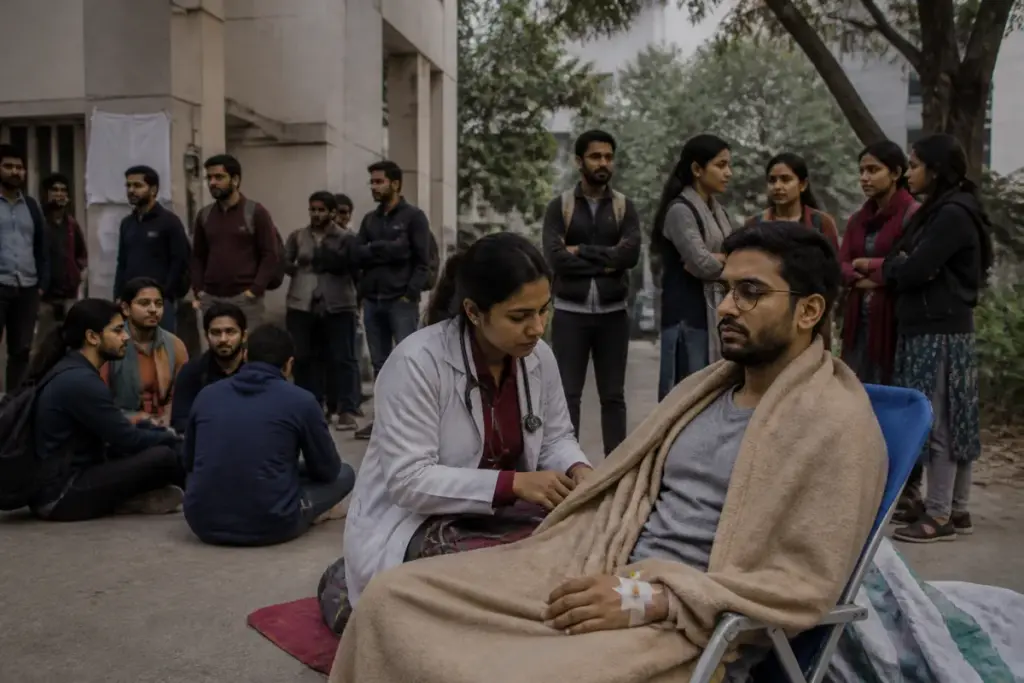
A hunger strike at Jamia Millia Islamia entered its ninth day on Tuesday after NSUI secretary Ebin Basil was hospitalised with dizziness and low blood sugar, according to information shared by the student organisation. NSUI said Basil’s condition had improved, but the development has intensified a dispute over student representation, disciplinary action and accountability at the university.
Basil is protesting over three demands: restoration of the student union, withdrawal of disciplinary action taken against protesting students, and the resignation of the chief proctor. NSUI said he continued the hunger strike despite his health problems and had expressed his intention to remain in the protest until the demands were addressed.
The organisation appealed to the university administration to consider the students’ demands seriously and begin an immediate dialogue to resolve the dispute. It said issues concerning student rights and accountability should be addressed through discussion.
The hospitalisation places the health consequences of the protest alongside the underlying institutional disagreement. The supplied report does not identify the hospital where Basil was admitted or provide medical details beyond dizziness and low blood sugar. It says his health had improved after admission.
The dispute also involves the university’s response to the students’ demands and to disciplinary measures against protesters. NSUI’s account presents the restoration of the student union and the withdrawal of action against protesting students as central demands, while calling for the chief proctor’s resignation. The university’s detailed position on those demands is not provided in the report.
Jamia has formed a seven-member committee to engage with students and consider ways to resolve the issue, according to the report. The committee’s creation indicates that the administration has established a formal channel for dialogue, although the supplied information does not specify when the committee will meet the protesting students, what authority it has, or whether it has proposed any settlement.
The episode brings three linked questions into the university’s immediate decision-making process: how student representation is structured, how disciplinary proceedings involving protesters are handled, and how dialogue is maintained during a health-sensitive protest. In the immediate term, the hospitalisation has made the student’s medical condition a central concern while the committee considers the wider dispute.
NSUI’s appeal for talks and the university’s seven-member committee are the next recorded steps in the matter. Further developments will depend on the committee’s engagement with students and the administration’s response to the three demands.


