

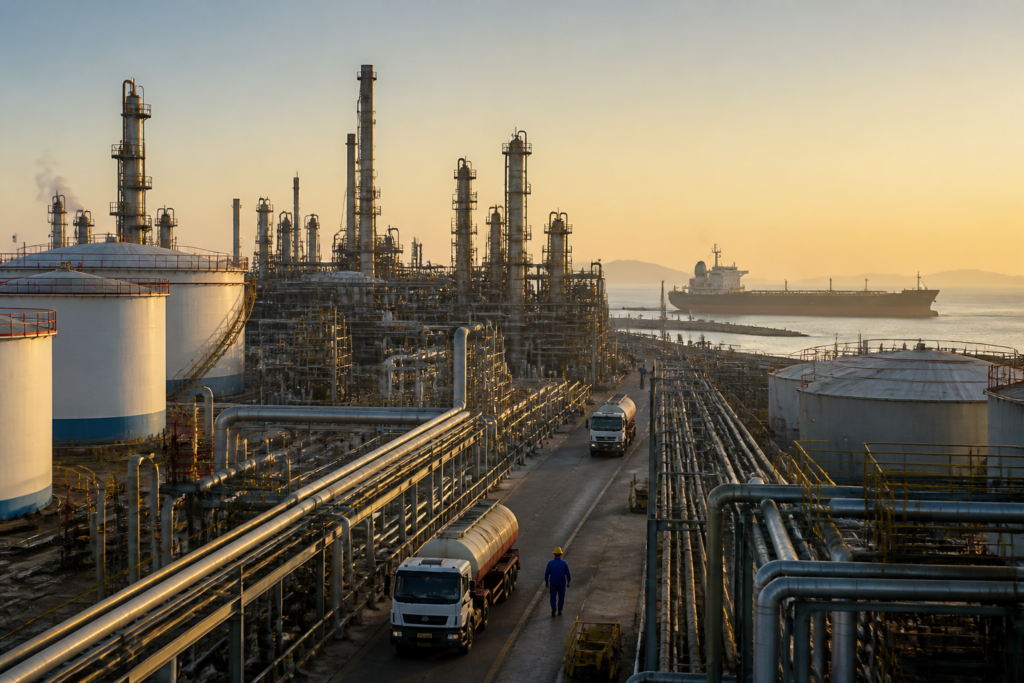
India has avoided a fuel shortage despite disruptions around the Strait of Hormuz and rising tensions in the Red Sea, Petroleum Minister Hardeep Singh Puri said on 16 October, attributing the resilience to diversified crude sources, higher refining capacity and increased imports.
Puri said India had successfully managed the disruption around the Strait of Hormuz, through which he said significant volumes of cargo continued to arrive. He added that the country was now dealing with renewed pressure linked to tensions in the Red Sea, a key route for global energy and goods shipments.
According to the minister, India is currently importing and consuming more than 5 million barrels of oil a day while exporting about 1 million barrels of oil daily. He linked the export figure to the country’s expanding refining capacity, which allows imported crude to be processed into petroleum products for domestic and overseas markets.
The minister said the government had taken steps to diversify supply sources and strengthen India’s energy security. He also pointed to a sharp change in the country’s crude import pattern since February 2022. At that time, Russian crude accounted for less than 0.2% of India’s imports, whereas its share has since increased substantially, he said.
Puri also referred to India’s earlier dependence on supplies from Gulf producers. He said the country had previously imported roughly 800,000 barrels a day from the United Arab Emirates and a similar volume from Saudi Arabia, although the figures change over time. The statement did not provide the current country-wise import breakdown.
The minister’s comments come as Brent crude remained above $105 a barrel, despite a slight decline. The source report said market analysts expected further upward pressure if the disruption continued, with prices potentially moving closer to $120 a barrel. That assessment was presented as an analyst view and was not an official government forecast.
Higher crude prices affect more than fuel pumps. They can raise transport and logistics costs, increase operating expenses for public and private mobility systems, and add pressure to businesses that depend on diesel, petrol or petroleum-based inputs. For cities, the effects can spread through freight movement, construction activity, public transport operations and household budgets, even when retail fuel availability is maintained.
The supply risks described in the report are linked to two separate maritime corridors. Tensions around the Strait of Hormuz can affect shipments from the Gulf, while instability in the Red Sea can disrupt routes connecting Europe and other markets. The report also referred to tensions involving Saudi Arabia and Houthi forces as contributing to supply concerns.
Puri said India had faced these challenges without a fuel shortage and that prices had remained controlled. His comments provide the government’s assessment of current supply conditions; the report did not include a new official notification on retail prices, stock levels or a revised fuel-import policy. Further developments will depend on crude prices, shipping conditions and the continuity of supplies through the affected routes.


