

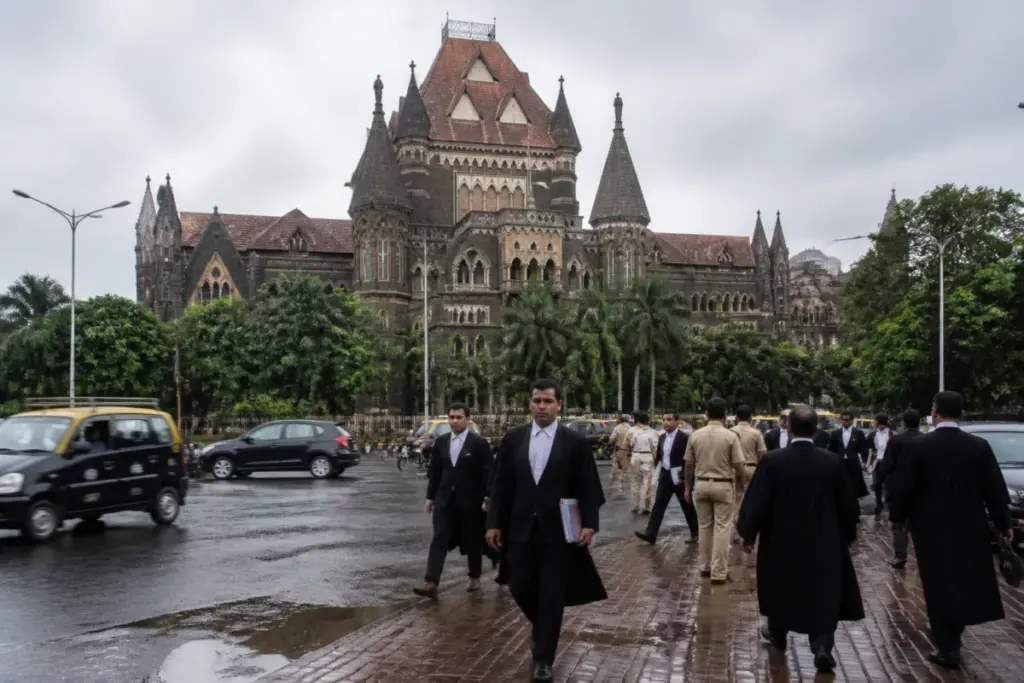
Actor Imran Khan has moved the Bombay High Court against a Leave India Notice issued by the Foreigners Regional Registration Office (FRRO), which directed him to leave India by October 28 over his alleged participation in a protest in Mumbai. He has sought an immediate stay on the notice and protection from coercive action, including deportation, blacklisting and any adverse action against his Overseas Citizen of India (OCI) status.
The petition was filed after the FRRO issued the notice on October 14, following an FIR related to Khan’s presence at a protest near August Kranti Maidan on October 10. The 44-year-old actor, a US citizen and OCI cardholder, has described the notice as unconstitutional and alleged that it reflects a disproportionate exercise of statutory power.
Khan was detained by Mumbai Police during the October 10 protest. The report said BJP leader Kirit Somaiya later filed a complaint alleging that Khan had violated the law. After an FIR was forwarded by the police, the FRRO issued the Leave India Notice, citing provisions of the Immigration and Foreigners Act, 2025.
In his petition, Khan has argued that the notice was based on an FIR that remains unproven and under investigation. He claimed that he was not questioned or given an opportunity to respond before the notice was issued. The petition alleges violations of Articles 14 and 21 of the Constitution and argues that the FRRO could not impose the most severe consequence of removal without considering a lesser measure.
Khan has also challenged the authority’s reference to Sections 7(2)(c) and 29 of the Immigration and Foreigners Act, 2025. According to the petition, the notice did not cite any adverse security report and treated him only as a US national while failing to properly consider his OCI status. Khan has claimed that he has lived in India with his family for nearly four decades and earns his livelihood in the country.
The petition further states that participation in, or mere presence near, a protest is not prohibited by statute. Khan has claimed that he had no association or affiliation with the organisation involved in organising the protest and that he was returning to his car when he was apprehended after media personnel gathered at the site. He has also alleged that authorities ignored CCTV footage.
The case raises questions about how immigration powers are applied to OCI cardholders who reside in India but do not hold Indian citizenship. Khan’s plea argues that the action could undermine confidence among the Indian diaspora in the certainty of the OCI regime and create concerns for the foreign national’s home country.
Separately, the FRRO issued Khan a show-cause notice on Saturday stating that his OCI registration may be liable for cancellation under Section 7D(e) of the Citizenship Act, 1955. The provision allows the central government to cancel OCI registration in the interests of India’s sovereignty and integrity, security, friendly relations with another country or the general public, after providing a reasonable opportunity to be heard.
The FRRO has given Khan 15 days to respond to the show-cause notice. His lawyers—Zulfiquar Memon, Parvez Memon and Chirag Naik of MZM Legal—are expected to mention the petition on Monday before a division bench led by Chief Justice Mahesh Chandra Tripathi for an urgent hearing.


