

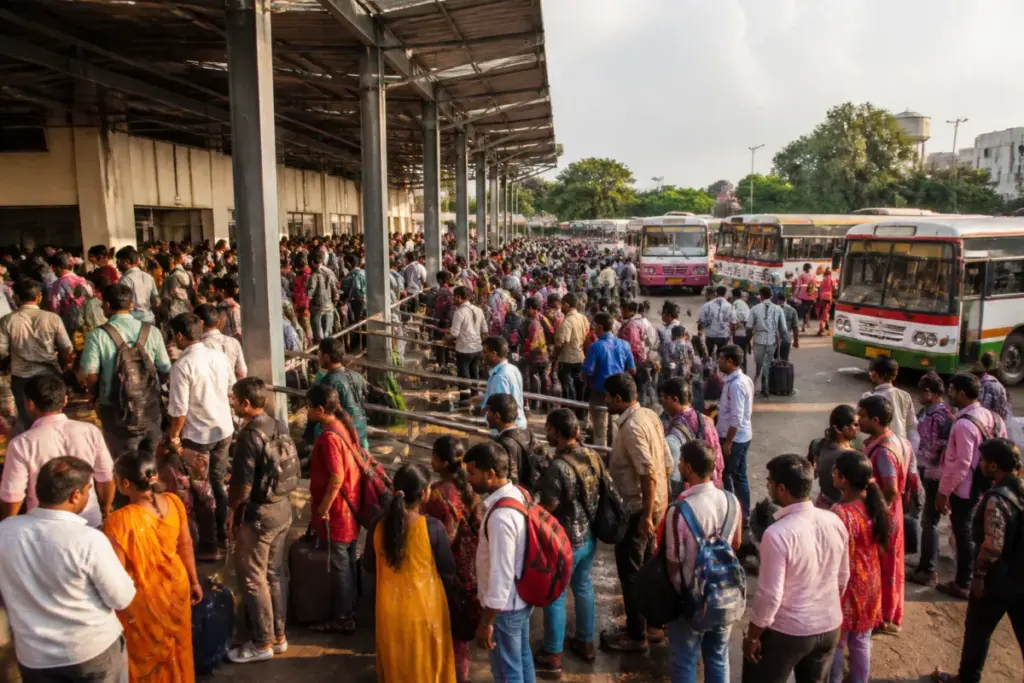
Hyderabad’s Dasara travel rush has filled regular trains and buses, pushed airfares sharply higher and prompted transport authorities to add thousands of special services as passengers leave the city for their hometowns.
The Telangana State Road Transport Corporation (TGSRTC) has deployed 7,000 special buses for the festive period, with around 95% of the planned services already operated. However, passengers using the special buses are being charged fares that are 50% higher than regular rates.
TGSRTC began operating the additional buses on October 10 and expects passenger traffic to rise further on October 17 and 18. Officials have been instructed to deploy more buses on routes recording higher demand, according to arrangements reviewed by the corporation.
TGSRTC managing director Y Nagi Reddy has directed field officers to monitor the operation of special services and reduce inconvenience for passengers at bus stations. The corporation said drinking water, rest facilities, sanitation and security arrangements had been made to manage the rush.
Passengers have also been advised to book tickets in advance through the corporation’s official website, www.tgsrtcbus.in. The scale of the operation reflects the pressure that festival-linked travel places on Hyderabad’s public transport network, particularly when large numbers of residents travel simultaneously over a short period.
Rail services are facing similar demand. Regular trains from Hyderabad to destinations across Telangana, Andhra Pradesh, Tamil Nadu, Karnataka, West Bengal, Uttar Pradesh and Maharashtra are running full. To accommodate additional passengers, South Central Railway is operating more than 600 special trains and augmenting services on routes where demand is high.
Air travellers are also facing higher costs. Airfares from Hyderabad to destinations including Kolkata, Bhopal, Jaipur, Chandigarh and Patna have doubled amid increased demand and limited flight availability.
The transport response is spread across road and rail services, while the rise in airfares has narrowed the options for passengers unable to secure seats on regular trains or buses. For the immediate peak, TGSRTC’s next steps are to add buses on high-demand routes and maintain monitoring, water, sanitation, rest and security facilities at bus stations.


