

The Himachal Pradesh High Court has directed the state to strengthen its stray dog sterilisation programme, warning that vaccination alone and continued dependence on private veterinarians and non-governmental organisations will not reduce the animal population in the long term.
A division bench comprising Chief Justice Gurmeet Singh Sandhawalia and Justice Bipin Chander Negi said the Supreme Court’s directions on stray dog management placed clear emphasis on operational control and adequate sterilisation capacity. The bench observed that Himachal Pradesh was missing this crucial part of the programme while hearing a matter related to compliance with those directions.
State data presented before the court showed that 3,709 dogs were sterilised between January 1 and June 30, compared with 26,564 that were vaccinated. The court’s intervention focused on the gap between the two activities and the need for regular, institutionally controlled sterilisation rather than a programme centred primarily on vaccination.
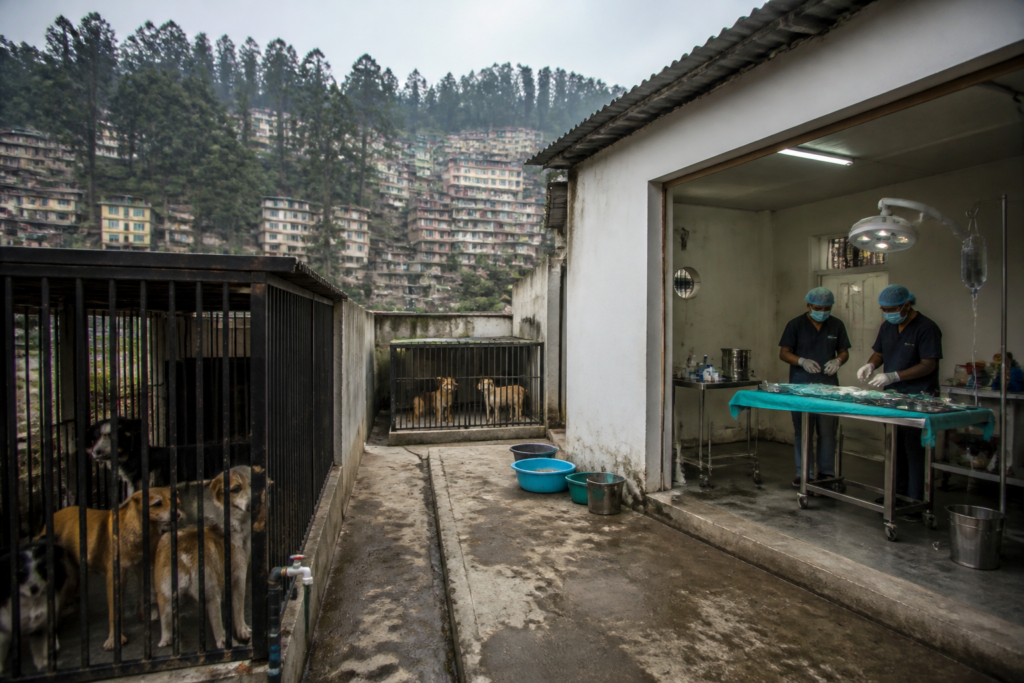
According to a compliance affidavit filed by the state government, 31 Animal Birth Control centres were functioning across Himachal Pradesh, except in Lahaul and Spiti, where the stray dog population was reported to be low. Seventeen centres were being operated by urban local bodies and 14 through institutions under the animal husbandry department. The government also informed the court that 12 additional centres had been proposed at a meeting chaired by the chief secretary on July 31.
The animal husbandry department has designated 74 veterinarians for the programme. Authorities have also identified 16,319 institutions, mainly educational establishments, hospitals, primary health centres and community health centres, whose premises need to be secured against stray dogs. Directions have been issued for proper fencing, and nodal officers have been appointed to oversee implementation of the Animal Birth Control Rules.
Two stray dog shelters have been established under the Shimla and Dharamshala municipal corporations. However, district-level committees reported several infrastructure and staffing deficiencies, including inadequately equipped operation theatres, shortages of veterinarians and trained personnel, and a lack of land for new Animal Birth Control centres and shelters.
Amicus curiae advocate Ragini Dogra told the court that some centres, including those in Bilaspur and Ner Chowk in Mandi district, were temporary. She also said sterilisation work in Kullu was being handled by an NGO and pointed to the absence of sterilisation activity in Kinnaur despite 536 vaccinations. In Shimla, she submitted that the municipal corporation had not had a permanent veterinary officer at its Animal Birth Control and anti-rabies centres for two years. The affidavit recorded that only 316 stray dogs had been sterilised in Shimla as of October 5.
The court said outsourcing sterilisation to NGOs or private doctors would not be sufficient and stressed the need for a permanent veterinary doctor to conduct the procedure regularly. It directed the authorities to fill the veterinary post in Shimla by the next hearing, either through deputation or appointment.
The case has been listed for the next hearing on December 3, when the state is expected to report on the staffing and operational measures taken in response to the court’s directions.


