

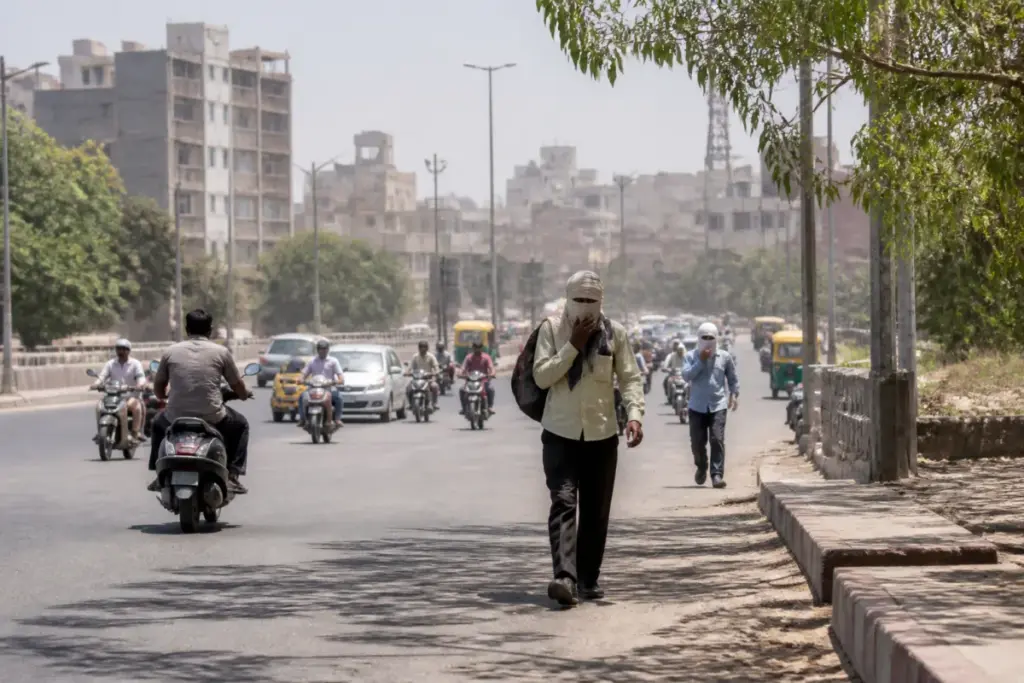
The Gujarat UV index has reached the high-risk category in parts of the state as temperatures remain above normal and air pollution rises in major cities during Navratri. The conditions are expected to persist, with little relief from the heat forecast over the next five days, according to a report by Gujarat Samachar – Ahmedabad.
Rajkot recorded the highest maximum temperature in the state at 40.1°C, which was 3.9°C above normal. The report said this was the city’s highest temperature in the past six years. Ahmedabad recorded a maximum of 38.1°C, or 2.2°C above normal, while its minimum temperature crossed 26°C, around four degrees above normal.
Other cities also experienced elevated temperatures. Bhuj recorded 39.4°C, Amreli 38.3°C, Deesa 37.6°C, Vadodara and Bhavnagar 37.2°C, Surat 37°C and Gandhinagar 36.2°C. Ahmedabad is expected to record maximum temperatures of around 38°C over the next three days.
The rise in ultraviolet radiation has been linked in the report to reduced cloud cover across Gujarat. Cloud cover was estimated at only 0 to 4%, while temperatures remained between 38°C and 40°C in several locations. The UV index was reported to be between 7 and 9 in places including Rajkot, with readings reaching 11 on some sensors.
A UV index of 11 or above falls within the extremely high-risk category. Prolonged exposure can damage the skin and eyes, with possible effects including premature skin ageing, pigmentation and damage to skin-cell DNA. The report also noted potential harm to the cornea and retina and an increased long-term risk of skin cancer.
The exposure is particularly significant for people moving through or working in public spaces during the afternoon. Residents have been advised to avoid unnecessary outdoor activity between 11am and 3pm when UV levels are high. Those who need to travel during this period have been advised to cover their head and face, use a hat or umbrella, wear clothing that covers the body and consider UV-protective sunglasses.
Air quality also deteriorated in several major cities. At around 8pm, Ahmedabad recorded an air quality index of 131, Surat 143 and Vadodara 111. Readings from different sensors in Rajkot ranged between 101 and 139. These levels indicate that urban exposure is being shaped by both heat-related radiation and airborne pollution.
The report attributed the rise in pollution partly to increased vehicle movement during Navratri and dry weather conditions. Fine particles such as PM2.5 and PM10 can travel deep into the lungs and affect respiratory health. The combination of high heat, strong UV radiation and polluted air creates a more difficult environment for commuters, outdoor workers and people with existing health vulnerabilities.
The immediate forecast cited in the report points to continued high temperatures in Ahmedabad and limited relief across the state over the coming days. Residents’ exposure will depend on afternoon heat, outdoor movement and local air-quality readings as the conditions continue.


