

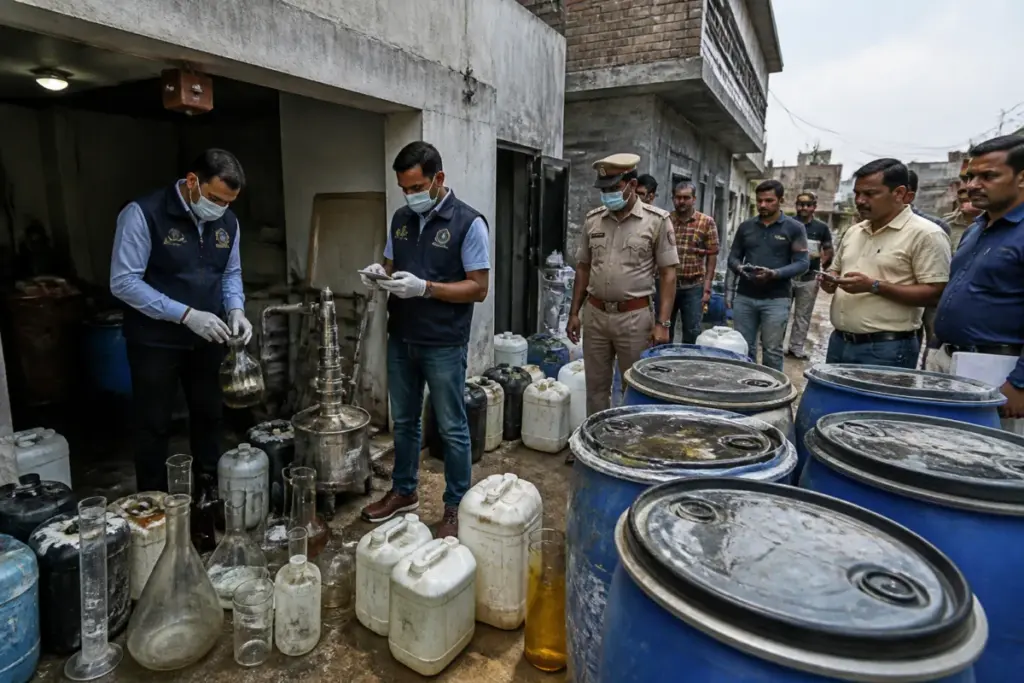
The Narcotics Control Bureau has dismantled two illegal synthetic-drug laboratories operating from rented premises in Jahanabad Kadalpur village in Greater Noida, recovering material that could have produced about 56 kg of crystalline amphetamine, according to the agency. The estimated illicit-market value of the finished drug is around ₹45 crore.
The operation was carried out on Friday and the NCB disclosed details on Saturday. Two people were arrested: Destiny Abraham Dumbiri and Lallawamzuali, also known as Olivia Lalchawimawi. The agency said both facilities were being used to manufacture and process synthetic drugs.
The seizure included 379.740 kg of amphetamine-containing material and 10 kg of pseudoephedrine. The amphetamine-related material comprised 4.260 kg of crystalline substance, 157.700 kg of semi-crystalline material and 217.780 kg in liquid form.
Investigators also found hydrochloric acid, acetone, toluene, sulphuric acid and potassium permanganate, along with heating equipment, glass reaction vessels, chemical storage drums, filtration systems, weighing machines, respirators and other laboratory equipment. The NCB said these chemicals are used in the manufacture of methamphetamine.
The agency is examining the identities and backgrounds of the arrested individuals. According to the NCB, Dumbiri had identified himself as a Nigerian national, while immigration records showed that he entered India in January 2020 under the name Francis Kalokoh as a Sierra Leonean citizen on a tourist visa valid until December 2020. The agency is investigating whether multiple identities were used to mislead enforcement authorities.
The second accused, Olivia, had been arrested by the Directorate of Revenue Intelligence in March after 313 grams of heroin-containing powder was found in her checked-in baggage at Goa’s Dabolim airport. She was subsequently granted bail in that case, according to the report.
The Greater Noida seizure follows an NCB action in October 2024 at the Kasna industrial area of Gautam Buddh Nagar, where around 95.5 kg of synthetic drugs in solid and liquid forms was seized from another illegal laboratory. In the latest case, investigators are tracing financial transactions, chemical procurement and the supply network. They are also examining who financed the operation, supplied the chemicals or provided technical assistance, as well as possible interstate and international links.
The case also highlights the public-safety risks created when hazardous chemical processing is concealed inside rented homes or other urban premises. The NCB said waste from illegal laboratories can contaminate soil, drains and water sources, creating serious health and environmental risks. It has appealed to landlords, property dealers, housing societies, resident welfare associations and security personnel to report suspicious activity.
The agency said unusual chemical odours, repeated movement of chemical drums or laboratory equipment, and suspicious storage or disposal of chemical waste should be reported to the national narcotics helpline, MANAS-1933. Further arrests remain possible as the investigation into the wider network continues.


