

The Godavari-Cauvery link debate has reopened a larger question for Telangana: whether changes in the proposed route and storage arrangements could alter the State’s access to water for irrigation, drinking water and industry. The issue became politically prominent after BRS Deputy Floor Leader T Harish Rao alleged that Andhra Pradesh was advancing the project through Polavaram and that the Telangana government was failing to protect the State’s interests.
Speaking at a press conference in Hyderabad, Harish Rao said Andhra Pradesh Chief Minister N Chandrababu Naidu had written to the Centre on October 7 seeking implementation of the Godavari-Cauvery link from Polavaram. He said the proposal was later included in the agenda of a National Water Development Agency meeting scheduled for November 3 and circulated to the States. These details were reported by Telangana Today, which attributed the claims to Harish Rao.
The immediate dispute is not simply about linking rivers. It concerns the starting point of the link, the route through which water would move, the reservoirs that could store it and the States that would control its use. Harish Rao said an earlier proposal envisaged linking the rivers from Ichampally through Nagarjuna Sagar, while the revised plan moved the starting point to Polavaram and dropped Ichampally. He argued that this change could affect Telangana’s expected access to the water system.
According to Harish Rao, the earlier proposal would have supported irrigation across 2,38,236 acres in the erstwhile Warangal, Nalgonda and Ranga Reddy districts. He said this figure was based on a memorandum of understanding signed with the Centre and questioned what would happen to those expected benefits if the route and storage arrangements were changed. The report does not independently establish the terms of that memorandum or the status of the earlier proposal, making the documentary record around the competing plans central to the dispute.
Harish Rao also alleged that Andhra Pradesh wanted to route the diverted water through the proposed Bollapalli reservoir rather than release it directly into Nagarjuna Sagar. He claimed this arrangement could allow Andhra Pradesh to store 150 TMC of water. He said Telangana would benefit if water from Sammakka were routed through Nagarjuna Sagar instead. These are political claims made by the BRS leader; the supplied report does not include a response from the Andhra Pradesh government, the Telangana government, the Centre or the National Water Development Agency.
The institutional significance of the dispute lies in how inter-State water projects are designed and approved. A proposal can affect multiple States long before construction begins, through decisions on source, conveyance, storage, operating rules and the agencies responsible for implementation. Once a reservoir or canal system becomes part of the operating network, control over timing and storage can be as important as the volume of water mentioned in the original project proposal.
That is why the agenda of the National Water Development Agency meeting matters politically and administratively, even though inclusion on an agenda is not the same as approval or implementation. The next stage would require clarity on the project’s technical design, water availability, inter-State allocations, environmental and statutory approvals, financing and operating arrangements. None of those final decisions is established in the supplied report.
The dispute is also unfolding against concerns over Telangana’s current irrigation operations. Harish Rao alleged that the State government had not taken adequate contingency measures despite warnings from scientists and weather experts about El Niño. He said the BRS had urged the government for nine months to lift water into reservoirs but that its appeals had not been acted upon. The report does not provide rainfall data, reservoir levels or an official assessment confirming the extent or cause of drought conditions.
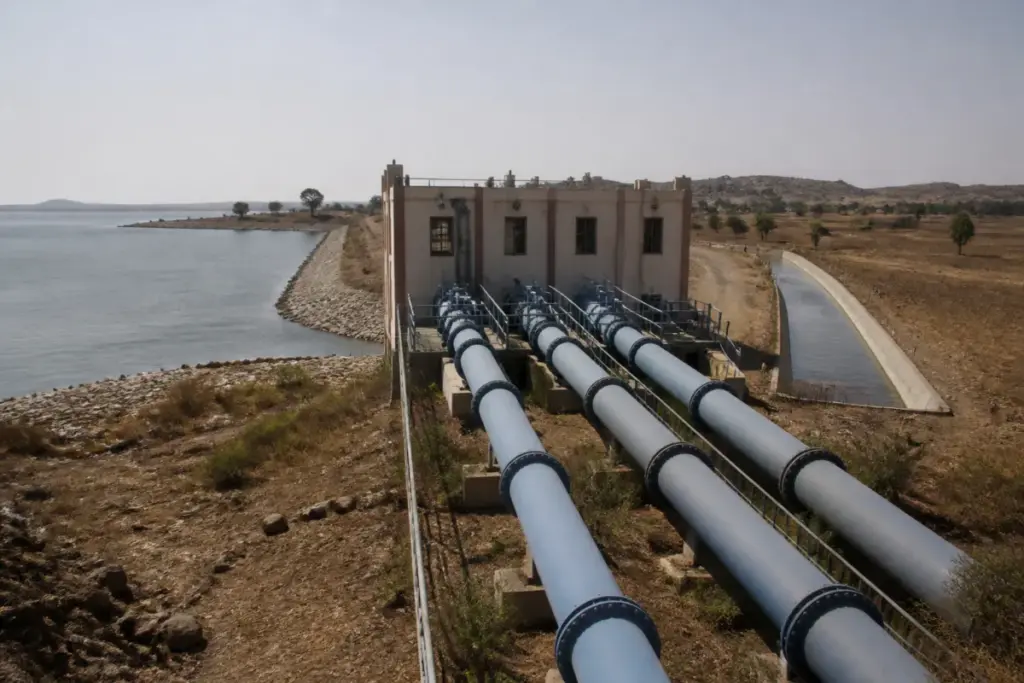
At the project level, Harish Rao claimed that only three of the 10 motors at Devadula were being operated. He said running all 10 could have helped fill tanks, check dams and reservoirs in Warangal district. He also alleged that only three of five motors at Kalvakurthy were operating for seven to eight hours, despite a potential lifting capacity of 35 TMC, and that 13 TMC had been lifted while the balance flowed into Andhra Pradesh. He called for greater operation of pumps at Devadula, Kannepally and Kalvakurthy.
These allegations point to a second water-governance problem distinct from the proposed river link: the gap between installed infrastructure and actual operation. Lift irrigation systems require electricity, maintenance, water availability at the source, pumping schedules and coordination across reservoirs and canals. A project’s physical capacity therefore does not automatically translate into water delivered to farms or cities. Establishing the actual operational position would require pump-house records, power-use data, reservoir levels, command-area details and statements from the responsible irrigation authorities.
The Kannepally issue adds another layer of institutional complexity. Harish Rao said the government had delayed a decision on operating the pumps by citing the National Dam Safety Authority. He argued that pumping could help meet the needs of North Telangana and Hyderabad. The supplied report does not clarify the authority’s advice, the safety concern involved or whether any formal approval was pending. Those documents would be necessary to distinguish an operational delay from a safety-related restriction.
The political language surrounding the link reflects the intensity of Telangana’s water politics. Harish Rao described the proposed project as a “death warrant” for Telangana’s water rights and accused Chief Minister A Revanth Reddy of supporting Andhra Pradesh’s interests. He also referred to the project as a “historic betrayal” and alleged that the government was asking farmers to defer Yasangi cultivation. These statements are part of the BRS’s political criticism and should not be treated as independent evidence of a change in Telangana’s legal or allocated water rights.
The numbers cited in the dispute show why the debate cannot be resolved through slogans alone. The proposed storage of 150 TMC at Bollapalli, the earlier reference to 2,38,236 acres of irrigation and the claimed 35 TMC lifting capacity at Kalvakurthy describe different parts of the water system: storage, command area and pumping potential. They are not directly comparable measures. A meaningful assessment would need to establish how much water is legally available, how much is physically conveyable, how much can be stored and how much can reach farms, towns and industries in a given season.
For Hyderabad and other urban centres, the issue extends beyond agricultural politics. Harish Rao linked the operation of pumps at Kannepally to the water needs of Hyderabad, while the wider dispute concerns the allocation of water between irrigation, drinking water and industrial demand. The supplied report does not quantify the city’s dependence on these systems or establish an immediate supply risk. It does, however, underline how urban water security is tied to decisions made across river basins, reservoirs and State boundaries.
The next institutional milestone is the National Water Development Agency meeting listed for November 3, according to the report. Before that meeting, the central questions are whether the Polavaram-based proposal is formally under consideration, what technical documents support it, how the route differs from the earlier Ichampally proposal, and what safeguards are proposed for Telangana’s existing interests. The positions of the Centre, Andhra Pradesh, Telangana and the agency responsible for the agenda will determine whether the current dispute develops into a formal inter-State policy confrontation or remains a political challenge over a proposed project.


