

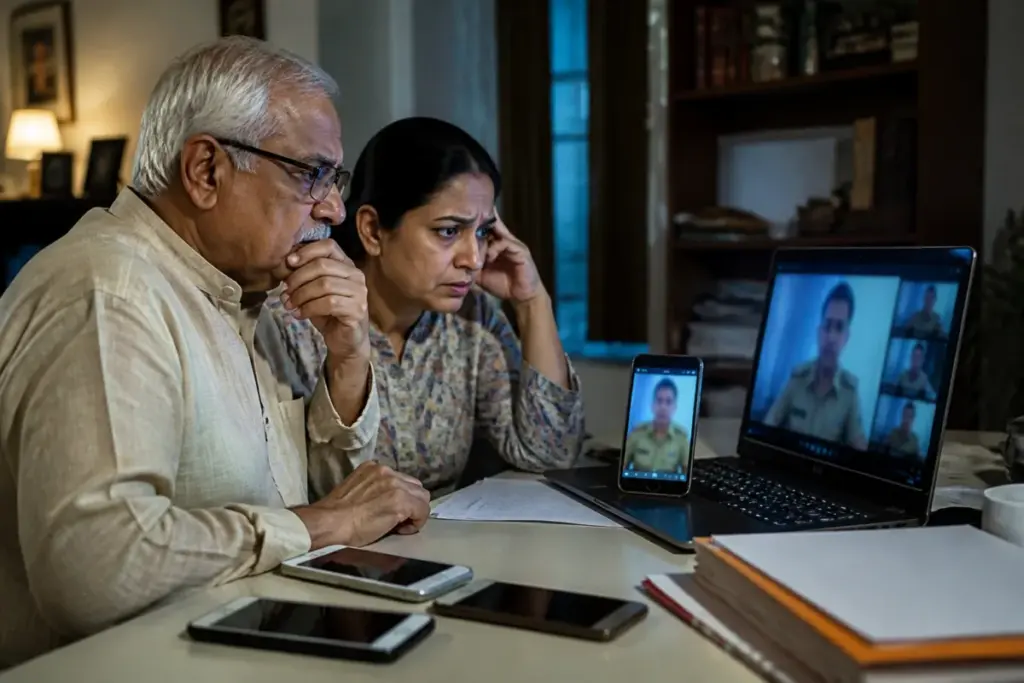
A Gandhinagar pensioner and his daughter were allegedly kept under a digital arrest for five days and made to transfer around ₹14 lakh after fraudsters impersonated telecom, CBI and law-enforcement officials, according to a report by Nav Gujarat Samay. The Gandhinagar Range Cyber Police Station has registered a complaint and begun an investigation.
The 81-year-old man and his daughter live in the Sargasan area of Gandhinagar. The alleged fraud took place between October 4 and October 9, when the callers warned the pensioner that a SIM card purchased in his name in Mumbai had been used to send pornographic videos and harassment messages.
The fraudsters allegedly told him that a case had been registered against him with the Mumbai CBI. They further claimed that a Canara Bank account had been opened in his name, through which ₹5 lakh had been transferred to a person identified as Naresh Goyal, and that financial transactions worth ₹2 crore had taken place in the account. The callers used these allegations to claim that the pensioner was connected to a money-laundering case.
The callers then allegedly arranged video calls with people posing as officials. Some of them appeared in police uniforms, while the video calls displayed a CBI logo, according to the report. The accused also sent the family documents through WhatsApp, including what appeared to be a CBI letter, a First Information Report, photographs purporting to show Naresh Goyal’s arrest, a fund-freezing control order, an arrest warrant and a Supreme Court order.
The use of official-looking documents and continuous video calls allegedly kept the pensioner and his daughter under pressure for five days. The fraudsters told them that money had to be paid in instalments to secure release from police custody. The pensioner subsequently transferred a total of around ₹14 lakh online, the report said.
The alleged digital arrest ended when the video call suddenly disconnected. The pensioner reportedly tried to contact the callers several times, but their phones had been switched off. He then approached the Gandhinagar Range Cyber Police Station, which registered the case and started investigating the identities of the callers, the accounts that received the money and the digital documents used in the deception.
The case highlights the way cyber fraud networks combine telephone impersonation, video conferencing and forged legal paperwork to create the appearance of an official investigation. In this instance, references to the Telecom Regulatory Authority of India, the CBI, money laundering, a bank account and the Supreme Court were allegedly used together to frighten the victims into making payments. The police investigation is now the next step in establishing how the calls were made and where the transferred funds went.


