

The prospect of an exceptionally strong El Niño is being treated by investors as more than a weather risk. The climate cycle is already being linked to crop damage, higher food prices, inflationary pressure and stress across energy, metals, fertiliser and infrastructure markets. For cities, that makes El Niño a test of whether urban systems can absorb climate shocks while households, governments and businesses are already dealing with high debt, elevated borrowing costs and financial volatility.
The report, published by Economic Times and attributed to Bloomberg, says the current El Niño cycle may be unprecedented in strength. The World Meteorological Organization is cited in connection with the assessment of the phenomenon’s intensity. El Niño is associated with warming across the equatorial Pacific Ocean, but the effects described in the report extend well beyond the Pacific region through changes in rainfall, drought, flooding, crop production, energy demand and commodity prices.
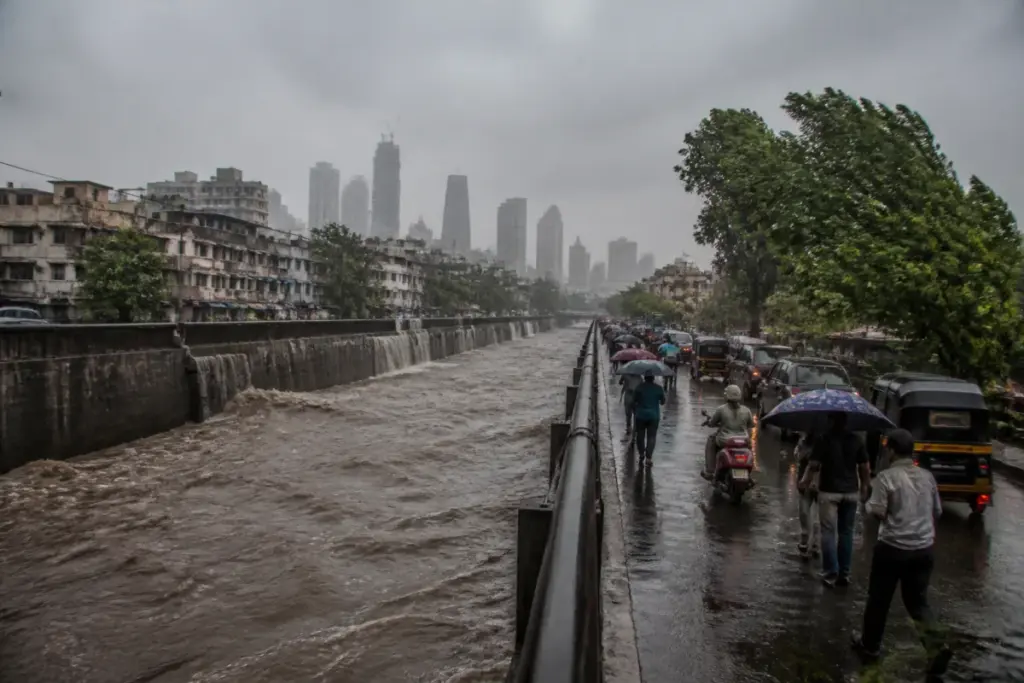
That wider reach is important for urban policy. Cities may not experience the climate cycle in the same way, but they are where many of its consequences become visible. Food price increases affect household budgets and inflation estimates. Water stress places pressure on supply systems and agriculture. Flooding tests drainage and protection infrastructure. Disrupted energy markets can increase the cost of operating buildings, transport systems and municipal services. The report does not provide city-level damage estimates, but it shows how climate-linked disruption can travel through markets and public systems at the same time.
The financial community’s response also reveals a shift in how climate risk is being understood. Katie Self, a portfolio manager at Pictet Asset Management, told Bloomberg that the current El Niño could be the most extreme on record and said preparing for the resulting disruption had become a priority. Man Group has warned that grid infrastructure, metals and fertiliser could be exposed to the cycle. T. Rowe Price has developed custom models to assess risks to its $165 billion emerging-market debt and equities portfolio.
These responses are centred on investment portfolios, but they point to a broader institutional problem: climate risks are no longer confined to environmental departments. They are becoming issues for finance ministries, utilities, infrastructure agencies, food systems and city administrations. When drought, flood and commodity shocks occur against a background of higher interest rates and debt dependence, the ability to fund adaptation becomes part of the risk itself.
The report cites an analysis by Kamesh Korangi and Rose Choy of the Anthropocene Fixed Income Institute, which said the current macroeconomic backdrop differs from earlier El Niño phases because of higher rates, debt and volatility. The analysts identified Indonesia, Brazil and Colombia as particularly vulnerable sovereigns and warned of likely spillover effects globally. The significance for urban systems is indirect but substantial: sovereign financial stress can affect the public resources available for water security, flood management, energy infrastructure and emergency response.
The physical effects described in the report are already crossing regional boundaries. Southeast Asian countries have faced severe air pollution from forest fires. India experienced its weakest monsoon in more than a decade, according to the report, while parts of South America have faced both severe floods and a lack of rain. Such uneven conditions disrupt farming and create pressure on the systems that connect rural production with urban consumption.
For cities, food is one of the clearest transmission channels. Urban residents depend on supply chains that extend far beyond municipal boundaries. When crop failures or uneven rainfall push up prices, the impact is felt in household expenditure, inflation expectations and political pressure on governments. The report specifically notes that uneven rains may keep spice prices elevated. It also links the wider El Niño cycle to crop-damaging droughts and floods, although it does not quantify the likely price effect for individual Indian cities.
Water infrastructure is another critical interface. Pictet’s Self cited smart-irrigation equipment, technologies that help plants develop longer roots, storm-water drainage and flood-protection systems as examples of solutions that could help societies cope with extreme weather. These examples connect climate adaptation with the built environment. They also show that resilience is not a single project or department: it can involve agricultural technology, drainage networks, flood barriers and the management of water across rural and urban systems.
The urban challenge is that these systems are often planned separately even though their risks are connected. Food prices may be treated as an economic issue, flooding as an engineering issue, and energy costs as a market issue. The evidence in the report points in the opposite direction. El Niño can influence all three at once. Its consequences may appear in a city as higher food bills, pressure on household finances, air pollution, water shortages, flood disruption or more expensive infrastructure inputs, even when the original climatic disturbance occurs thousands of kilometres away.
Energy markets add another layer of exposure. Zulfiqar Ali, founder and chief investment officer of ZAMS Asset Management, told Bloomberg that winter may bring together climatic, geopolitical and structural forces with unusual intensity. The report presents this as a potential source of trading opportunities, but the same convergence matters for urban operations. Energy prices influence the cost of pumping water, maintaining buildings, running transport systems and supporting commercial activity. The article does not establish a specific price trajectory, but it identifies energy as one of the markets likely to be affected by the weather cycle.
The policy landscape emerging from the report is therefore broader than disaster response. It includes the financial capacity to maintain infrastructure, the design of drainage and flood-protection systems, the use of water-efficient technologies, and the ability of institutions to monitor links between climate conditions and commodity prices. It also raises questions about whether public investment decisions adequately account for compound risks, particularly when climate disruption coincides with high borrowing costs.
The report’s most significant evidence is not a single forecast but the convergence of responses across financial institutions. Pictet is examining companies developing climate-adaptation technologies. Man Group has identified exposure in grid infrastructure, metals and fertiliser. T. Rowe Price is modelling the impact on emerging-market assets. These actions suggest that investors are treating climate resilience as an economic capability rather than a narrow environmental theme.
However, the supplied evidence also sets clear limits. It does not provide a verified forecast of exact rainfall, city-level flooding, Indian food inflation, infrastructure losses or municipal spending requirements. Nor does it establish that every region will experience the same effects. El Niño’s consequences vary by geography and season, and the report describes a global pattern of disruption without offering a detailed urban impact assessment.
That uncertainty does not reduce the planning significance. It changes the question cities must ask. The issue is not whether every forecast will be correct, but whether essential systems can function when rainfall, food supply, energy costs and financing conditions become volatile at the same time. The report shows that markets are already preparing for those connections. Urban institutions, by implication, face the same task: understanding resilience as a linked economic, infrastructural and climate responsibility.
The evidence confirms that the current El Niño cycle is being treated as an unusually broad risk to agriculture, commodities, finance and infrastructure. What remains uncertain is the precise scale and location of its urban effects. Developments worth monitoring include the evolution of the climate cycle, food and energy prices, rainfall conditions, pressure on public finances, and investment in drainage, flood protection and water-efficiency technologies.


