

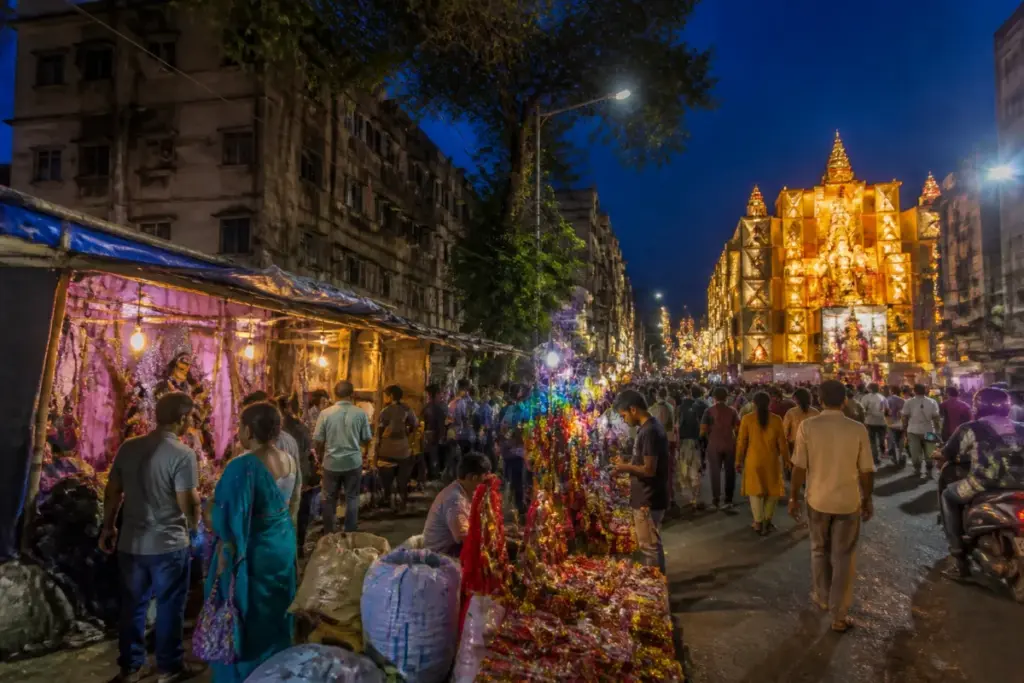
Bengal’s Durga Puja economy has expanded this year, but the gains have been distributed unevenly, with large puja organisers, malls, organised retailers and e-commerce platforms performing strongly while smaller community committees, traditional traders and hawkers face greater pressure.
Government data showed that 13,000 more pujas were organised this year than last. The increase has expanded the overall festival economy, but advertising and consumer spending have remained concentrated around prominent celebrations and established commercial locations.
Large and traditionally popular puja organisers reported that their outdoor advertising slots were fully booked. Advertising rates at these locations rose by at least 20 per cent, alongside the growing use of LED displays.
Smaller community puja committees have not benefited to the same extent. Around 30 per cent of their outdoor advertising slots remained vacant, according to Kajol Sarkar, an office-bearer of the Forum for Durgotsab, which represents more than 550 community puja committees in Kolkata, Howrah and their suburbs.
Sarkar said advertisers were focusing on specific routes rather than distributing their spending across different locations. This has made visibility and footfall along established routes more valuable to advertisers, while smaller celebrations have found it harder to attract commercial support.
The increased use of LED digital hoardings has widened the difference between large and small pujas. Prominent celebrations can command higher advertising rates and offer greater visibility, while smaller committees have struggled to secure advertisers for available spaces.
The uneven advertising market is part of a wider divergence within the festival economy. Large puja organisers, malls, organised retailers and e-commerce platforms reported strong business, while smaller committees, traditional market traders and hawkers remained under pressure. The available report does not provide a consolidated estimate of total festival spending or sales among these groups.
For community committees, advertising revenue is an important part of the local financial ecosystem around puja organisation. The reported vacancies indicate that the rise in the number of celebrations has not automatically translated into equal commercial support for every neighbourhood event.
The Forum for Durgotsab’s representation across Kolkata, Howrah and their suburbs also places the trend within a dense metropolitan network of community celebrations. The contrast between route-based advertising demand and weaker support for smaller committees shows how commercial visibility is shaping the distribution of festival-related economic activity.
The report records stronger business for major organisers and organised retail, alongside pressure on smaller participants. It does not establish whether the gap will narrow later in the festival season. For now, the clearest reported trend is that Bengal’s expanding Durga Puja economy is producing stronger returns for high-visibility celebrations than for smaller community markets and committees.


