

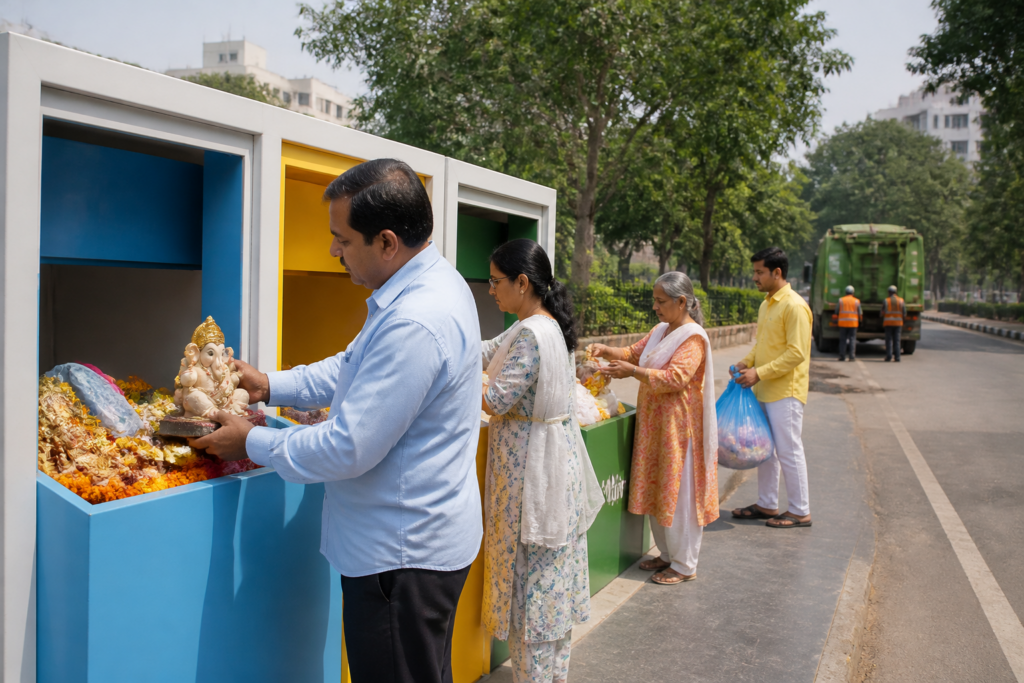
Delhi will set up 250 kiosks across Municipal Corporation of Delhi wards to help residents dispose of damaged idols and other worship materials, in a move aimed at reducing dumping in public spaces and water bodies. The facilities will collect ritual materials after ceremonies for segregation, recycling and scientific processing.
The initiative will be implemented by the Municipal Corporation of Delhi in collaboration with Plastindia Foundation. A memorandum of understanding for the arrangement was signed on Thursday at the behest of Delhi chief minister Rekha Gupta, according to a statement from the chief minister’s office.
The planned kiosks are intended to provide designated disposal points for damaged idols and worship-related items that might otherwise be left on roadsides, in open areas or near water bodies. The administration said the system would help prevent indiscriminate dumping and ensure that collected material is handled through organised processing channels.
Under the arrangement, the MCD will be responsible for staffing the kiosks, maintaining cleanliness, collecting the deposited material and transporting it to processing sites. The Delhi government will coordinate with the agencies concerned for implementation of the initiative.
The collected material will first be segregated before being sent for recycling or scientific disposal, as applicable. The report did not specify the locations of the 250 kiosks, the materials that will be accepted at each facility, or the timeline for their operationalisation.
Gupta urged residents to use the designated facilities and avoid leaving worship materials in public spaces. The appeal places the effectiveness of the programme partly on public access and participation, since the kiosks are intended to offer an alternative to informal disposal after religious ceremonies.
Mayor Pravesh Wahi said the kiosks would support the dignified disposal of religious materials while helping keep public spaces clean. The MCD’s role in collection and transportation will be central to ensuring that material deposited at the kiosks reaches processing sites rather than being mixed with routine waste.
The arrangement also creates a defined division of responsibility between the municipal corporation and the Delhi government. While the MCD will manage day-to-day operations, collection and transport, the state government will coordinate with the relevant agencies. Further details on the kiosk network, operating hours and monitoring arrangements were not available in the supplied report.
The proposed network comes as Delhi seeks to address the civic consequences of worship-material disposal beyond the period of individual ceremonies. Its immediate focus is to create dedicated collection points and connect them to segregation, recycling and scientific-disposal processes. The next public milestone will be the announcement of kiosk locations and the start of operations by the MCD.


