

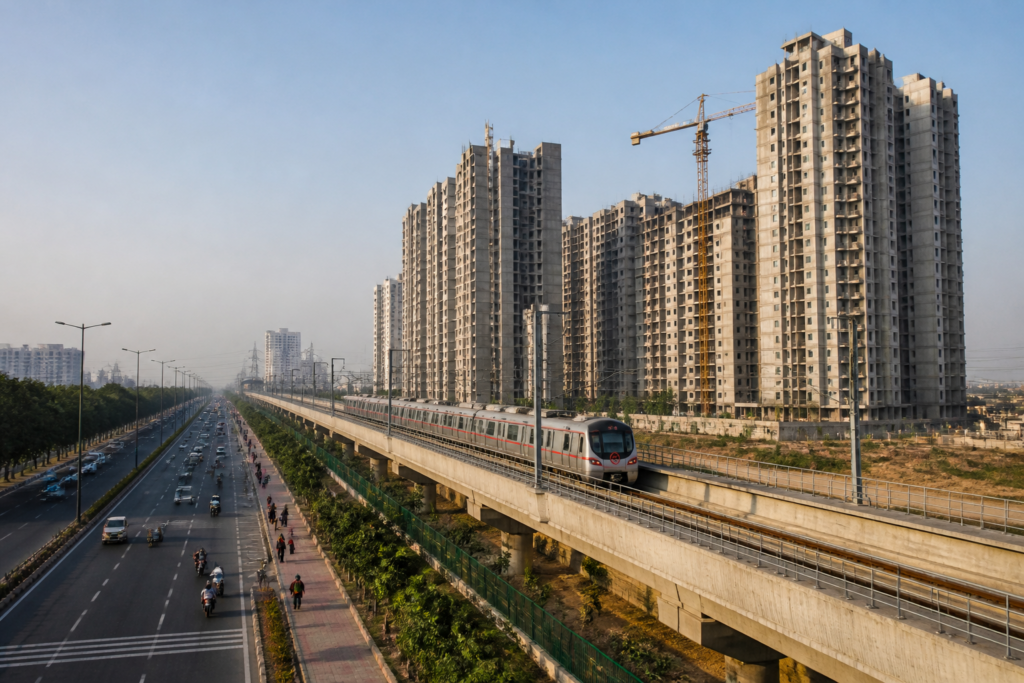
Delhi’s Transit-Oriented Development (TOD) policy is set to be implemented faster, with around 17 lakh residential units planned over the next 10 years across 207 square kilometres around metro, railway and Regional Rapid Transit System (RRTS) corridors, according to a review by the Delhi Development Authority (DDA).
The plan was discussed during a meeting between Delhi Lieutenant Governor Taranjit Singh Sandhu and senior DDA officials on Wednesday. The review focused on accelerating the policy, completing projects within defined timelines and improving coordination between the agencies responsible for planning and construction.
Under the TOD framework, development will be permitted in areas extending up to 500 metres on either side of metro corridors. Similar development is planned within a 500-metre radius of RRTS and railway stations. The identified area is expected to support planned residential development as well as related facilities, with affordable housing designated as a priority.
The DDA’s stated target is to develop approximately 17 lakh housing units under the policy over the next decade. The plan is intended to address Delhi’s growing housing requirement and increase the availability of affordable homes. The source report does not provide a project-wise breakdown of the proposed units, their locations or the expected construction schedule for individual corridors.
The policy also includes provisions around Urban Extension Road-2, or UER-2. Under Master Plan-2021, high-rise residential buildings have been included within a 250-metre zone on both sides of the road. This provision is separate from the 500-metre development zones around metro corridors, RRTS stations and railway stations described in the TOD plan.
The proposed model links housing growth with mass-transit infrastructure by concentrating higher-density development near existing or planned transport corridors. In practical terms, the approach places housing, mobility and supporting urban facilities within the same planning framework. Its implementation will therefore require coordination between the DDA, transport agencies, local authorities and development companies.
Sandhu directed officials to ensure closer monitoring of every stage of construction and better coordination among the agencies involved. He also stressed the need for integrated and sustainable infrastructure to improve connectivity and living conditions in Delhi, while asking officials to complete projects according to their prescribed timelines.
The DDA had invited applications from developer companies under the TOD policy in July. The authority is now focusing on putting the policy into effect and speeding up construction activity. Details of the selected developers, project approvals, financing arrangements and delivery milestones were not provided in the source report.
The next stage will depend on how the DDA converts the broad land-use provisions into approved projects, infrastructure plans and construction timelines. The implementation of the 17-lakh-unit target, the location of affordable housing and coordination between transport and civic agencies will be key milestones as the policy moves forward.


