

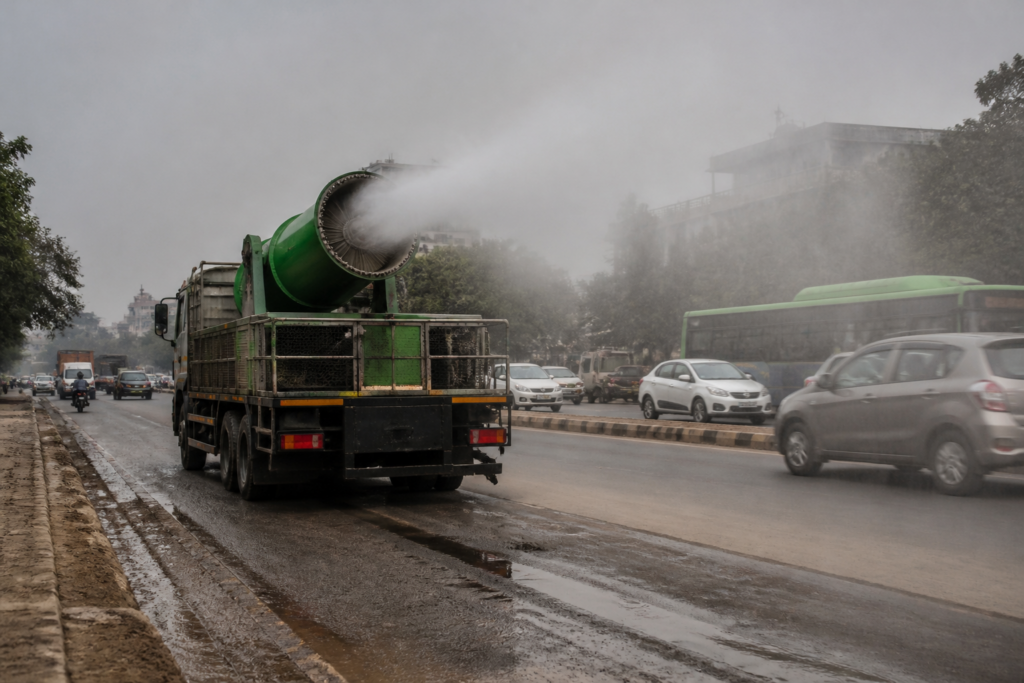
The Delhi Public Works Department plans to deploy 28 truck-mounted anti-smog guns across dust-prone roads in south and south-east Delhi, with the proposed three-phase arrangement estimated to cost Rs 50.63 crore between September 2026 and June 2029.
The services are being planned by three PWD road divisions to control road dust in areas identified as pollution hotspots, including R K Puram, Okhla, Nehru Nagar, Sri Aurobindo Marg, Jawaharlal Nehru Stadium, Mathura Road and Lodhi Road. Okhla has been identified as an official pollution hotspot, according to PWD officials cited in the report.
Under the proposed deployment, South Road Division-I and South Road Division-II will each receive eight truck-mounted anti-smog guns. South-East Road Division-II will receive 12 vehicles. Each vehicle will be required to operate an eight-hour shift and complete at least two rounds during that period.
The vehicles will have to carry GPS systems and cameras at both the front and rear. These requirements are intended to provide records of deployment and allow the department to monitor whether dust-control operations are being carried out on assigned road stretches.
The plan is being considered alongside road repair and surface-maintenance work. PWD officials said several roads in Okhla are scheduled for repairs to reduce dust pollution. The condition of roads in Sarai Kale Khan has also been highlighted, particularly on the route from the Sarai Kale Khan flyover towards Kalindi Colony and Maharani Bagh.
That corridor carries heavy traffic, making the condition of the road surface, the accumulation of soil along its edges and the effectiveness of routine cleaning significant factors in dust control. The proposed anti-smog gun services are therefore being planned as part of a wider response involving road repairs and cleaning of PWD-maintained stretches.
The move follows a recent inspection by the Commission for Air Quality Management, which examined dust and cleaning conditions on about 35 kilometres of the Inner and Outer Ring Roads. The inspection covered 25 road sections under PWD jurisdiction and was conducted by four teams.
The commission’s inspection found 17 deficiencies linked to dust and construction debris, according to the report. The findings have placed attention on the operational condition of major roads, where exposed soil, damaged surfaces, roadside deposits and construction waste can add to airborne particulate pollution.
The planned deployment will depend on the service-procurement process being undertaken by the three road divisions. The report identifies the proposed operating period as September 2026 to June 2029 and does not provide a final award date or details of the agencies that will operate the vehicles.


