

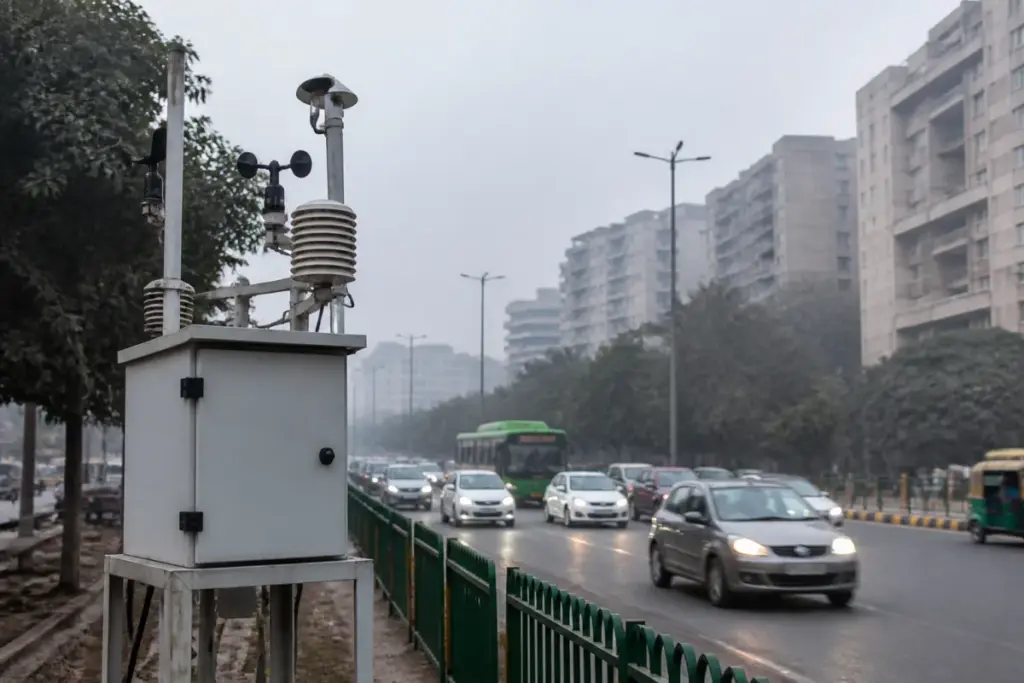
The Delhi Pollution Control Committee (DPCC) has invited e-tenders to deploy pollution-control technologies and outdoor air-quality monitoring services at 40 identified sites across the national capital, with the pilot contract carrying an estimated value of ₹104 crore.
The tender has been issued under the Delhi government’s Environment Department, with the DPCC named as the procuring organisation. According to the GeM bid document cited in the tender report, the one-year contract has been divided into 40 separate schedules, each with an estimated value of ₹2.6 crore.
The schedules will be awarded independently, with the lowest eligible bidder selected separately for each site or package. This structure allows the procurement process to consider bids for individual schedules rather than requiring one contractor to undertake the entire programme.
The tender document is dated September 17, while the bids were scheduled to open on October 6. The procurement is intended to support the deployment of innovative technologies on a pilot basis to curb outdoor air pollution at the identified locations.
The tender requires bidders to have an average annual turnover of at least ₹1 crore over the preceding three years and prior experience in providing similar services. Companies will also need to meet the quality and technical requirements specified in the document.
Eligible startups registered with the Department for Promotion of Industry and Internal Trade may receive relaxation in the experience and turnover criteria. The relaxation remains subject to compliance with the prescribed technical and quality conditions, according to the tender document.
Each schedule carries an earnest money deposit of ₹5 lakh. The document specifies a validity period of 14 months for the deposit, forming part of the eligibility and bid-security requirements for participating firms.
The tender comes as Delhi continues efforts to address worsening air pollution, particularly during the winter months, when pollution levels typically become a major public-health concern. The initiative combines site-specific deployment of pollution-control technologies with outdoor air-quality monitoring services, although the supplied tender report does not specify the technologies to be used at each location or the performance benchmarks that will determine the success of the pilot.
The division of the contract into 40 schedules also means that implementation will depend on the appointment of eligible bidders for individual packages and on the terms set out for each site. The DPCC’s procurement process will determine which companies are selected and how the pilot is operationalised across the capital.
The immediate next steps are the evaluation of bids and the award of the individual schedules under the DPCC tender. The one-year contract period will begin according to the final procurement and appointment arrangements set by the committee.


