

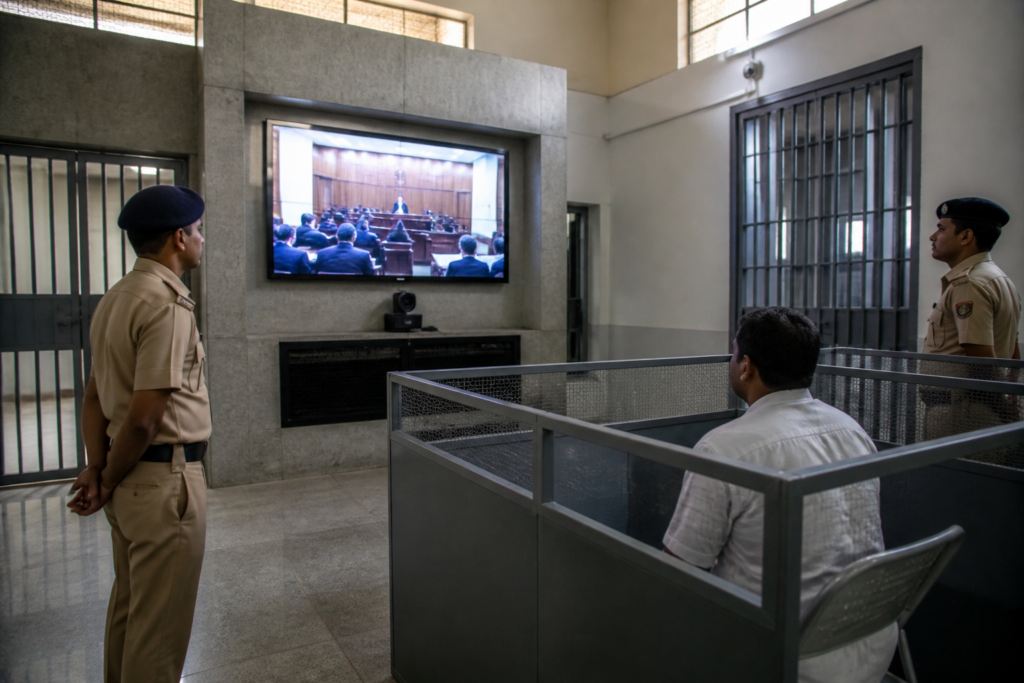
Delhi’s 16 jails will receive 840 video-conferencing systems at an estimated cost of ₹38 crore, allowing prisoners to attend many court proceedings from within prison premises and reducing the need for routine physical transport, according to a report by Jagran – New Delhi published on October 17.
The proposed Delhi jail video conferencing network is expected to save the Delhi Police around ₹15 crore every month, the report said. The savings are linked to the costs of transporting prisoners to court, deploying police personnel and operating prison vans. The systems will be installed according to the requirements of individual jails.
At present, the Delhi Police’s Third Battalion is responsible for taking prisoners to court and bringing them back after hearings. The process involves prison vans, escort personnel and, depending on the number of prisoners and the sensitivity of their cases, additional security arrangements. Expanding video conferencing could reduce the number of such movements and ease the deployment burden on the police.
The arrangement is also expected to reduce the movement of prison vans on Delhi’s roads. Lower vehicle use could cut fuel expenditure and reduce the contribution of these journeys to traffic and pollution. Prisoner movements can be delayed by congestion, which may affect court appearances and require additional coordination between jails, police teams and courts.
The report also highlighted the security risks associated with transporting prisoners outside jail premises. These include the possibility of escape attempts, attacks and the movement of prohibited items during transit or within court areas. Conducting eligible hearings from secure prison facilities could reduce exposure to some of these risks. However, prisoners whose physical presence is required in court will continue to be transported under the existing security arrangements.
The reported savings are also expected to create additional resources for prison-related services. The funds could be used to modernise jail-run factories, upgrade machinery and improve work facilities, helping expand opportunities for vocational training and employment. Other areas identified in the report include healthcare, education, skill development and rehabilitation.
The scale of the plan means its impact will depend on how consistently the systems are installed and used across the 16 jails, as well as on the cases in which courts require a prisoner’s physical presence. The next stage is the installation of the 840 systems and the expansion of video-based court appearances across Delhi’s prison network.


