

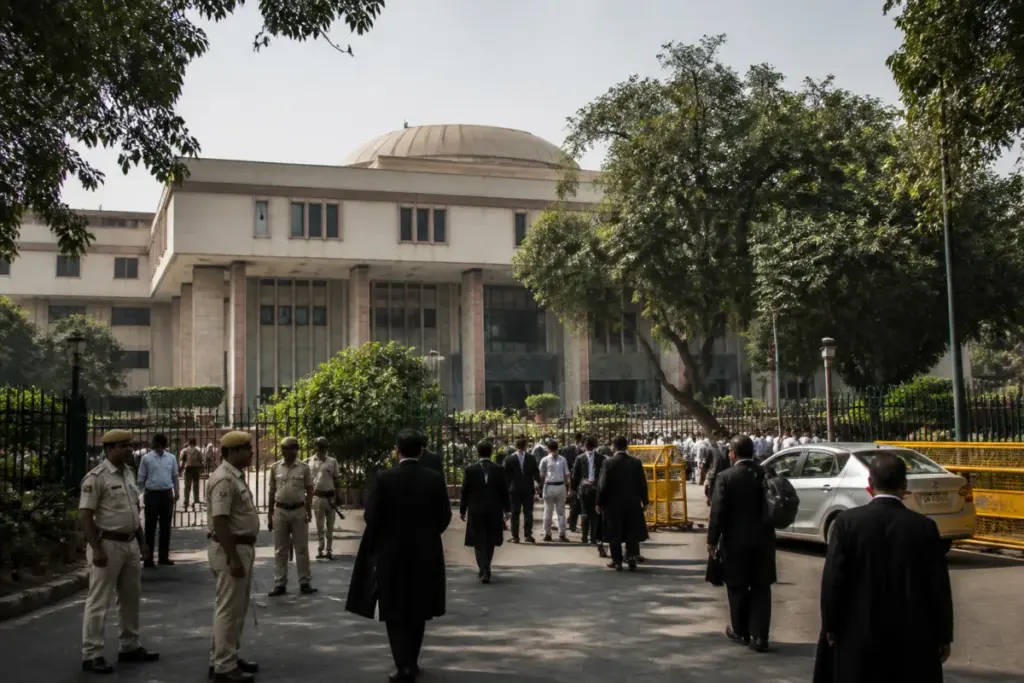
The Delhi High Court has agreed to hear a challenge by Cockroach Janta Party leaders Saurav Das and Ashutosh Ranka against the extension of their custody by a Special Executive Magistrate, after the two argued that their continued detention violated their fundamental right to liberty.
The matter was taken up by a bench led by Justice Subramonium Prasad on Wednesday, October 21, according to a report by Jagran. The hearing followed an urgent request made by the leaders’ lawyers, who sought the court’s intervention during the High Court’s week-long holiday for Dussehra.
Das and Ranka were detained by the Delhi Police on October 13. A Special Executive Magistrate’s court sent them to custody for five days on October 15. Their custody was later extended by two days, up to October 21, through an order passed on Monday.
The petition challenges the order extending their custody and claims that the magistrate acted incorrectly while assessing whether the two had complied with the conditions required for their release. The petitioners told the High Court that the magistrate had relied on the failure to furnish the necessary bond, even though sureties had been produced as required under law.
The two leaders also alleged that the custody order was passed solely on the basis of a police application and without an independent assessment of whether continued detention was necessary. They argued that the magistrate had not examined whether their conduct created a situation warranting custody.
Their petition further contended that holding a protest at a restricted location could amount to a violation of applicable rules, but should not automatically be treated as a threat to public order. The argument places the case within a broader legal question over how administrative authorities distinguish between a breach of protest restrictions and conduct that justifies preventive action.
The Special Executive Magistrate’s earlier order, as reported by Jagran, stated that the behaviour of Das and Ranka suggested that they had little regard for the law and could disturb peace and order. The High Court also made strong observations during the hearing and advised the leaders, though the supplied report does not provide the full text of those remarks.
The case highlights the role of Special Executive Magistrates in ordering preventive custody and the limits placed on such powers when personal liberty is at stake. The petitioners have asked the High Court to set aside the custody order and consider their claim that the detention is unconstitutional.
The Delhi High Court has agreed to hear the plea. The supplied report does not specify the next hearing date or record a final decision on the challenge.


