

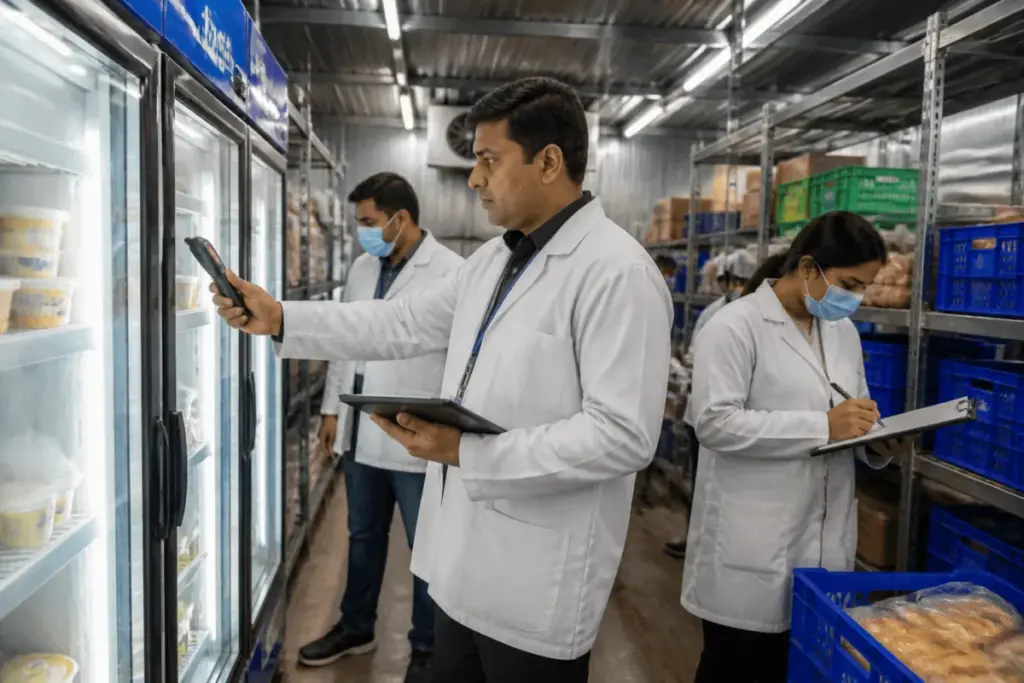
A Delhi government enforcement drive has found expired food products, pest infestations and poor storage conditions at facilities operated by online food delivery and retail companies, prompting the Food Safety Department to issue improvement notices and collect samples for testing.
The inspections were carried out ahead of the festival season at food storage premises in Uttam Nagar, Wazirpur Industrial Area, Daryaganj and Rohini. Officials reported expired green peas, Greek yoghurt, eggless chocolate-chip brownies and cow ghee at one facility, while another site had flies, mosquitoes, a lizard and spider webs.
The inspections also found lapses in maintaining prescribed storage temperatures, inadequate pest-control arrangements and gaps in cleaning records. At the Wazirpur premises, officials said the cleaning schedule and related checklist were unavailable. At a major online food aggregator’s Daryaganj facility, dirty crates and dust were found in storage areas, while rat traps were either insufficient or positioned incorrectly.
At the aggregator’s Rohini store, food items were not segregated, creating a potential risk of cross-contamination, according to the official statement. The findings highlight the importance of warehouse-level controls in a delivery market where consumers may order food and groceries without seeing the premises in which products are stored before dispatch.
The department also tested 59 samples of desi ghee. Nineteen were found to be unsafe and four failed to meet food safety standards, officials said. The authorities stated that action would be taken under the applicable rules based on the deficiencies identified during the inspections.
Chief Minister Rekha Gupta has directed officials to strengthen monitoring of markets, food storage facilities and establishments supplying food products, according to the Chief Minister’s Office. The inspections were conducted by the Delhi government’s Food Safety Department as part of preparations for the festival season, when demand for packaged food, dairy products, sweets and cooking ingredients typically increases.
The enforcement action places online food delivery and quick-commerce storage facilities within a wider municipal food-safety chain that includes procurement, warehousing, temperature control, pest management, product segregation and last-mile dispatch. The department’s findings indicate that compliance failures were not limited to product expiry dates but also involved the day-to-day systems used to keep food safe inside distribution premises.
Officials said food samples had been collected from the inspected establishments and improvement notices were issued to the businesses concerned. Further action will be based on the deficiencies and test results identified through the enforcement process.


