

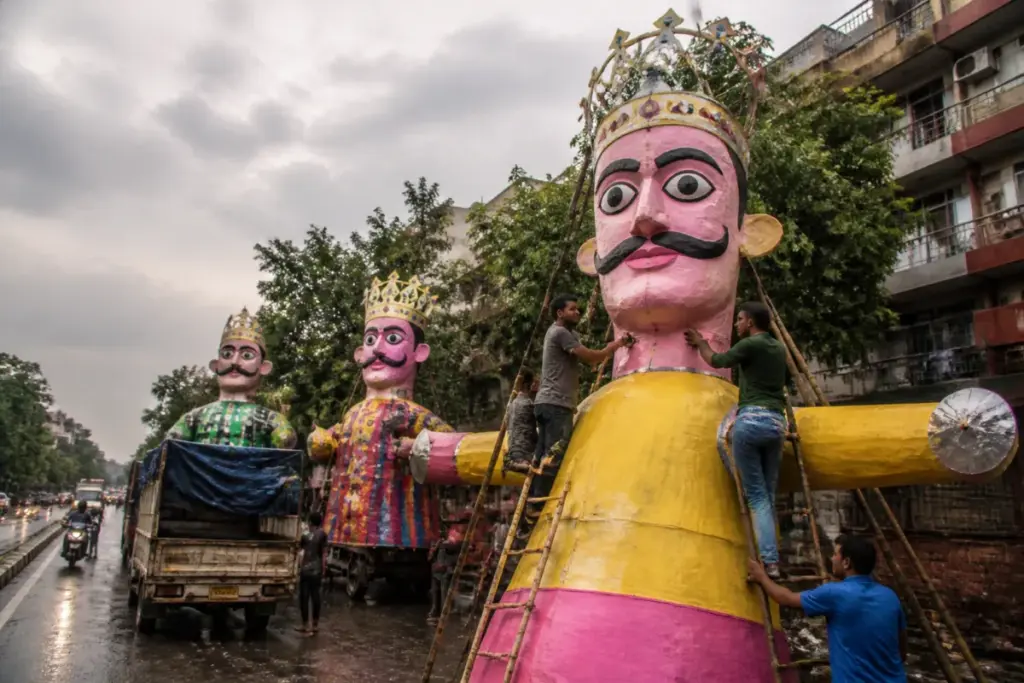
Delhi’s Dussehra effigy trade is facing last-minute pressure after recent rain damaged Ravana, Kumbhakarna and Meghnad figures displayed along pavements between Rajouri Garden and Tagore Garden, with artisans working against the festival deadline and absorbing financial losses.
Hundreds of effigies have been placed along the roadside stretch ahead of Dussehra, ranging from one foot to 50 feet in height. The structures include traditional ten-headed figures as well as customised versions of Ravana shown with six-pack abs, riding a motorbike, perched on a dragon, driving a car or seated on a throne.
Artisans were making final repairs and adjustments with one day remaining before the festival, while trucks were being loaded with the colourful structures. The roadside display and loading activity have turned the area into a temporary production and distribution zone for a seasonal trade that depends on completing and selling the effigies within a narrow window.
Sandeep, an artisan from Chittorgarh who had worked for a month, told The Times of India that rain had damaged 30 effigies measuring between 15 feet and 25 feet. Each structure had an average production cost of Rs 7,000, putting the value of the damaged stock at about Rs 2.1 lakh if all 30 pieces were rendered unsellable.
Another artisan, Akash, from nearby Raghubir Nagar, reported water damage to 16 effigies measuring between 20 feet and 35 feet. He estimated his loss at about Rs 1,000 per effigy, or approximately Rs 16,000 in total. The report did not specify whether the damaged pieces could be fully restored or sold at their original prices.
The artisans were attempting to recover part of their losses through last-minute bargaining, while also repairing water-damaged work and meeting delivery deadlines. The compressed sales period leaves little time to replace ruined materials or remake large structures, making weather disruptions particularly consequential for workers whose income is tied to the annual festival season.
The display also reflects how temporary cultural production occupies Delhi’s streets and pavements before major festivals. Effigies are assembled, repaired, stored and transported through neighbourhood spaces before being moved to celebration grounds. For the artisans, however, the immediate priority remained completing orders and getting the structures onto trucks before Dussehra.


