

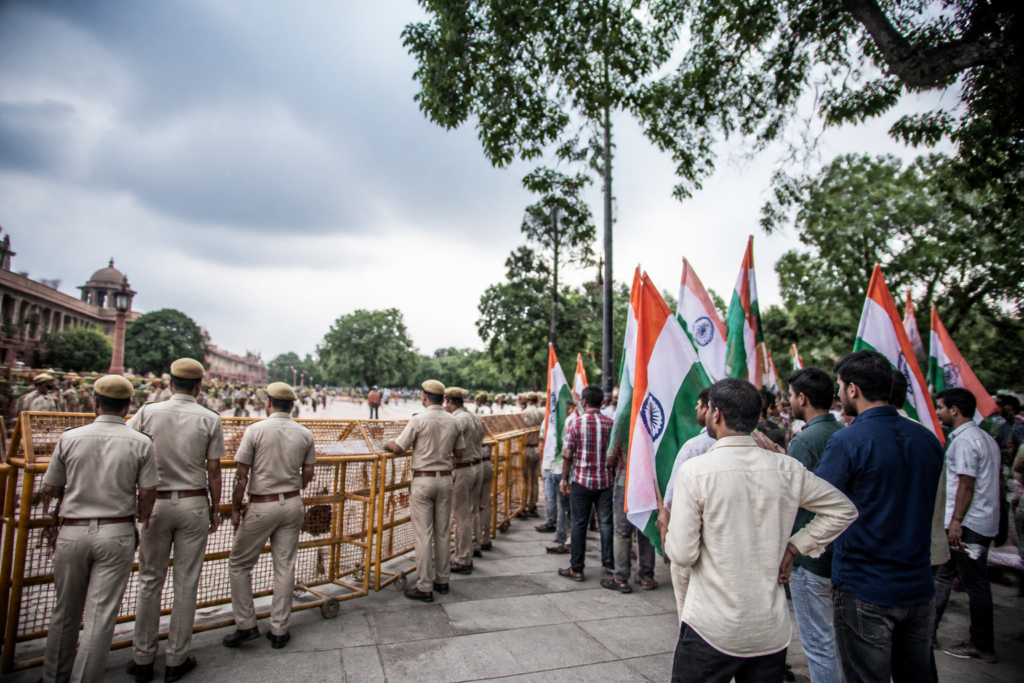
The arrests of Cockroach Janta Party leaders Ashutosh Ranka and Saurav Das after they entered the denotified Jantar Mantar area have brought an obscure legal mechanism into public view: the preventive bond for keeping peace and maintaining good behaviour. The episode shows how a provision designed to prevent an anticipated breach of peace can quickly become central to disputes over protest, public space and police power.
According to the Delhi Police, Ranka, Das and CJP founder Abhijeet Dipke were first arrested on October 10 in what the police described as preventive action under Sections 126 and 170 of the Bharatiya Nagrik Suraksha Sanhita, or BNSS. They were produced before a Special Executive Magistrate the following day and released after furnishing a surety bond of Rs 50,000 each for maintaining peace and good behaviour for one year.
The police later alleged that Ranka and Das breached the conditions of that bond when they returned to Jantar Mantar with other volunteers. They were taken into custody again and faced two FIRs containing allegations including trespassing, violation of prohibitory orders, obstructing a public servant and breach of a bond. Their lawyers disputed that account, saying the two had merely gone to a public place with volunteers, waved the national flag and raised the slogan ‘Bharat Mata Ki Jai’.
The dispute is therefore not limited to whether the leaders entered a particular area or whether the police had issued restrictions. It concerns the legal status of an undertaking signed before an inquiry has been completed, and the point at which conduct viewed by police as a threat to public peace becomes a punishable breach of that undertaking.
## What BNSS bond provisions actually do
Section 2(1) of the BNSS defines a bond as an undertaking for release under which an accused agrees to abide by conditions set by the court. A bail bond is different in one important respect: it requires a surety in addition to the undertaking. The surety may be an individual who guarantees compliance, or a specified amount of money that may be forfeited if the conditions are violated.
The BNSS also allows authorities to require bonds for keeping peace and maintaining good behaviour. Sections 125 to 143, contained in Chapter IX, establish the procedure for these preventive measures. Unlike a conviction following a completed offence, the process is based on information that a person may commit an act affecting public peace or public tranquillity.
Section 126 allows an Executive Magistrate to act when information is received that a person is likely to commit a breach of peace or disturb public tranquillity. If the magistrate considers there is sufficient ground to proceed, the person may be asked to show cause why they should not be ordered to execute a bond or bail bond. The period for keeping the peace under this provision cannot exceed one year.
Section 170 separately empowers a police officer to arrest a person whom the officer believes is likely to commit a cognizable offence, where there is reason to believe that the person is likely to commit such an offence. The Delhi Police cited both provisions in connection with the first arrests.
The distinction matters because preventive action is meant to operate before an alleged offence takes place. It gives the administration a legal route to intervene on the basis of anticipated conduct, but it also makes the factual foundation for the intervention particularly important. The relevant question is not only what a person has done, but what information led the magistrate or police to conclude that a breach was likely.
## The unresolved issue of breach
The form prescribed under Form Number 13 of the BNSS describes a bond to keep the peace as an undertaking not to commit a breach of peace or do an act that may probably occasion such a breach during the specified period or until the inquiry is completed. The amount covered by the undertaking may be forfeited in case of default.
The supplied report states that Section 126 begins with a show-cause process and that the magistrate must issue an order setting out the term, surety and bond requirements. An inquiry under Sections 135 and 136 then examines the truth of the information that prompted the proceedings. If the inquiry establishes the basis of the allegations and the statutory requirements are met, the magistrate may issue a final order directing the person to execute a bail bond, with or without sureties, for keeping the peace or maintaining good behaviour.
That sequence creates a significant procedural distinction in the CJP case. The inquiry involving Ranka and Das was still pending, according to the report. The Delhi Police nevertheless treated the signed bond and the subsequent conduct as grounds for registering FIRs that included breach of bond. The lawyers, on the other hand, argued that entering Jantar Mantar with volunteers and raising slogans did not amount to a violation of the undertaking.
The central legal question is consequently whether the conduct alleged by the police falls within the specific terms of the bond and the statutory meaning of a likely breach of peace. A bond is not simply a general direction to avoid disagreement with the authorities. Its terms, the evidence supporting the preventive action and the procedure followed after an alleged breach all affect the legality of the next step.
The report also notes that the law contains provisions for arrest and detention pending inquiry. However, the magistrate’s order of October 11 released the individuals after the bond and surety were furnished. This adds another layer to the dispute: whether later detention is being treated as enforcement of an existing preventive process, or as a consequence of a new alleged offence requiring separate justification.
## Public space and the right to assemble
Jantar Mantar occupies a distinctive place in Delhi’s public-space system. It is associated with demonstrations, but its use is also subject to restrictions and police control. The CJP episode illustrates the tension created when a space recognised as a site for public expression is simultaneously managed through prohibitory orders and preventive policing.
Article 19(1)(b) of the Constitution protects the right to assemble peacefully and without arms. The right is subject to reasonable restrictions, including restrictions linked to public order. The issue in the present case is therefore not whether the right to assemble is unlimited. It is how the restriction is applied, what evidence supports it and whether the preventive procedure remains proportionate to the conduct alleged.
The report refers to the Supreme Court’s decision in Madhu Limaye v Sub-Divisional Magistrate, in which the court upheld preventive powers under the chapter dealing with public peace but warned against long-term preventive detention while inquiries remain pending. The judgment also distinguished public order from acts that merely disturb the serenity of others, observing that public order concerns conduct that may endanger the security of the state or cause a broader disruption.
That distinction is important for urban administration because public spaces routinely bring together competing claims. Demonstrators seek visibility and access; residents, commuters and nearby institutions may seek safety and uninterrupted movement; and the police are responsible for managing order. A legal framework that does not clearly distinguish between inconvenience, unlawful obstruction and a genuine threat to public peace can expand preventive powers beyond their intended purpose.
The facts supplied in the report do not establish the final legal position in the CJP matter. They record the police version, the lawyers’ response, the provisions invoked and the fact that the inquiry remained pending. Any determination of whether the bond was breached would therefore depend on the applicable bond terms, evidence about the October 14 incident and the subsequent judicial process.
## The administrative mechanics behind a protest arrest
The case also demonstrates how several institutions can shape one episode. The police initiate preventive action or make an arrest under the relevant statutory powers. An Executive Magistrate then considers whether the information is sufficient to begin proceedings and whether a bond should be required. The person is expected to receive an opportunity to show cause, while the inquiry examines the basis of the allegations.
This administrative structure is different from a conventional criminal prosecution, where the focus is generally on an offence that has already occurred. Preventive proceedings are intended to manage risk before an anticipated disturbance. That makes documentation especially significant: the information received by the magistrate, the reasons for proceeding, the precise conditions of the bond and the evidence of an alleged breach determine how far the process can legitimately extend.
The police said the three CJP members were produced within 24 hours, as required by law, and that the Special Executive Magistrate, Delhi Cantonment, released them after a Rs 50,000 surety bond was filed for one year. The subsequent arrests show that release on a bond does not end the administrative process. It shifts the dispute to compliance with the undertaking and to the consequences of alleged non-compliance.
For citizens, the practical meaning of such proceedings may not be immediately clear. A person can be released without a conventional bail order, yet remain subject to a continuing undertaking. A violation may expose the person to further police action, while the underlying inquiry into the preventive action may still be incomplete. The legal system therefore has to maintain a clear separation between the initial preventive assessment, the inquiry and any later allegation that the bond was breached.
## What the episode reveals about preventive governance
The CJP arrests are significant because they place an ordinary feature of urban administration—the regulation of a protest site—within a more consequential legal framework. The BNSS provisions are not limited to one location or one political group. They establish a general mechanism through which the state can respond to anticipated breaches of peace across public spaces.
The episode also shows why procedural safeguards matter in preventive law. The protection of public order and the protection of peaceful assembly are not automatically opposing objectives. The legal question is whether the restriction is based on sufficient information, whether the person has received the required opportunity to respond and whether detention or further action is justified by the procedure and evidence.
At this stage, the supplied account confirms that the police invoked Sections 126 and 170, that the individuals were released on bonds, that they were later taken into custody after attempting to enter Jantar Mantar and that the police and lawyers offered different accounts of what constituted a breach. It does not establish the final outcome of the inquiry or whether a court has conclusively determined that the bond conditions were violated.
That unresolved process is the essential point. Preventive bonds can help authorities respond to credible threats before violence or serious disruption occurs, but their legitimacy depends on precise conditions and disciplined procedure. The next significant development in the CJP matter will be the outcome of the pending inquiry and the judicial consideration of the arrests, the alleged breach and the relationship between the bond proceedings and the constitutional right to assemble peacefully.


