

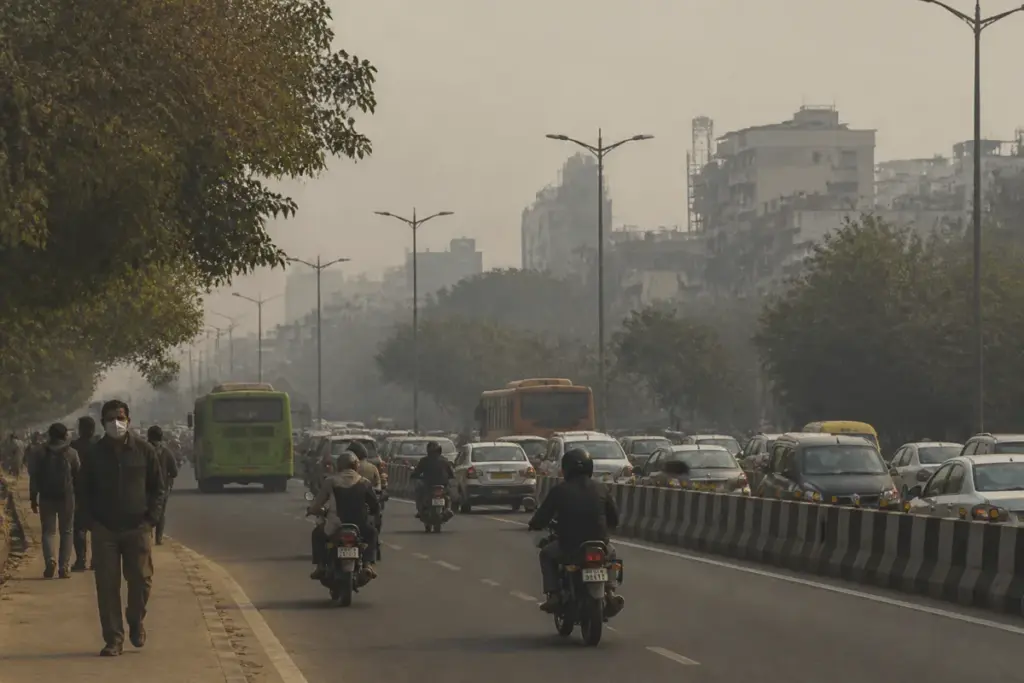
Delhi’s air quality deteriorated sharply on Saturday, with the city’s average Air Quality Index rising to 159 from 90 a day earlier and 12 areas recording AQI levels above 200, which falls in the poor category. The deterioration followed a brief improvement after rain and strong winds earlier in the week.
The affected locations include residential neighbourhoods as well as areas with heavy traffic, according to the report. At 4 pm on Saturday, the AQI in 12 parts of the capital had crossed the 200 mark, indicating that pollution was no longer confined to isolated monitoring stations.
Delhi and several parts of north India received rain accompanied by strong winds on Thursday. The weather brought down temperatures and temporarily reduced pollution levels. However, the improvement did not last. The report attributed the renewed rise partly to below-normal rainfall in September, which has left the soil less moist and increased the amount of dust being released into the air.
Light rain has produced short-lived reductions in pollution, but levels have risen again soon afterwards. The India Meteorological Department forecast cited in the report indicates that Delhi is unlikely to receive rain over the next three to four days. The absence of rain could allow the upward movement in pollution levels to continue, although the report does not provide a new area-wise forecast.
Data cited from AQI.in showed rapid changes over a 24-hour period. The index stood at 135 at 10.30 am on October 16 before improving to 65. It then rose to 240 by the evening, followed by a reading of 216 at 10.30 am on October 17. These fluctuations show how quickly Delhi’s air quality changed after the temporary weather-driven improvement.
Despite the weekend deterioration, Delhi Environment Minister Manjinder Singh Sirsa said the city’s air had been cleaner this year than in any year since 2016, excluding the Covid-19 year of 2020. According to figures cited by the minister, Delhi recorded 211 days of good, satisfactory or moderate air quality up to October 17 this year. The comparable figures were 200 days in 2025, 209 in 2024, 206 in 2023 and 110 in 2016.
The latest readings underline the volatility of Delhi’s air quality. Short periods of rain and wind can bring temporary relief, but the return of poor readings across multiple locations has again placed weather conditions, dust and traffic-linked pollution in focus. The next significant indicator will be whether rainfall returns after the forecast dry spell and whether the AQI remains elevated across the capital’s monitoring network.


