

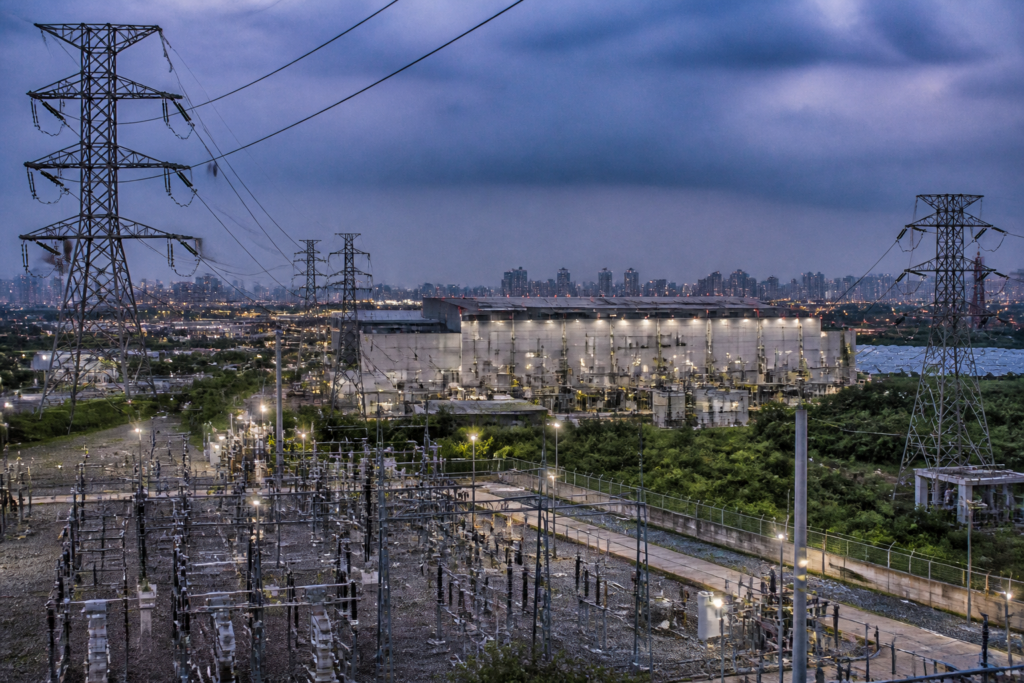
Tata Power’s 2.8 GW data centre opportunity pipeline shows that India’s digital infrastructure expansion is becoming a power-system challenge as much as a technology story. The company is pursuing renewable energy, transmission, distribution, storage, cooling and utility infrastructure opportunities, while strengthening Mumbai’s grid to support large hyperscale facilities.
The scale of the opportunity is divided across three parts of Tata Power’s business. The company has identified approximately 430 MW of upcoming load under its distribution network, 1,236 MW of transmission-linked opportunities and 1,150 MW of green energy capacity under active engagement. Together, these opportunities represent more than 2.8 GW of potential demand and supply-related work connected to the data centre ecosystem.
The figures are significant because data centres do not operate like ordinary commercial buildings. Their requirements extend beyond a connection to the electricity network. Tata Power said its offering includes powered land, transmission and grid connectivity, renewable energy, storage, cooling and utility infrastructure. This indicates that the physical conditions for digital services are increasingly being assembled as an integrated infrastructure package rather than as an isolated power-supply contract.
The company has 29 active workstreams involving 18 global and domestic data centre operators, according to its statement. It said it is supporting some of India’s largest hyperscalers and AI-ready digital infrastructure projects. The statement does not disclose the individual operators, project locations or commissioning schedules, but the number of workstreams suggests that demand is being developed across multiple projects rather than through a single facility.
Mumbai is central to this expansion. To meet the rising power requirement of hyperscale data centres in the Mumbai Metropolitan Region, Tata Power is upgrading its 110 kV and 220 kV transmission network. The company is augmenting transformation and transmission capacities and building network redundancy, which is intended to support reliable and uninterrupted supply for large digital infrastructure projects.
This is an important shift in the urban infrastructure question around data centres. The visible project may be a large, secure building filled with servers, but its operational dependence extends across substations, transmission corridors, receiving stations and distribution networks. In the MMR, the ability to host additional digital infrastructure will therefore depend not only on land and fibre connectivity, but also on whether the electricity network can deliver continuous power with sufficient redundancy.
Tata Power said it is developing new receiving stations and advancing a 400 kV transmission ring network in the region. These additions are intended to create a more resilient and secure grid capable of supporting further data centre growth. The company has placed this work within its Rs 15,000 crore Mumbai Grid Upgradation and Expansion Plan.
The stated investment plan connects private-sector data centre demand with a broader metropolitan electricity upgrade. A grid project of this scale is not limited to the immediate needs of one operator or one building. It involves strengthening the network through which multiple categories of urban users receive electricity. However, the supplied statement does not specify how the Rs 15,000 crore plan will be allocated between data centre-related requirements and other network needs, nor does it provide a project-wise construction timeline.
The power requirement is expected to grow as artificial intelligence, cloud computing and digital platforms expand. The Ministry of Power, using estimates from the Central Electricity Authority, projects that AI-led data centres could add approximately 26.3 GW of electricity demand by financial year 2031-32. This national estimate places Tata Power’s pipeline in a wider energy transition: the growth of digital services is creating a new category of large, concentrated and reliability-sensitive electricity demand.
That demand also changes the role of utilities. Tata Power is positioning itself not simply as an electricity supplier but as a provider of several infrastructure components required by data centre operators. The company’s stated package combines conventional grid functions with renewable power, storage, cooling and utility systems. For urban regions, this model could make electricity planning more closely connected to land-use decisions, industrial development and the location of digital infrastructure.
The distribution of Tata Power’s pipeline offers some indication of where the company sees commercial opportunity. The 1,236 MW transmission-linked component is larger than the 430 MW of upcoming load identified under its distribution network, while the 1,150 MW green energy opportunity is of a comparable scale. This mix suggests that the expansion is not confined to supplying power at the final connection point. Transmission capacity and renewable energy are being treated as core parts of the data centre proposition.
The infrastructure challenge is also about continuity. Data centres support cloud platforms, digital services and AI-related operations that are designed to run continuously. Tata Power’s emphasis on network redundancy, receiving stations and a 400 kV transmission ring reflects the need to reduce dependence on single network paths. The statement does not provide reliability targets, outage data or the expected capacity of each proposed receiving station, so the operational performance of the planned upgrades cannot yet be assessed from the available information.
For the MMR, the question is how new digital demand will be integrated into an already extensive metropolitan power network. Tata Power has said that it is upgrading both 110 kV and 220 kV systems while developing higher-voltage infrastructure. The combination points to work across different layers of the grid, from transmission capacity to the networks that distribute power closer to consumers and facilities.
The institutional landscape involves several actors. Tata Power is identifying and developing the commercial and network opportunities; data centre operators are generating the demand; and the Ministry of Power and the Central Electricity Authority provide the national demand context cited in the statement. The supplied material does not detail approvals, land arrangements, tariffs, environmental clearances or the roles of other public agencies in the MMR. Those details will determine how the announced infrastructure plans translate into operating projects.
The numbers also show why data centres are becoming an urban planning concern. A potential 2.8 GW pipeline and a projected national AI-related demand addition of 26.3 GW by FY2031-32 indicate that digital infrastructure can create electricity requirements comparable to major industrial loads. Unlike many conventional developments, these facilities require high reliability and substantial supporting systems, which can influence where new substations, transmission links, renewable generation and storage are built.
Tata Power’s announcement confirms three developments: the company is pursuing a diversified data centre-related pipeline; Mumbai’s grid is being upgraded to support hyperscale demand; and national electricity requirements are expected to rise as AI-led data centres expand. It does not yet establish how many projects will reach construction, when the proposed MMR upgrades will be completed or how the additional demand will affect other electricity users. The next milestones to watch are the conversion of active workstreams into commissioned facilities, progress on the receiving stations and 400 kV ring network, and further detail on the implementation of the Mumbai grid plan.


