

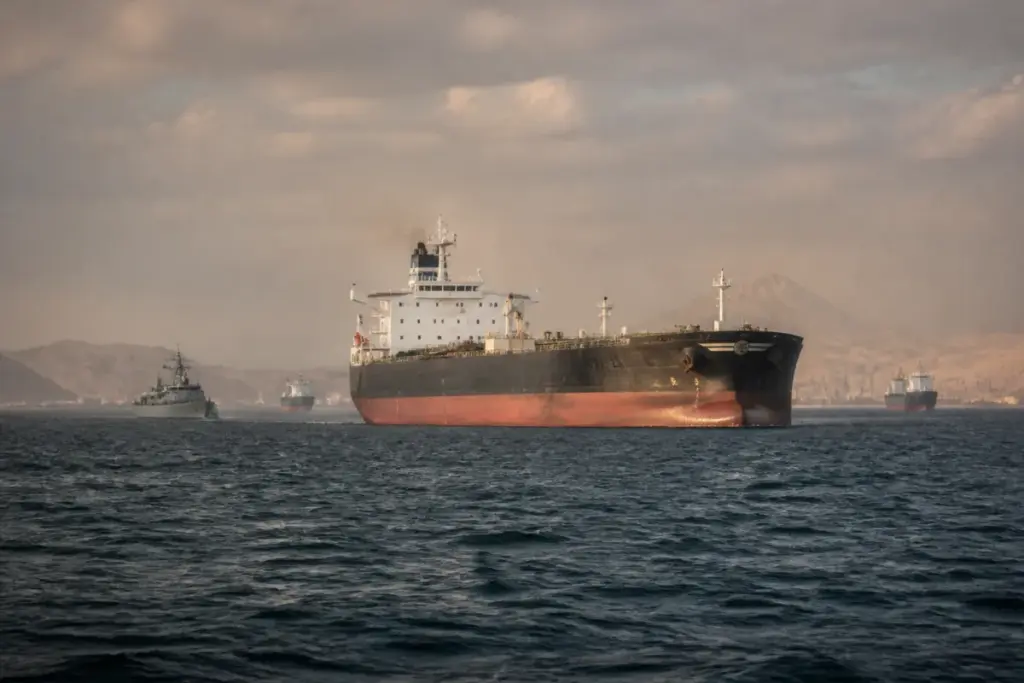
Global crude shipping costs have risen sevenfold in a year as war-related risks in the Strait of Hormuz, ship-to-ship transfers and higher tanker operating expenses disrupt major oil routes, according to a Goldman Sachs report cited by Economic Times. The surge is placing particular pressure on Asian refiners that depend on crude arriving from distant suppliers.
The global average crude freight rate has climbed above USD 20 per barrel from about USD 3 per barrel a year ago, Goldman Sachs said. More than half of the USD 20-per-barrel year-on-year increase is attributed to risks linked to the Strait of Hormuz and the rise in ship-to-ship transfers outside the Persian Gulf.
Brent crude crossed USD 110 per barrel during the week and was trading at around USD 111.51 per barrel at the time of reporting. Another crude benchmark was quoted at approximately USD 99.31 per barrel. Although most crude benchmarks do not directly include transportation costs, the rise in freight rates can reduce refiners’ profitability and influence where they source crude.
Goldman Sachs identified five main contributors to the increase in global crude freight rates. The war-risk premium for vessels crossing the Strait of Hormuz accounts for about USD 7 per barrel, while ship-to-ship transfers outside the Persian Gulf add another USD 4. Higher maritime fuel prices contribute USD 4, inefficient tanker allocation and vessel diversions add USD 3, and restrictions affecting the Iranian tanker fleet account for a further USD 2.
The increase began in the very large crude carrier segment and on Middle Eastern routes before spreading to major crude trading routes. Long-distance voyages have been particularly affected. Goldman Sachs said the factors supporting higher freight rates could persist as long as the conflict in the Middle East continues.
For Asian refiners, the cost increase creates a choice between passing higher freight expenses on to consumers and accepting lower net refinery margins. Passing on the full increase may be difficult in markets where alternatives to oil, including electric vehicles in China, are available or where retail fuel prices are regulated. The report said the pressure on refining margins could lead to lower refined-fuel output and contribute to higher global fuel prices.
The disruption is also changing the relative position of crude suppliers. Producers that depend on distant buyers may have to offer larger discounts to preserve demand, while suppliers located closer to major consumption centres could benefit from demand shifting towards shorter routes. Goldman Sachs identified Brent in north-western Europe and ESPO in Russia as examples of supplies that could gain from some reallocation of demand.
Tanker operating costs have added to the pressure. Global maritime fuel oil prices have risen by nearly USD 50 per barrel, or about 70% year on year, amid weak exports from the Persian Gulf and Russia and resilient bunker demand from tankers and container ships. Rising crew salaries have also increased vessel operating expenses.
The immediate impact is being felt across the oil supply chain, from shipping and refining to fuel markets. The duration of the pressure will depend on the continuation of Middle East conflict-related risks, vessel diversions, tanker availability and the ability of refiners and suppliers to adjust their sourcing decisions.


