

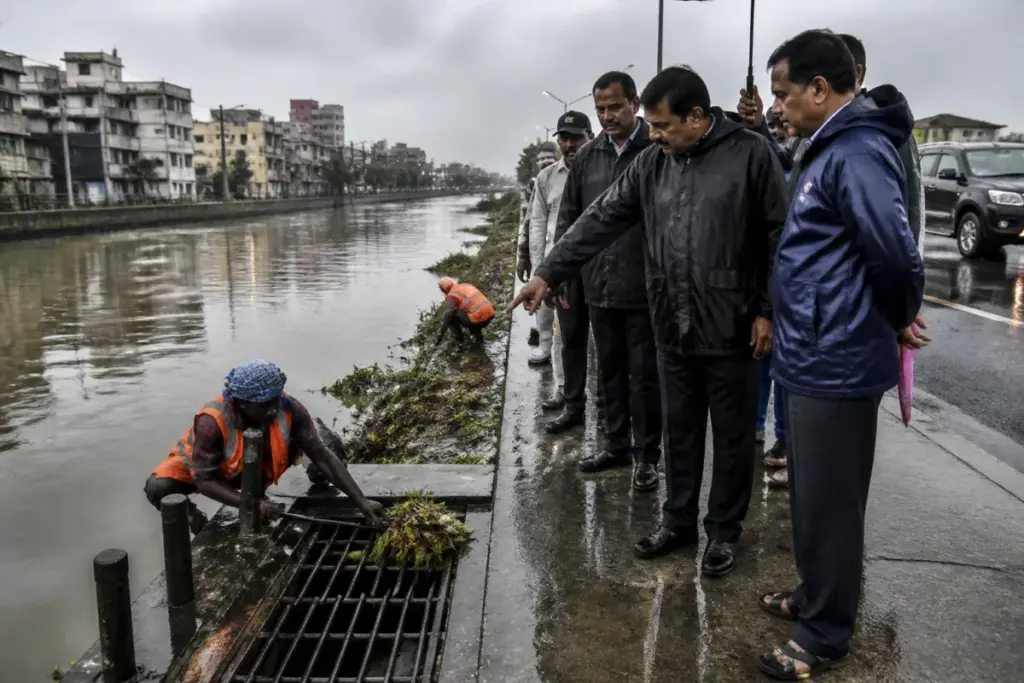
Chennai Mayor R Priya inspected rainwater removal, storm water drain and canal maintenance works across the city on Wednesday as widespread rainfall affected Corporation areas, directing officials to speed up drainage work and monitor water flow continuously.
The inspections covered the Thiru Vi Ka Nagar zone, where Priya reviewed precautionary measures for the northeast monsoon. She first visited Perambur Subway to inspect rainwater removal operations before moving to Stephenson Road near the Sengai Sivam Bridge. There, she checked whether water was flowing without obstruction through the Otteri Nullah Canal.
The Mayor also reviewed water flow in the Gandhi Canal in Ward 72 and inspected ongoing storm water drain construction and maintenance works on Powder Mills Road in the Basin Bridge area. She instructed officials to expedite the storm water drain works around Basin Bridge and directed staff to keep monitoring canals and storm water drains across Chennai to prevent blockages.
At Ripon Building, Priya inspected the monitoring activities being carried out by the Greater Chennai Corporation and instructed officers to take immediate action on grievances received from residents. She later inspected rainwater removal work in stagnant areas of AGS Colony along with South Chennai MP Thamizhachi Thangapandian.
The field inspections were followed by the inauguration of a new Ward 181 office building in Kottivakkam. The facility was built at a cost of Rs 97.98 lakh and was opened for public use by Priya and Thangapandian.
The two public representatives also laid the foundation stone for a compound wall at a Tamil Nadu Urban Habitat Development Board residential site in Kotturpuram. The wall is being built at a cost of Rs 23.10 lakh.
They further inspected a newly constructed community hall on CP Ramaswamy Road. The facility was built at a cost of Rs 7.97 crore, with Rs 5.50 crore contributed from the South Chennai MP’s fund and Rs 2.47 crore from the Greater Chennai Corporation’s Capital Fund. The Corporation’s instructions for continued monitoring of canals and storm water drains form the immediate next step in the city’s monsoon preparedness operations.


