

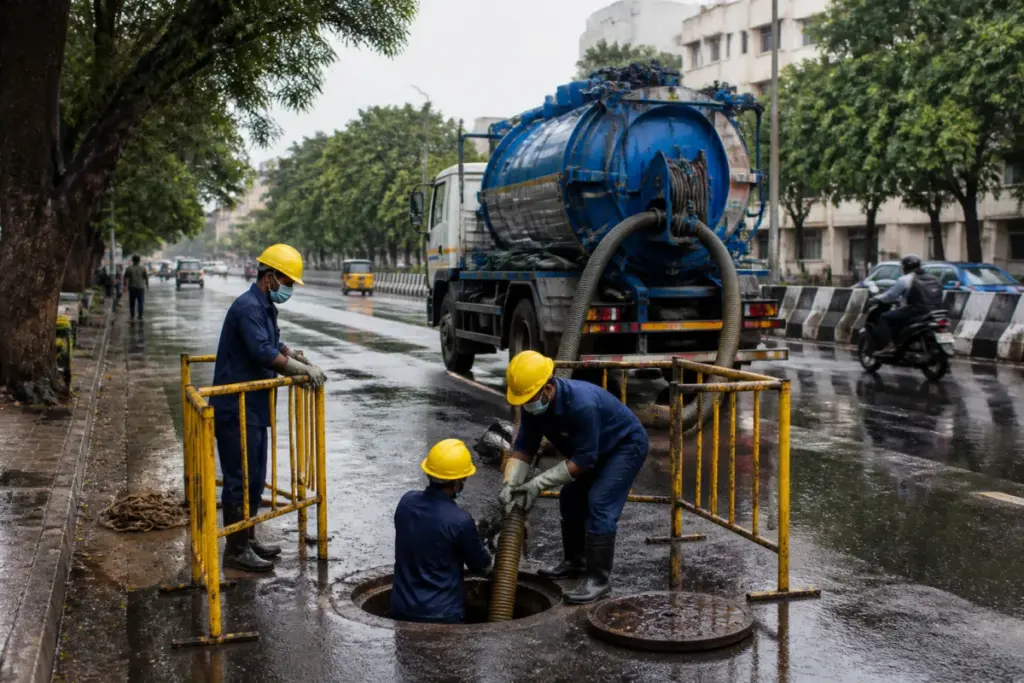
Chennai Metrowater has desilted 9.6km of sewer lines and 433 manholes across 227 streets within Greater Chennai Corporation limits, while expanding its equipment and monitoring capacity to respond to sewage blockages after rainfall.
The work was carried out using 218 machines across the identified streets. Metrowater is also monitoring sewage pumping levels around the clock through an Internet of Things-based system. When pumping levels fall after rainfall, officials identify the affected stretch and deploy workers to clear possible blockages.
The response has been supported by 29 sewage suction vehicles hired from other districts. These vehicles have been added to Metrowater’s existing fleet of 580 machines and 173 contract-operated jetting-cum-grabbing vehicles. The additional capacity is intended to strengthen the utility’s ability to remove silt and respond to disruptions across the corporation area.
Metrowater has also kept generators and fuel ready to maintain operations at eight water treatment plants, 143 water distribution stations, 22 sewage treatment plants and 438 sewage pumping stations. These facilities form the operating network through which the city’s water supply and sewage systems are managed.
The utility has doubled its daily drinking water quality testing from 900 to 1,800 samples across the Greater Chennai Corporation’s 15 zones. The increase covers a wider testing effort across the city’s distribution network and comes alongside the preparations for handling rainfall-related operational challenges.
The scale of the operation highlights the logistical demands of managing sewage and water services in a dense urban area. Desilting sewer lines and manholes is a street-level intervention, while pumping-level monitoring allows officials to identify potential problems through the wider network. Together, the measures combine preventive maintenance with a response mechanism for localised blockages.
For residents, the immediate contact point for reporting water supply and sewage-related complaints remains Metrowater’s 1916 helpline. Complaints received through the helpline can help the utility identify locations requiring inspection or operational intervention.
Metrowater’s current preparations cover both the physical network and the systems supporting it, including treatment plants, pumping stations, equipment fleets and water-quality testing. The utility’s next response will depend on pumping-level alerts, complaints and field conditions following rainfall across the city.


