

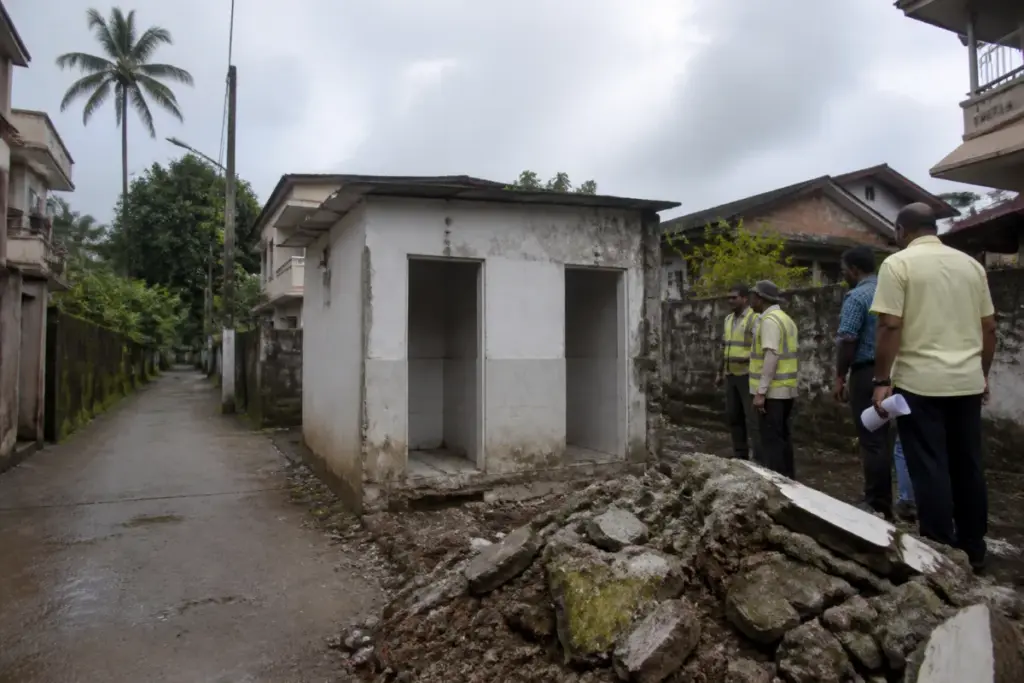
The Bombay High Court has directed the demolition of a toilet constructed under the Swachh Bharat Abhiyan in Calconda, Margao, after finding that the structure was built without the required licence or permission from the competent authority.
Justice S G Chapalgaonkar said the toilet’s construction under a Central government scheme did not by itself legalise work carried out in violation of the law. The court observed that the petitioner had not demonstrated that the construction was supported by the necessary sanction or permission from the competent authority.
The ruling followed a petition filed by Zubeda Khan, who is now deceased and was represented in the proceedings by Amina Khan. The petition challenged an October 2021 order issued by the Margao Municipal Council and a February 2026 order of the Goa Municipal Appellate Tribunal, which upheld the council’s decision.
The Margao Municipal Council had concluded that the toilet was constructed without permission and ordered its demolition. It also directed the petitioners to bear the cost of removing the structure. The council had earlier issued a show-cause notice to the Khans in August 2017, asking them to explain why the toilet should not be demolished.
The petitioners argued that authorities implementing the Swachh Bharat Abhiyan had allotted and constructed the toilet at the site of their old toilet. They contended that the complainant had failed to disclose this detail in the complaint submitted to the municipal council. They also argued that the council’s decision was contradictory because the same civic body was responsible for approving such construction.
The petitioners further submitted that their application had been processed and that the Public Works Department, through its appointed technical officers, had assessed the feasibility of the construction and granted technical sanction. They said the sanitation scheme was intended to provide toilet facilities in residential homes and improve safety for women and the public.
The High Court, however, held that the scheme’s public-health objective could not substitute for statutory approval. The court’s order leaves the municipal demolition direction and the tribunal’s decision in force, with the petitioners responsible for the associated demolition costs.


