

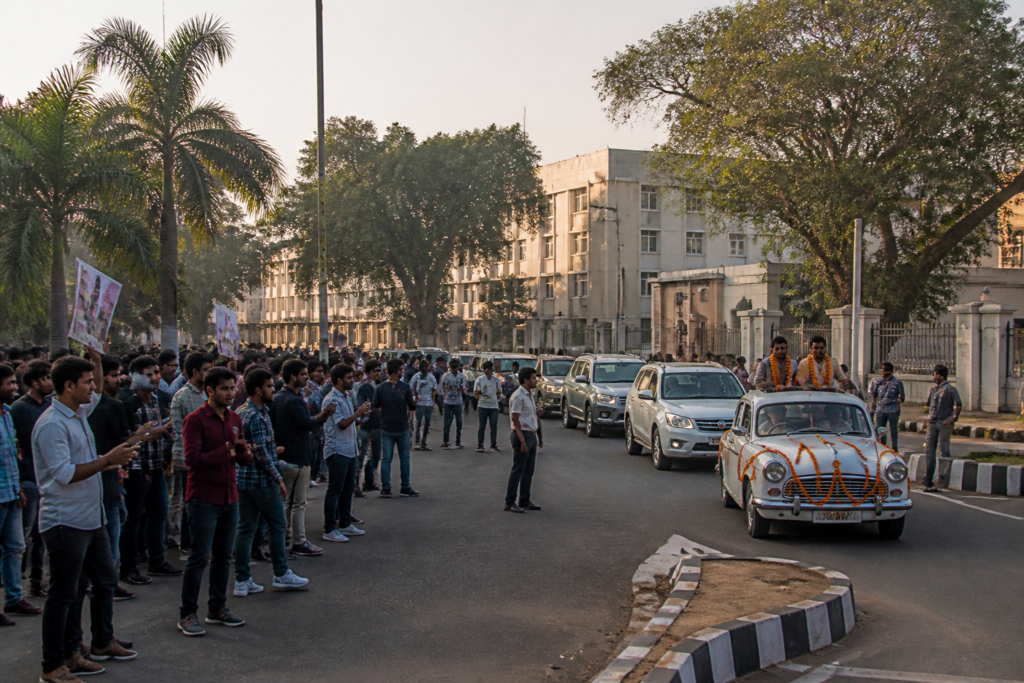
Bhubaneswar’s campus elections have drawn attention to possible violations of expenditure and campaign rules, with candidates using vintage cars, SUVs, printed posters and organised food distributions despite guidelines capping spending at Rs 5,000 per candidate.
The campaigning took place as student union elections returned to campuses after a nine-year gap. At Kamala Nehru College, candidates of a student outfit hired a vintage car for a rally on the final day of campaigning ahead of Thursday’s polls. The vehicle’s vendor, Bana Bihari Pradhan, said a six-to-seven-hour rental costs at least Rs 20,000 to Rs 22,000, more than four times the expenditure ceiling for one candidate.
At Utkal University, aspirants used a fleet of SUVs for a large procession on the final day of campaigning. A senior official in the higher education department said candidates would have to submit campaign expenditure statements to their respective institutions within two weeks of the results. The official said failure to comply with the prescribed spending rules could result in a candidate’s election being annulled.
The Lyngdoh Commission recommendations, approved by the Supreme Court for implementation in campus elections, are intended to limit excessive spending and the use of outside funds. The rules cap a candidate’s expenditure at Rs 5,000 and state that candidates cannot draw on funding sources other than voluntary contributions from the student body.
The reported campaign activity also included printed posters and other publicity material outside educational institutions. The recommendations prohibit printed posters, pamphlets and similar material, while permitting handmade posters only at designated locations on campus.
Faculty member Meenakshi Pati said road medians and spaces outside Ramadevi University, Utkal University and other colleges in Bhubaneswar had been covered with printed campaign posters, including material described as AI-generated. She said the campaigning appeared to resemble a high-stakes political contest rather than an election intended to encourage democratic participation among students.
Food distribution was another prominent feature of the campaign. Students at Ramadevi Women’s College were offered breakfast spreads and biryani lunches at food camps associated with the BCJD and ABVP, according to student Niharika Lahari. She described the arrangements as a way for candidates to attract electors.
The expenditure statements due after the election will determine how institutions assess compliance with the spending ceiling and other campaign restrictions. The polls are scheduled for Thursday, following the conclusion of campaigning.


