

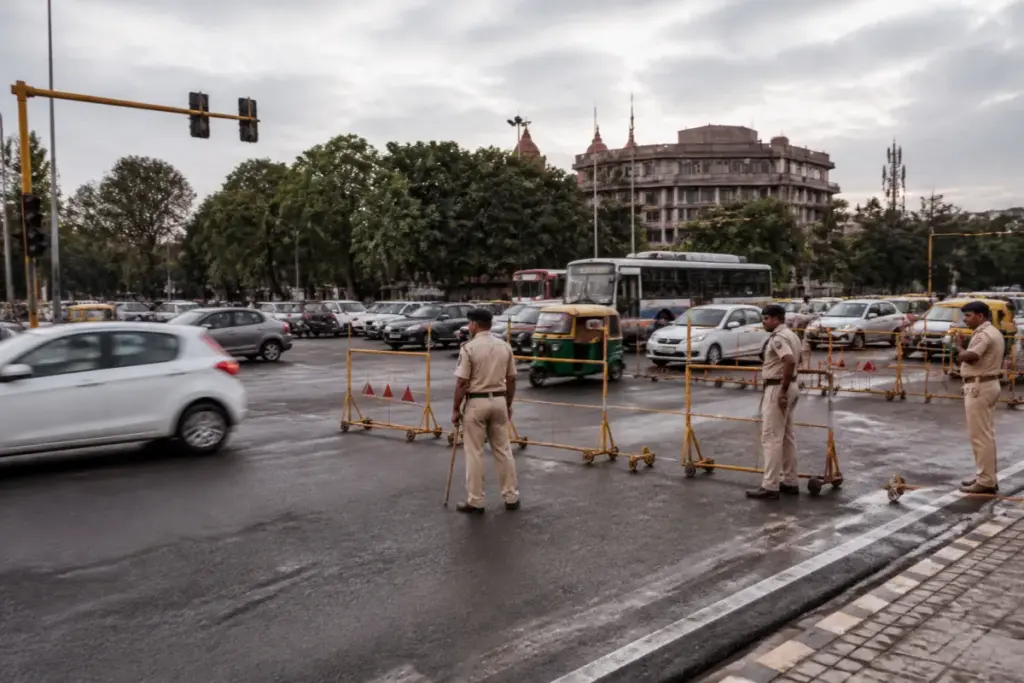
Bhopal Police have prohibited protests, demonstrations, strikes, agitations and effigy burning at Roshanpura Square and several nearby junctions for two months, citing traffic congestion and the need to keep routes open for ambulances, fire engines and other emergency vehicles.
Police Commissioner Sanjay Kumar issued the order under Section 163 of the Bharatiya Nagarik Suraksha Sanhita, 2023. The restriction at Roshanpura Square will remain in force for two months from the date the order takes effect.
According to the order, various communities, organisations, political parties, committees and delegations frequently seek permission to hold demonstrations at the intersection to press their demands. Police said such gatherings at the busy junction often disrupt traffic and inconvenience commuters.
Roshanpura Square connects several important locations, including Raj Bhavan, the airport, Hamidia Hospital and Gandhi Medical College. The route is also used by ambulances, fire engines and vehicles carrying VIPs, making uninterrupted movement a stated reason for imposing the restriction.
The police order said traffic disruptions caused by demonstrations could delay emergency services and potentially put patients’ lives at risk. The decision therefore places the junction within a temporary restricted zone for the specified forms of public activity.
In a separate order, the Bhopal Police Commissioner also declared Polytechnic Square, Akashvani Square and Kilol Park Square, along with the stretches connecting these locations, restricted zones for protests, demonstrations, strikes, agitations and effigy burning. The move is aimed at preventing traffic disruption and ensuring smoother movement of emergency services across the connected routes.
The orders affect some of the city’s important junctions and corridors, but the supplied police account does not specify an alternative location where organisations and delegations can hold demonstrations during the two-month restriction. It also does not provide details on the number of previous protests at the intersections or the duration of traffic delays attributed to them.
The restrictions bring public assembly and traffic management into the same administrative decision. For the police, the stated priority is maintaining access through junctions that serve major public institutions and emergency facilities. For commuters, the immediate effect is intended to be fewer disruptions at the affected squares and connecting roads.
The prohibition will continue for two months from the effective date of the order. Further movement of protests or requests for demonstrations will depend on permissions and directions issued by the Bhopal Police during that period.


