

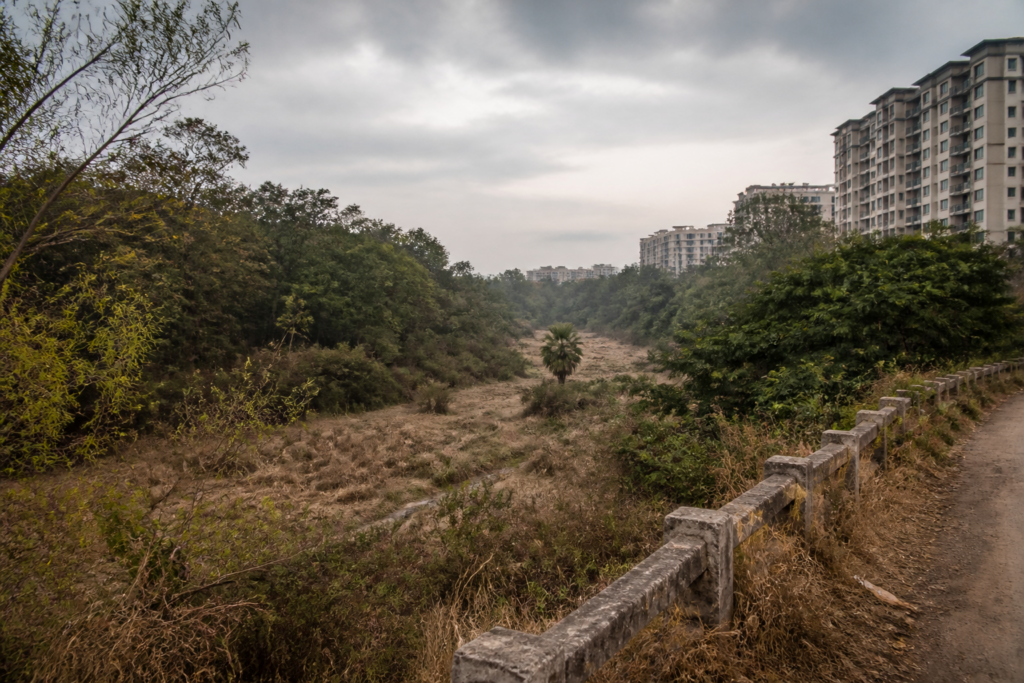
Bengaluru’s Roerich Estate and the elephant corridor around it have come under scrutiny after a report by Prajavani said an eco-tourism project, barriers, urbanisation and apartment construction were threatening a traditional route used by elephants. The report says the corridor connects Bannerghatta with areas towards Nelamangala and Savandurga, but the project’s exact design, approvals and impact remain to be independently established.
The issue places a familiar urban question at the centre of Bengaluru’s expanding edge: how should infrastructure, tourism and real-estate growth be planned when development overlaps with wildlife movement routes? In the Roerich Estate area, the concern is not limited to a single construction activity. The report links the alleged pressure on the corridor to a combination of urbanisation, apartment development, declining wildlife habitat and physical barriers.
Prajavani reported that the government’s eco-tourism project involves an expenditure of ₹55 crore. It also said that barricades associated with the project were obstructing the route used by elephants. The report did not identify the government department implementing the project, provide the project tender or administrative approval, specify the location and length of the barricades, or state whether an environmental or wildlife impact assessment had been carried out.
Those details are central to understanding the dispute. An eco-tourism project can include visitor facilities, access roads, fencing, interpretation infrastructure and other changes to a landscape. Without the project plan, however, it is not possible to determine which components have been approved, which have been constructed, or whether the barriers were installed as part of the project. The supplied report also does not establish whether the barricades are continuous, temporary or designed for a specific safety purpose.
The report attributes concern to local residents and environmental scientists. Their objections, as presented, focus on the possibility that the project and surrounding development are reducing the space available for wildlife movement. The account does not name the residents or scientists, quote their statements, identify their organisations or provide the scientific basis for mapping the route. These omissions matter because an elephant corridor is not simply an open strip of land. Its identification usually depends on evidence of animal movement, habitat connectivity, land ownership and the relationship between adjoining forest or revenue lands.
The report describes the route as an old path used by elephants travelling from Bannerghatta towards Nelamangala and Savandurga. It does not specify whether this corridor has been officially notified, mapped by a forest department, recognised in a wildlife management plan or documented through a court or government order. It also does not provide data on elephant sightings, movement frequency, conflict incidents or changes in habitat over time.
That gap prevents a firm assessment of the scale of the alleged threat. The supplied material establishes that the Roerich Estate area is being discussed as a wildlife-sensitive landscape and that residents and environmental scientists have expressed concern. It does not establish the precise boundaries of the corridor, the number of elephants using it, the extent of habitat loss or whether the eco-tourism project has already altered animal movement.
The urban planning dimension is nevertheless clear. Bengaluru’s peripheral growth increasingly brings housing, access infrastructure and tourism-related development into landscapes that may perform ecological functions. When such areas are treated only as vacant land available for construction, the costs of development can remain invisible in project approvals. Wildlife movement, water flows, vegetation and local livelihoods may not appear in the same way as built-up area, road width or visitor capacity, even though they shape whether a project can function safely over time.
Apartment construction adds another layer to the concern. Prajavani reported that local residents and environmental scientists were worried about the spread of urbanisation and the decline of wildlife habitat around the estate. The report does not identify the apartment projects, their locations, construction status, approvals or relationship to the alleged corridor. It therefore cannot establish whether any particular developer or project has violated a planning, environmental or wildlife regulation.
This distinction is important for public accountability. A broad concern about habitat fragmentation is not the same as proof that a named project has caused an obstruction. Establishing responsibility would require land records, approved plans, environmental permissions, forest or wildlife department records and site-level evidence. It would also require the relevant authorities to explain how the cumulative impact of multiple developments is being assessed.
The financial figure attached to the eco-tourism project makes the need for documentation more immediate. A ₹55 crore public project would ordinarily be expected to have an administrative sanction, implementing agency, budget head, procurement record, work package and defined scope. None of those documents is included in the supplied report. The government department responsible for the project is also not identified, and no official statement is provided in response to the concerns.
The same absence applies to the barricades. Their purpose could range from visitor management to road safety or wildlife protection, but the source does not state who installed them, when they were installed or what assessment preceded the decision. If the barriers are located on an elephant movement route, their effect would need to be assessed by the competent wildlife authority. If they are outside such a route, the claim would require a different explanation. At present, the supplied evidence does not resolve that question.
The institutional responsibility is therefore spread across several possible authorities. A forest or wildlife department may be responsible for corridor identification and wildlife protection. A tourism or local development agency may oversee the eco-tourism project. Urban and local planning bodies may regulate layouts, apartment construction and access roads. Revenue authorities may hold records on land ownership and classification. The report does not identify which agencies have reviewed the project or whether they have coordinated their decisions.
This fragmented responsibility is a recurring challenge at the urban edge. A project may be approved under one administrative framework while its consequences are experienced through another. A tourism plan may focus on visitor access, a housing approval on construction compliance and a wildlife office on habitat protection. Unless these decisions are brought together through a common landscape assessment, the cumulative effect can remain unclear until conflict emerges on the ground.
The available evidence does not provide a time series showing how the landscape has changed. There are no figures on the area converted to built use, the number of new apartments, the length of roads or the frequency of elephant movement. There is also no comparison between conditions before and after the eco-tourism project. As a result, the claim that the corridor is shrinking is a serious allegation requiring verification, but its extent cannot be quantified from the source material.
What can be established is narrower. Prajavani reported a concern involving the Roerich Estate, an alleged elephant corridor, a government eco-tourism project valued at ₹55 crore, barriers and surrounding urban development. The report said local residents and environmental scientists had raised objections. It did not include primary documents, named official responses or independent ecological findings.
Before the issue is treated as an established account of corridor obstruction, the government project approval, detailed plan, tender documents and site maps should be examined. The relevant forest and wildlife authorities should confirm whether the route is officially recognised and whether the barriers affect it. An on-site assessment would also be needed to document existing construction, habitat continuity and signs of elephant movement.
The central urban question is not whether Bengaluru should have tourism or housing at its periphery. It is whether those uses are being planned with enough information about the landscapes they occupy. In the Roerich Estate case, the publicly available account points to a potential conflict between development and wildlife movement, but the documents needed to establish the conflict are not yet available in the supplied material.
Until those records and official responses are obtained, the claims should remain attributed to the report and the people cited in it. The next relevant developments are likely to be clarification from the implementing government agency, confirmation from wildlife authorities about the corridor’s status, and publication or review of the project’s environmental and planning records.


