

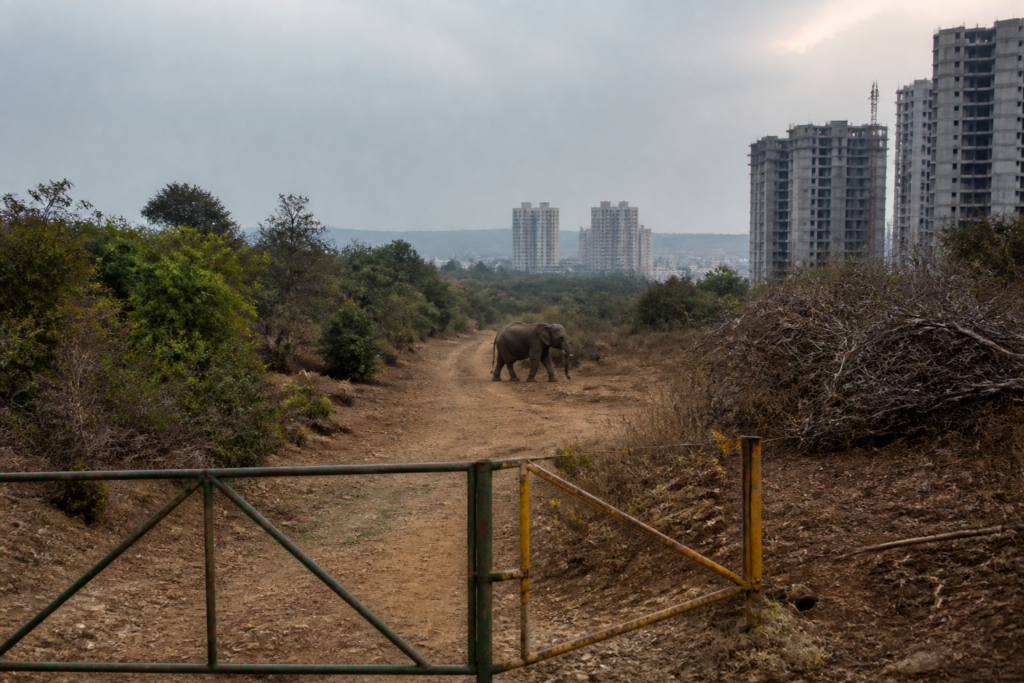
Bengaluru’s historic Roerich Estate and the elephant corridor connecting Bannerghatta with the Nelamangala and Savandurga areas are facing reported pressure from an eco-tourism project, barricades, urbanisation and apartment construction, according to a report by Prajavani published on October 16.
The report states that elephants have traditionally moved through the corridor between Bannerghatta and the Nelamangala–Savandurga region. It claims that a government-backed eco-tourism project estimated at ₹55 crore, along with barricades, is restricting movement along the route. The supplied report does not include the project notification, the implementing agency, the construction schedule or an official response from the government or forest authorities.
Local residents and environmental scientists have expressed concern about the effect of urban expansion and the construction of apartments on wildlife habitat around the estate and corridor, Prajavani reported. Their concerns place the issue within a wider land-use conflict on Bengaluru’s expanding outskirts, where development projects and wildlife movement routes can overlap.
The Roerich Estate is described in the report as a historic property on the outskirts of Bengaluru. Its surroundings are also presented as part of an established elephant movement route. The report does not specify the legal status of the corridor, the boundaries of the estate, the location of the barricades or whether any wildlife movement studies were conducted before the eco-tourism project was planned.
The reported ₹55 crore cost is the most specific financial detail available in the supplied material. However, the source does not identify the department that approved the funding, the nature of the proposed tourism facilities or the stage of implementation. It also does not establish whether the barricades were installed as part of the same project or through a separate intervention.
These missing details are important because the effect of infrastructure on an elephant corridor depends on its exact location, design and relationship with existing habitat. The source material indicates that residents and environmental scientists believe the corridor is under threat, but it does not provide wildlife movement data, an environmental assessment, a government order or a statement from the forest department confirming the reported obstruction.
The report also links the pressure on the corridor to apartment construction and broader urbanisation. No figures are provided on the number of projects, the area of habitat affected or the extent of land-use change. The available material therefore establishes concern about the direction of development but does not quantify the cumulative impact on wildlife or nearby communities.
The issue highlights the administrative challenge of managing urban growth in areas where built-up expansion meets ecological corridors. Decisions involving tourism infrastructure, access barriers, apartment development and wildlife habitat can involve multiple authorities, but the supplied report does not identify the agencies responsible for the site or explain how approvals were granted.
Prajavani’s report calls attention to the reported threat and to the concerns raised by residents and environmental scientists. Further reporting would need to establish the official status of the eco-tourism project, the source and use of the ₹55 crore allocation, the purpose and location of the barricades, and whether the forest and wildlife authorities have assessed their impact on elephant movement. Those details remain unconfirmed in the supplied material.


