

Bengaluru’s Pink Line is moving closer to passenger operations on its elevated section, but the underground corridor continues to face delays caused by hard rock, boulders, ground settlement and a buried waste dump encountered during tunnelling.
The 7.5-km elevated stretch between Kalena Agrahara and Tavarekere is awaiting final safety clearance from the Commissioner of Railway Safety (CMRS). The railway safety authority inspected the route from October 6 to 8, covering the mainline track, depot trial runs and the Operations Control Centre at Byappanahalli.
BMRCL received the inspection report on October 9 and is preparing its compliance report and clarifications. Passenger services can begin only after the CMRS reviews the response and confirms that all safety conditions have been met. Chief Minister DK Shivakumar has also sought an inauguration date from the Union government.
The underground section has faced a different set of construction risks. According to a BMRCL official, tunnelling teams encountered ground settlement and sinkhole-like formations caused by the escape of compressed air and loss of ground during boring. Such problems were reported near Venkateshpura, Shivajinagar, Lakkasandra and Vellara Junction.
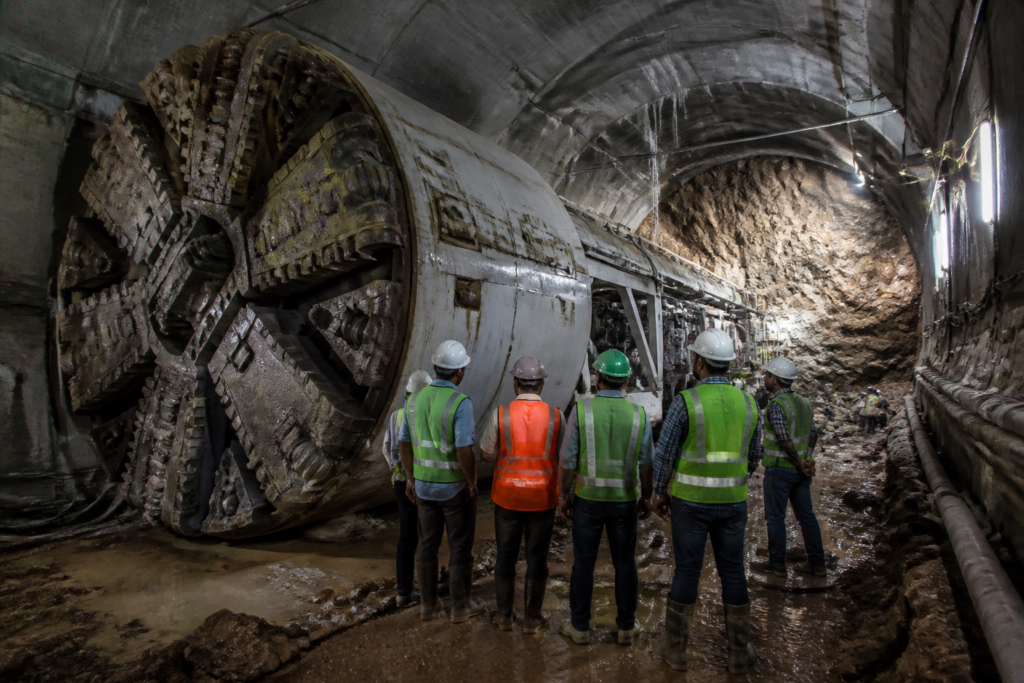
Hard rock at Shivajinagar, MG Road and Venkateshpura also slowed the work. BMRCL said excavation through hard rock progresses differently from boring through mixed soil, while large boulders added to the difficulty. The most unusual obstruction was reported near Lakkasandra, where a tunnel boring machine encountered an underground heap of mixed waste extending for nearly 40 metres.
The material reportedly included plastic, tyres, shoes, buckets, slippers and decayed bones. The BMRCL official said the waste was believed to have been dumped around four decades ago in an old quarry. The entire material had to be removed before tunnelling could resume, adding nearly two months to the work.
Bengaluru’s earlier metro tunnelling works faced comparable geological and urban constraints. During Phase I, the TBM named Godavari struck hard boulders on the Sampige Road–Majestic stretch in May 2014, damaging its cutter head. The 70-tonne component took more than a year to remove, while a replacement imported from Italy halted tunnelling for nearly 18 months.
The densely built areas around Majestic, Chickpet and KR Market also exposed the machines to rapidly changing ground conditions, including soft soil, loose sand, granite and large boulders. These conditions make underground metro construction more complex than a straightforward excavation exercise, particularly in older and heavily built-up parts of the city.
Once the remaining Phase II tunnel works are complete, BMRCL plans to begin trial runs on finished sections within two to three months. Before that, power supply and other operating systems must be commissioned. The corporation is examining whether trains could initially run between Dairy Circle and MG Road while electrical and related works continue.
The Environmental Control System and Tunnel Ventilation System will also have to be operational. These systems are required to remove heat generated by trains and maintain safe and comfortable conditions inside the tunnel. BMRCL has said the overall project is required to be completed by March 2027.


