

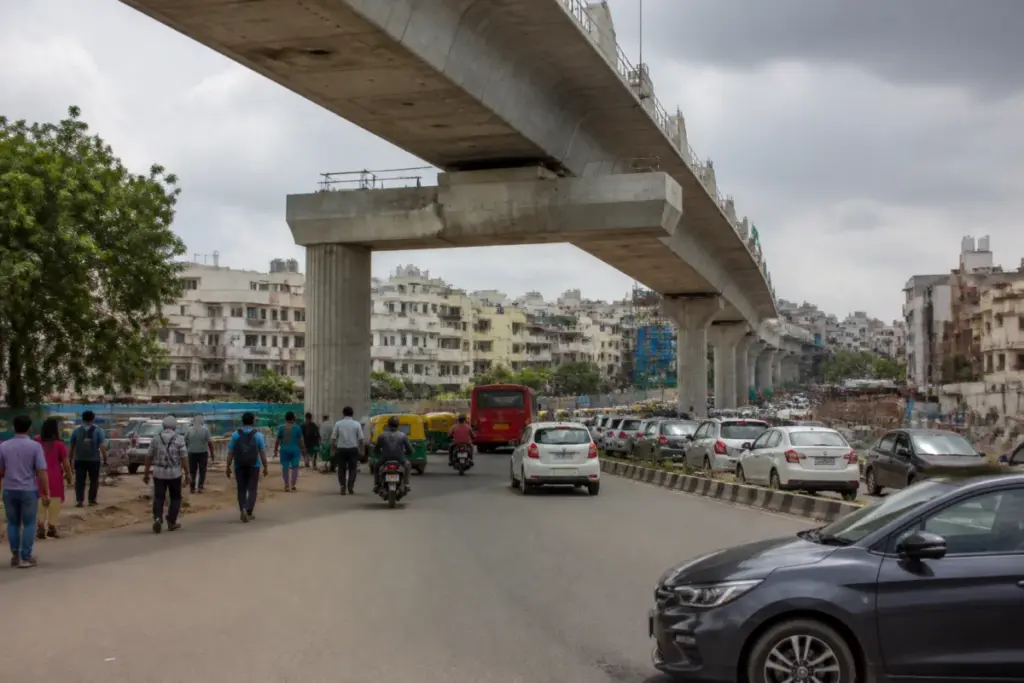
Bengaluru’s flyover programme has entered a second tendering cycle, but the return of six projects to the procurement process has not resolved the larger questions around how the city is choosing elevated road infrastructure. Bengaluru Smart Infrastructure Limited, or B-SMILE, has issued fresh tenders for six flyover projects after the Karnataka government cancelled tenders for eight elevated corridors, following concerns about non-compliance with contracting norms.
The immediate development is significant because these projects are not isolated junction improvements. They form part of a much larger programme approved by the government on April 27: 11 elevated corridors covering about 75.6 km, with an estimated cost of Rs 13,262.70 crore. The corridors are to be built by B-SMILE for the Greater Bengaluru Authority across five city corporations. That places the tender reset inside a wider attempt to reorganise and expand the city’s road infrastructure through a new institutional arrangement.
The cancellation, therefore, was not simply an administrative pause. The Urban Development Department recommended cancelling the earlier tenders after a subcommittee identified flaws in the tender documents. Fresh procurement may correct those procedural shortcomings, but it does not by itself answer whether every proposed corridor is appropriate for the streets and neighbourhoods through which it will pass. In Bengaluru, where road space is contested among private vehicles, buses, pedestrians, businesses, utilities and residential communities, the tender document is only one part of the infrastructure question.
The six projects now being retendered cover a wide geographical spread and vary substantially in scale. They include a flyover at Konanakunte Cross on Kanakapura Road, estimated at Rs 76.76 crore; a split flyover at MEI Junction on Tumakuru Road, estimated at Rs 41.62 crore; and a grade separator on Pipeline Road, estimated at Rs 315.28 crore. A proposed elevated corridor at Kogilu Cross on Doddaballapura Road carries an estimated cost of Rs 1,026.66 crore.
The other two projects are an elevated corridor from Sholay Circle to St John’s Hospital Road, estimated at Rs 564 crore, and a corridor from Minerva Circle to Hudson Circle, estimated at Rs 539.94 crore. The figures supplied in the report indicate a combined value of roughly Rs 2,564 crore for these six listed projects, although the report describes the fresh tenders as worth Rs 1,500 crore. That discrepancy should be clarified in the official procurement documents before the financial scale of the retendered package is treated as settled.
The proposed corridors also show how Bengaluru’s flyover strategy is being assembled across different kinds of urban locations. Some projects address major radial roads and junctions, while others would create longer elevated links through dense parts of the city. A junction flyover and a multi-kilometre elevated corridor may both be described as congestion-relief projects, but their effects on access, street design, land use and local movement can be very different.
That distinction is important because elevated infrastructure can move traffic through a bottleneck without necessarily improving the entire transport system around it. The supplied report does not provide traffic studies, travel-time assessments, public transport comparisons or detailed designs for the six projects. It is therefore not possible from the available evidence to establish whether the proposed structures will reduce congestion across their full influence areas, or whether they will primarily shift queues to adjoining junctions and roads.
The institutional structure adds another layer. The government has assigned the projects to B-SMILE for the Greater Bengaluru Authority, while the programme is spread across five city corporations. This arrangement concentrates project delivery in a specialised company but places the corridors within a metropolitan governance landscape involving multiple urban jurisdictions. The effectiveness of that model will depend on how project decisions, tendering, land requirements, utility shifting, construction management and local consultation are coordinated across those boundaries.
The cancellation of the earlier tenders exposes the importance of that coordination. Contracting norms are not a technical detail separate from urban planning. They determine how bidders compete, how risks are allocated, what design obligations are imposed, and how the public authority protects itself during construction and operation. If tender documents are flawed, the consequences can include delays, disputes, cost changes and a mismatch between the contracted work and the city’s actual transport needs.
The fresh tenders are expected to be followed by bids for three more projects within a week: a flyover on Indiranagar’s 100 Feet Road, a 5.2-km stretch from Sirsi Circle to Nayandahalli, and a short flyover on Kanakapura Road. This means the procurement process is moving forward even as the public debate over the programme remains unsettled in some locations.
Residents and several organisations have opposed at least two projects: the Indiranagar flyover and the Ragigudda–Kanakapura Main Road corridor. Residents recently formed a human chain in protest, and some have approached the Karnataka High Court against the Indiranagar flyover. The trial is pending. These developments do not establish that the projects are legally or technically unsound, but they show that the programme has moved beyond an internal government infrastructure decision and into public and judicial scrutiny.
The Ragigudda–Kanakapura corridor is one of two tolled elevated corridors currently under tendering. It would link Ragigudda junction on Marenahalli Main Road with Kanakapura Main Road through BWSSB Pipeline Road. The other tolled corridor would run from Methikere Cross in Yeshwantapur to Old Madras Road through IISc, Mehkri Circle, Jayamahal, St John Church Road and Ulsoor lake. Tolling introduces a further question about how the city intends to finance and regulate elevated road capacity, although the supplied report does not specify the proposed toll structure or operating terms.
The programme’s data points reveal an ambitious infrastructure pipeline: 11 corridors, about 75.6 km and a total estimated cost of Rs 13,262.70 crore. But those numbers describe the scale of the proposal, not its performance. The available report contains no evidence on projected vehicle volumes, expected travel-time savings, construction duration, affected properties, pedestrian facilities or integration with buses and other modes. Without those details, the public can assess the programme’s size but not its likely value.
This gap is central to the city’s flyover debate. A road project is not evaluated only by the number of kilometres built or the number of junctions separated. Its consequences include how traffic enters and exits the structure, whether local streets remain accessible, how pedestrians cross the road, what happens to public transport, and whether the surrounding urban fabric is divided by ramps and piers. Those questions become more important when corridors pass through established neighbourhoods rather than undeveloped road edges.
The retendering process offers the authorities an opportunity to make the procurement more transparent and the project logic more legible. The immediate administrative task is to issue compliant tender documents. The larger governance task is to demonstrate how each corridor fits into the wider mobility network and how objections, legal proceedings and local impacts have been considered. The two tasks are connected: a technically sound tender cannot substitute for a clearly justified project, while a strong transport rationale can still be weakened by defective procurement.
For Bengaluru, the next milestones are the opening of bids for the six retendered projects, the expected tendering of three additional corridors, and the pending court proceedings related to the Indiranagar flyover. The evidence currently confirms that the government is restarting procurement after problems in the earlier tenders. It does not yet establish whether the revised process will settle the planning, financial and neighbourhood-level questions surrounding the city’s elevated corridor programme.


