

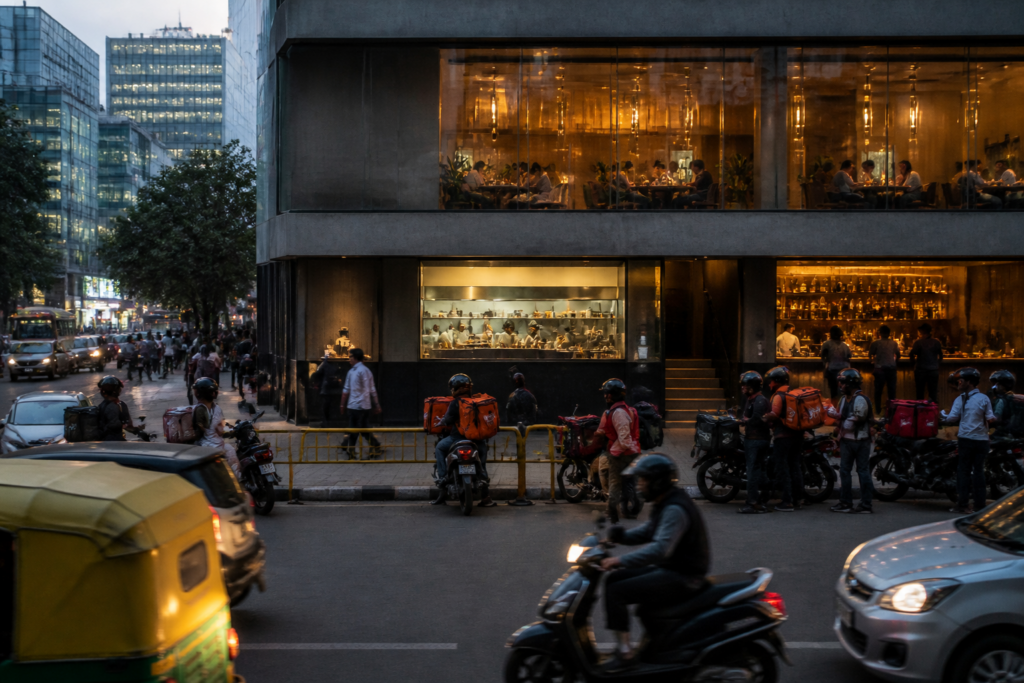
Bengaluru’s hospitality and liquor trade bodies have asked the Bengaluru Urban deputy commissioner to narrow proposed dry-day restrictions for legislative council elections, allowing restaurants and hotels to serve food and non-alcoholic beverages even while liquor counters remain sealed.
The district administration has proposed dry days from 4pm on October 21 to 4pm on October 23, and again on October 27, when votes will be counted. The administration has not yet decided on the request.
The delegation, representing Okkuta, included the Bengaluru chapter of the National Restaurant Association of India, Bruhat Bengaluru Hotels Association, Bangalore Hotels Association, Karnataka State Hotels Association, Karnataka Bakery, Sweets & Cafe Association and Bengaluru City Liquor Traders Association. It sought permission for restaurants, hotels and bars to continue food service, sell non-alcoholic beverages and undertake deliveries during the restricted period, provided that no alcohol is sold or served.
The group also asked the administration to end counting-day restrictions by 4pm or immediately after the results are declared, instead of continuing the ban until midnight. The proposed restrictions relate to elections for the Bengaluru teachers’ constituency and Karnataka South-East graduates’ constituency, in which only registered teachers and graduates are eligible to vote.
Okkuta said the Bengaluru teachers’ constituency had 16,063 voters in 2024, while hospitality businesses serve a city with more than 1.4 crore residents. The associations argued that a restriction lasting nearly three business days would affect a substantially larger urban economy than the size of the electorate involved in the election.
Although the proposed order prohibits liquor sales, the associations said food operations are often disrupted because of confusion during enforcement. They cited a previous Karnataka High Court order concerning a teachers’ constituency election and sought explicit instructions allowing food operations while alcohol sales remain prohibited.
The associations estimated that the restrictions could cause losses of nearly Rs 500 crore. Bangalore Hotels Association separately said individual establishments could lose about Rs 20,000 or more each day, in addition to the effect on employees whose earnings depend on business volumes.
The bodies said the restrictions would also affect service staff, delivery personnel and suppliers, while reducing state GST and excise collections. Their argument places the proposed dry-day order within a wider administrative question: whether liquor-sale restrictions during elections should automatically result in the closure or disruption of otherwise permitted hospitality activity.
Ananth Narayan, head of the NRAI Bengaluru chapter, said the request was to seal liquor stores and monitor compliance rather than close entire establishments. “Our humble request is to seal the liquor store on dry days and monitor that, instead of locking the whole place,” he said. Narayan added that businesses operating throughout the month could face a severe financial impact from losing four or five trading days.
The Bengaluru Urban district administration is yet to announce whether food service, non-alcoholic beverage sales and deliveries will be permitted during the proposed restriction period, or whether the counting-day ban will be shortened.


