

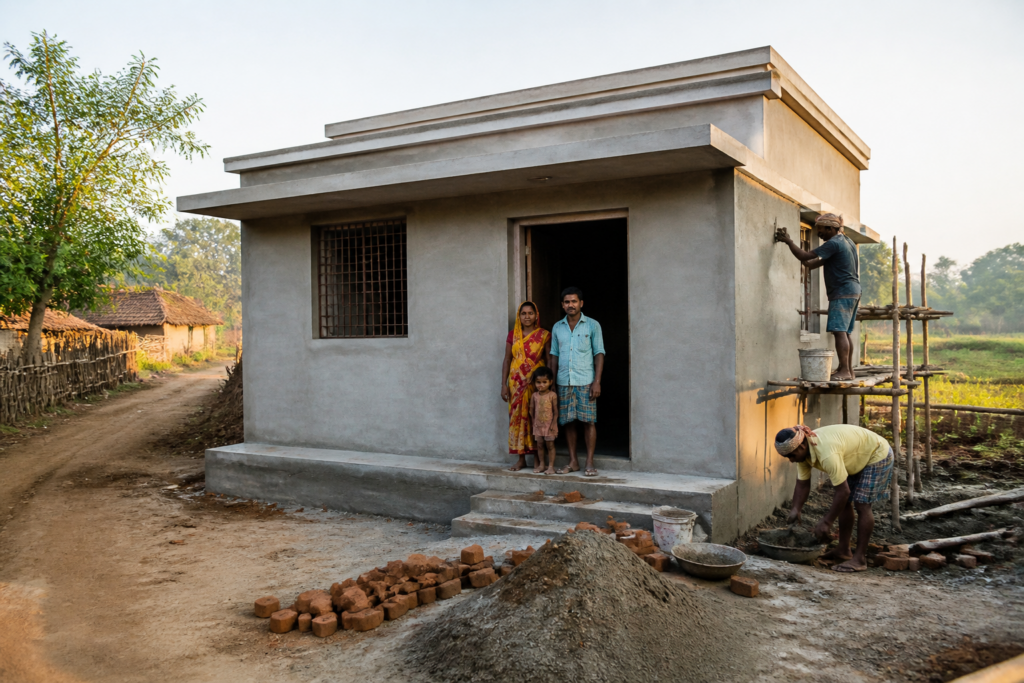
Odisha has approved 2,91,666 additional houses under the Antyodaya Gruha Yojana and extended the rural housing scheme’s implementation period by two years to 2029, in a move aimed at reaching families left out of central housing programmes.
Chief Minister Mohan Charan Majhi approved the expansion on October 15, according to a report by Pragativadi. The total project outlay will remain unchanged at Rs 7,550 crore. To fund the additional construction, Rs 3,500 crore earlier earmarked for the scheme’s repair component will be reallocated for building new houses.
The Panchayati Raj and Drinking Water Department has been directed to conduct a quick survey to identify additional eligible beneficiaries. Under the revised norms, households that have received Rs 48,500 or less under the scheme, along with other eligible families, can be considered for inclusion.
The Antyodaya Gruha Yojana is focused on poor and vulnerable households that were not covered under the Pradhan Mantri Awas Yojana. The target group includes families living in kutcha houses and those without permanent shelter. The scheme was launched with an initial target of constructing houses for five lakh families.
The revised decision also increases incentives for beneficiaries who complete construction within specified timelines. Families completing their houses within five months will now receive Rs 35,000, compared with the earlier incentive of Rs 20,000 for completion within four months. Those completing construction within seven months will receive Rs 20,000, up from Rs 10,000 for completion within six months.
The changes are intended to expand coverage while encouraging faster completion of houses. The earlier implementation deadline was 2027; the extension moves it to 2029 without increasing the overall project outlay.
The reallocation of repair funds towards new construction means the state will prioritise adding housing units under the revised plan. The department’s beneficiary survey will determine which additional households meet the revised eligibility conditions.
The decision addresses a persistent gap in rural housing delivery: families who may not qualify for or have been covered by central housing programmes but still live in inadequate shelter. For these households, access to a permanent house depends not only on approval but also on identification, construction progress and timely release of incentives.
The Odisha government expects the expanded coverage and higher completion incentives to narrow the state’s rural housing gap and advance its stated goal of providing permanent houses to all eligible households. The next immediate step is the quick survey by the Panchayati Raj and Drinking Water Department to identify beneficiaries under the revised norms.


