

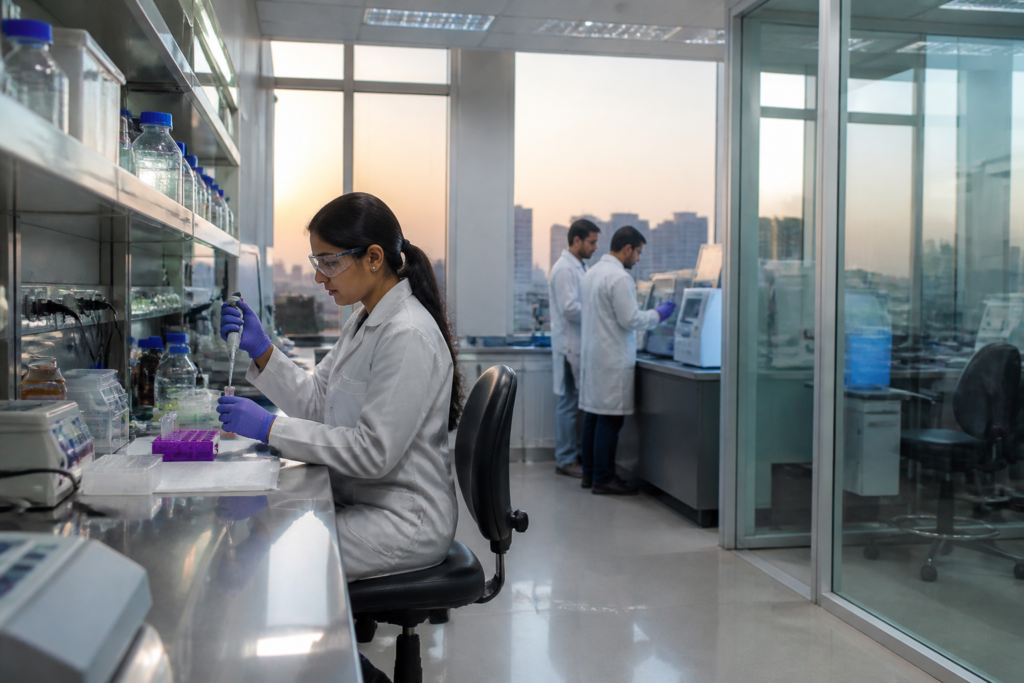
India’s animal testing rules are set for a major change, with the Centre proposing a four-tier system that would assess laboratory experiments by the pain, distress and suffering they cause rather than by the size of the animal involved. The draft framework could bring tighter scrutiny to laboratories in Hyderabad and across Telangana, a major pharmaceutical and biotechnology hub.
The Committee for Control and Supervision of Experiments on Animals (CCSEA), under the Union Ministry of Fisheries, Animal Husbandry and Dairying, has released the draft Prevention of Cruelty to Animals (Control and Supervision of Experiment, Breeding and Trading of Laboratory Animals) Rules. The proposed rules are intended to modernise oversight of animal experiments and address gaps in the existing framework.
Under the proposed system, experiments would be classified as non-recovery, mild, moderate or severe. Non-recovery procedures would be conducted entirely under general anaesthesia, with the animal not waking up from the experiment. Mild procedures would involve short-term and minimal pain or distress without significant impairment of the animal’s well-being.
Moderate procedures would include interventions causing short-term moderate pain or long-lasting mild pain. Severe procedures would cover experiments causing intense, severe or long-lasting pain, as well as critical impairment. The classification would determine the level of approval required before an experiment could begin.
The proposed framework would give Institutional Animal Ethics Committees, which operate within scientific laboratories, the authority to approve mild and moderate experiments involving all animal species. This would allow routine studies to be cleared at the institutional level rather than being referred for central approval.
However, severe experiments would require direct clearance from the central committee. Central approval would also be mandatory for any procedure involving animals larger than rodents and lagomorphs, including rabbits and hares, if the procedure does not allow the animal to recover. The rules therefore retain central oversight for experiments considered to have a higher potential impact on animal welfare.
The draft also adopts the internationally recognised 3Rs principles of animal research: Replacement, Reduction and Refinement. Researchers would be required to actively explore alternatives to live animals, limit the number of animals used and improve pain management through measures such as anaesthetics and analgesics.
The proposed shift is particularly relevant to Telangana, which has 120 registered animal testing and research facilities. Hyderabad is one of India’s largest pharmaceutical and biotechnology centres, placing the city’s research institutions and laboratories within the wider regulatory change. The draft report also identifies close to 2,300 animal testing laboratories across India.
The source report states that rodents, including mice, rats and fish, make up the vast majority of animals used in laboratory experiments in India and the United States. Globally, about 115 million animals are used in laboratory experiments, according to figures cited in the report.
The proposed rules have not yet replaced the existing framework. Their implementation will depend on the finalisation of the draft regulatory structure and the approval procedures that follow. Until then, laboratories and their institutional ethics committees will continue to operate under the current rules.


