

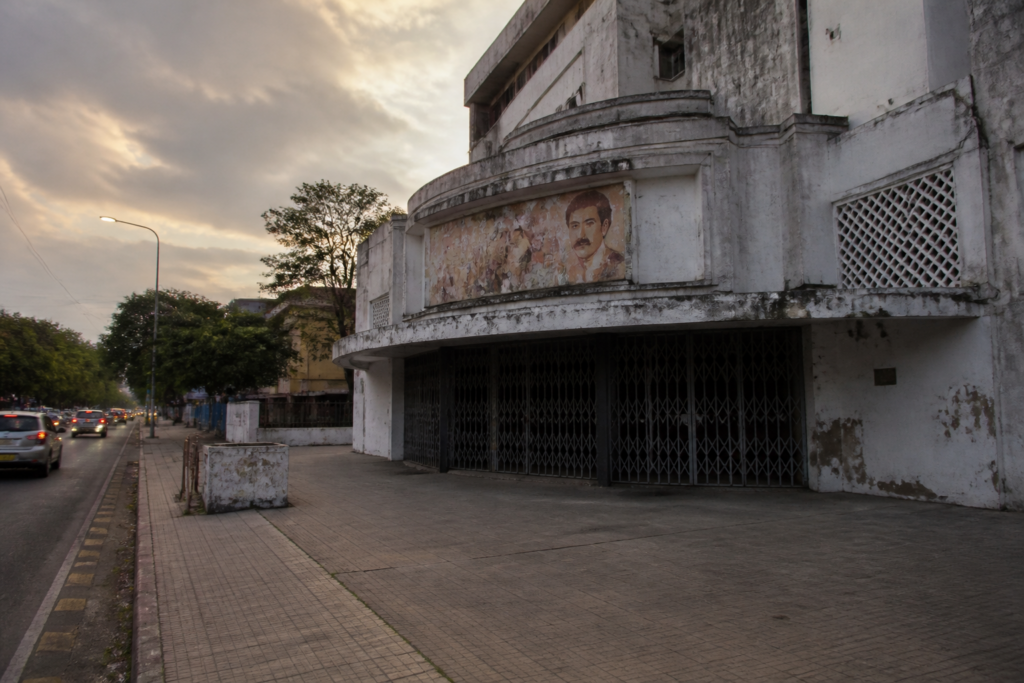
Albert Theatre’s quiet gates during the release of Jailer 2 offer a striking measure of how Chennai’s cinema geography has changed. Once a reliable stronghold for Rajinikanth’s biggest films, the Egmore complex now appears to be struggling to remain part of the city’s active cultural landscape. The theatre manager, Mariappan, told The Hindu that the venue was trying to resolve an “ongoing minor issue” before Deepavali, leaving open the possibility of a return while confirming that the complex is currently operating under uncertainty.
The significance of Albert Theatre Chennai lies in the relationship it built with its surrounding neighbourhoods. Albert and the smaller Baby Albert were not merely venues where films were screened. For residents of Egmore, Pudupet and Chintadripet, the complex was a familiar destination and a source of local pride. The venue’s identity was expressed through the way residents referred to it as “our” theatre. That sense of ownership is difficult to reproduce in a cinema landscape increasingly organised around multiplexes, malls and standardised entertainment spaces.
Albert’s history also shows how a theatre can become an informal urban institution. In the late 1980s and 1990s, its proximity to several dense central Chennai neighbourhoods made it a convenient place to watch major Tamil releases. When Rajinikanth appeared in Rajadhi Raja in 1989, the report recalls the audience erupting as he entered the screen in a white ensemble. Two years later, Thalapathi brought Rajinikanth and Mammootty together under Mani Ratnam’s direction, and Albert was again packed.
The most powerful association was with Baashha, released in 1995. The film’s success strengthened Rajinikanth’s position as a major commercial star, while Albert became one of the venues where that popularity was publicly experienced. The theatre was not simply showing a successful film; it was hosting a collective ritual involving crowds, applause and the measurement of a star’s appeal. For fans, the first response inside Albert could feel like an early indication of how a film would perform across the city.
That role extended beyond individual releases. The report describes Albert as a barometer for Rajinikanth films, with even the superstar visiting the venue to gauge the public mood. The theatre’s reputation was therefore built through repeated interaction between a major performer, a loyal audience and a particular part of Chennai. A theatre could gain an identity that was inseparable from a star, a neighbourhood and the physical experience of watching a film together.
## Albert Theatre Chennai and the changing urban cinema map
The contrast with the release of Jailer 2 is central to the story. While audiences across Chennai and Tamil Nadu gathered around the new Rajinikanth film, Albert and Baby Albert remained shut, giving the Egmore corner where they stand an unusually quiet atmosphere. The report notes that Rajinikanth fans were turning to other venues, while the theatre that once represented his strongest local territory was no longer at the centre of the release-day experience.
This shift matters because cinema-going is also a form of urban movement. A neighbourhood theatre depends on a steady connection between nearby residents, transport routes, local commerce and the social routines surrounding a show. When that connection weakens, the loss is not limited to a screen or a ticket counter. It changes where people gather, how they move through a locality and which places remain visible in the everyday memory of a city.
The account places Albert’s decline alongside the closure or stoppage of other Chennai theatres. Anna has shut down, while S2 Theyagaraja in Thiruvanmiyur has stopped functioning. The examples suggest a wider fragility among older single-screen or traditional theatre complexes, although the supplied material does not establish the scale of this trend across the city or identify the precise causes behind each closure.
What it does establish is the emotional and spatial impact of such changes. When a familiar hall winds down, memories are attached to the building: bunking classes, entering the large auditorium, waiting through the interval and buying puffs and soft drinks. These details are not incidental nostalgia. They describe how a commercial building becomes embedded in the social life of a neighbourhood. A cinema hall can operate as a landmark even when it has no formal heritage designation.
## From public ritual to uncertain infrastructure
Albert’s story also captures the difference between a theatre as infrastructure and a theatre as institution. As infrastructure, the complex has gates, auditoriums, projectors and a release schedule. As an institution, it carries accumulated meaning created by decades of audiences and films. The loss of the second function can begin before the building formally disappears, particularly when releases become irregular and the venue no longer anchors major public occasions.
The report describes Albert as having lingered “in the shade”, handling the occasional release before closing its gates. That pattern is important. Urban cultural spaces do not always vanish in a single event. They can decline through reduced use, fewer high-profile screenings and a weakening relationship with their original audience. The physical structure may remain visible while its role in the city becomes uncertain.
The manager’s statement provides the only official explanation in the supplied material: the theatre is attempting to resolve an ongoing minor issue and working towards doing so before Deepavali. The statement does not specify the nature of the issue, the work required, whether both Albert and Baby Albert are affected, or whether the venue has a confirmed reopening schedule. Those details remain unresolved.
This uncertainty prevents the current situation from being described as a final closure. The account points instead to a theatre at a vulnerable moment. Its future depends, at least in the immediate term, on whether the stated issue is resolved and whether the complex resumes regular operations. The distinction is significant for reporting on older urban venues, where temporary shutdown, reduced programming and permanent closure can look similar from the street.
## The policy landscape is largely absent from the record
The supplied report does not identify the ownership structure of Albert Theatre, the regulatory status of the complex, its financial position, maintenance requirements or the broader policy framework governing older cinemas in Chennai. It also does not provide information on redevelopment proposals, property values, taxation, licensing or competition from newer formats. These omissions matter because the reasons for a theatre’s decline cannot be established from its cultural history alone.
The article does, however, preserve a useful institutional clue from an earlier period. A 2017 photograph and caption describe theatres across Tamil Nadu remaining shut in protest against a newly imposed 30 per cent local tax. That episode shows that cinema halls operate within a wider municipal and state-level financial system. Taxes, operating permissions and public policy can directly affect whether a venue remains viable, although the supplied material does not say that taxation is responsible for Albert’s current condition.
The story therefore illustrates the need to separate cultural significance from verified cause. Albert’s importance to Rajinikanth fans and central Chennai is well documented in the account. The reasons for its present inactivity are not. A theatre may be culturally indispensable to a neighbourhood and still face operational difficulties that are invisible to audiences. Without details from the management or relevant authorities, it would be inaccurate to attribute the situation to a single factor.
## What Albert’s decline reveals about Chennai’s public culture
The strongest evidence in the report concerns the venue’s changing symbolic position. Earlier, Albert was described as the barometer for Rajinikanth films. During Jailer 2, the crowds were elsewhere. That contrast does not prove that audiences have stopped valuing older theatres, but it does show that the relationship between a major star, a release and a particular venue is no longer fixed.
The shift also raises a broader question about what happens when city landmarks are defined by use rather than architecture. A theatre can be architecturally ordinary yet socially important because generations of residents attach experiences to it. If the venue becomes inactive, Chennai loses a layer of local history that is difficult to document through property records or development plans. The memories survive in fans’ accounts, but the shared setting that produced them may not.
At the same time, the material does not establish whether Albert’s possible reopening would restore its earlier role. The city’s cinema habits, venue choices and release-day patterns may have changed, but the available report does not provide audience data or a comparison of ticketing and programming. Any conclusion about a permanent transformation would therefore go beyond the evidence.
For now, Albert Theatre Chennai stands at an uncertain point between continuity and disappearance. Its gates are shut, but its manager has indicated that efforts are under way to resolve the problem before Deepavali. That planned milestone is the immediate fact to watch. Whether the complex returns to regular screenings, remains intermittently active or closes for good will determine whether Albert remains a functioning neighbourhood institution or becomes another remembered landmark in Chennai’s cinema history.


