

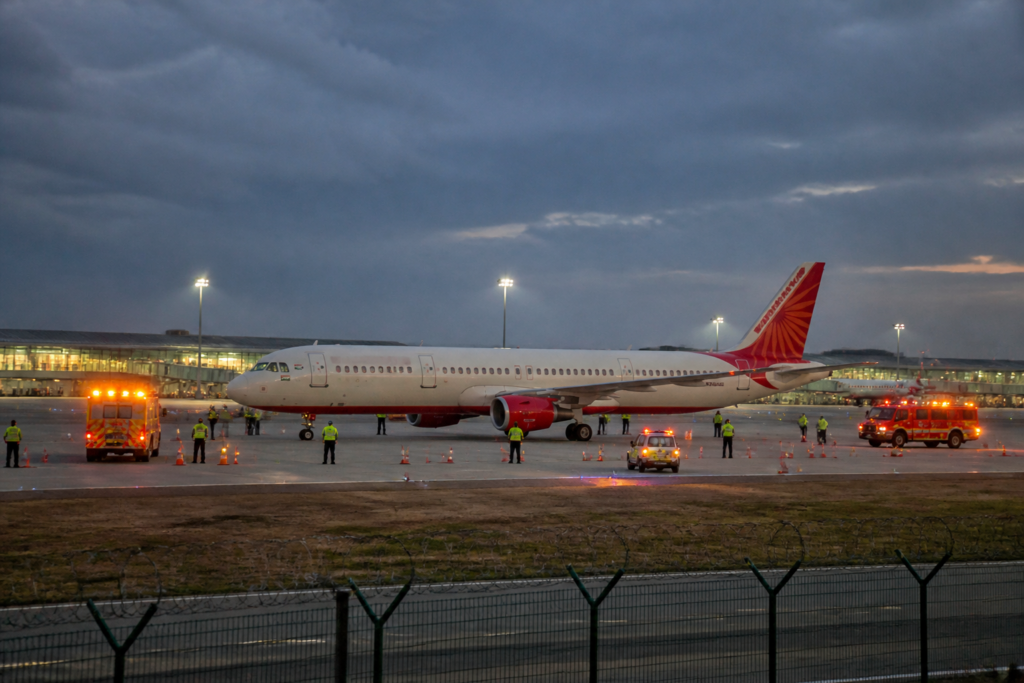
An Air India flight travelling from Frankfurt to Delhi made an emergency landing at Jaipur airport after transmitting a Squawk 7500 distress signal that was received by Ahmedabad air traffic control, according to a report by Bartaman Patrika. The aircraft was carrying passengers, who were evacuated safely after landing, while the plane was moved to an isolation bay for examination.
The flight, identified as AI 2030, had departed Frankfurt for Delhi at around 9.45pm local time on October 13, according to the report. It was scheduled to reach Delhi at 10.40am on October 14. During the journey, the aircraft transmitted the distress code, prompting an emergency response and a diversion to Jaipur.
Squawk 7500 is an internationally recognised transponder code used to indicate an unlawful interference or hijacking situation. The code allows pilots to alert air traffic controllers discreetly when they are unable to communicate the nature of the threat openly. The signal from the Air India aircraft led to an immediate security response and public concern over the possibility of a bomb or other danger on board, the report said.
After the aircraft landed at Jaipur, passengers were taken off the plane safely. The aircraft was then moved to an isolation bay, where it was subjected to checks. The supplied report does not provide details of any suspicious object, security breach or injury, and it does not state whether the distress signal was intentional, accidental or caused by a technical problem.
Air traffic control and multiple central agencies have begun an investigation into the incident, according to the report. The investigation is expected to establish why the Squawk 7500 code was transmitted, how the message was received by Ahmedabad air traffic control and whether any operational or security issue affected the flight.
The incident places attention on the coordination required between aircraft crews, air traffic control, airports and security agencies when an in-flight distress code is received. For passengers, the immediate impact is not limited to the diversion: emergency landing procedures can also lead to delays, aircraft inspections, altered travel plans and additional security screening before operations resume.
The report also referred to a September 30 incident involving a FlyDubai flight bound for Tel Aviv, where one pilot was alleged to have attempted a hijacking and the other pilot intervened. That earlier incident was cited as part of the wider concern surrounding flight security, but the supplied report does not establish any connection between the two cases.
The next steps in the Air India incident are the investigation by air traffic control and the central agencies, along with the technical and security examination of the aircraft at Jaipur airport. No further operational details or formal findings were provided in the source report.


