

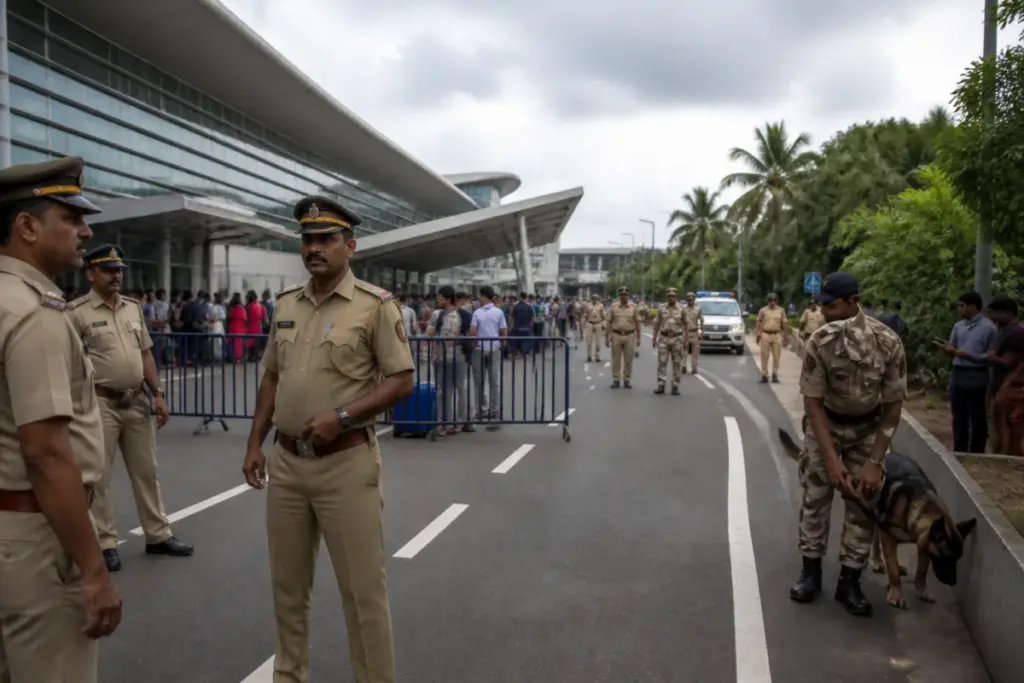
A Tamil Nadu-born information technology professional based in the United States has been arrested in connection with more than 200 alleged hoax bomb threats sent to establishments across Kerala since 2023, including Thiruvananthapuram airport, the chief minister’s official residence, courts, government offices, hotels and temples, police said.
Sharath Subramanyam was arrested by Thiruvananthapuram city cybercrime police on Saturday after being brought from Chennai on a production warrant, city police commissioner Arul R B Krishna said. Tamil Nadu police had arrested him in July 2026 when he arrived at Chennai airport over allegations that he sent more than 1,500 hoax bomb threats across India.
Police said Subramanyam had worked in the information technology sector for 12 years and was involved in artificial intelligence research. He allegedly used artificial intelligence to send threat emails and then monitored their impact through local news reports. The allegations have not been tested in court.
Within Thiruvananthapuram city limits, the accused allegedly sent around 40 fake bomb threats targeting key public institutions and commercial establishments. The reported targets included Thiruvananthapuram airport, Cliff House, the official residence of the chief minister, Lok Bhavan, the governor’s residence, the Secretariat, the district court, the collectorate and five-star hotels.
Police also said an email claiming that explosives, including RDX, had been planted at the German consulate in Thiruvananthapuram triggered security concerns. The reported threats extended to the state police chief and the transport commissionerate, placing both public administration and transport-related institutions within the scope of the alleged campaign.
The incidents disrupted the functioning of civic and judicial establishments. Court proceedings were affected after threat messages were sent to court complexes, including the district court, on six occasions, according to police. Repeated evacuations, searches and security checks can temporarily interrupt public services even when no explosive device is found, although police did not provide a cumulative estimate of the operational or financial cost in the material available.
One incident cited by police occurred on March 18, 2025, when a threat claiming that explosives had been planted at the Thiruvananthapuram district collectorate led officials to evacuate the building. During a subsequent inspection by the bomb squad, a disturbed beehive caused several people, including senior officials, to be stung. Those affected reportedly sought treatment at Peroorkada district model hospital and Thiruvananthapuram Medical College Hospital.
The alleged threats also targeted religious institutions. Police said Subramanyam accessed the websites of the Sree Padmanabhaswamy Temple and Attukal Bhagavathy Temple to obtain their email addresses and send bomb threats. The incidents disrupted access for devotees, adding a public-facing service and crowd-management dimension to the security response.
The case highlights how threat messages directed at urban institutions can create disruption without an actual attack. Airports, courts, government offices, consulates, hotels and temples operate through tightly coordinated security and public-access systems. A credible-looking email can therefore trigger evacuations, searches, traffic or access restrictions and interruptions to scheduled services before investigators establish whether the threat is genuine.
The Thiruvananthapuram cybercrime police investigation is continuing following the production warrant proceedings. Police have linked the accused to the Kerala cases and to the wider allegations involving more than 1,500 threats across India; further legal proceedings will determine the charges and evidence in the case.


