

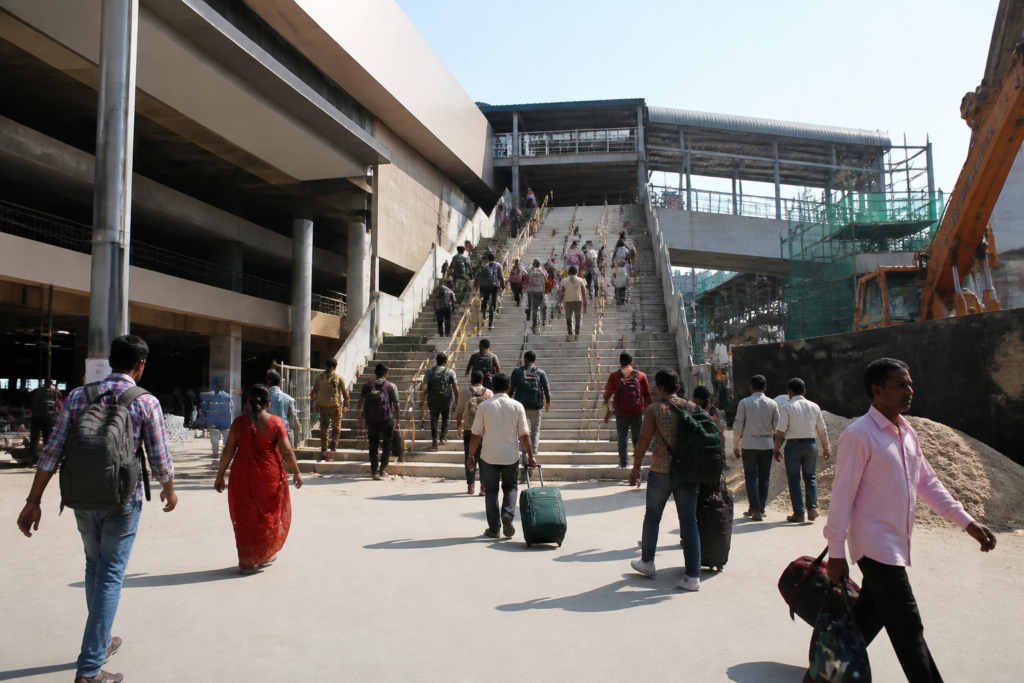
Ahmedabad’s Kalupur railway station has opened a new passenger entry from the southern side of its redevelopment complex, but travellers currently have to climb about 72 steps to reach the platforms from the building being developed for the bullet train project, according to a report by Gujarat Samachar.
The new entry has been opened near the Saraspur Gate-2 side before the existing access route is closed in the coming days. The reservation counter and cloakroom have also been shifted to the new building, giving passengers an alternative location for ticket booking and baggage storage during the redevelopment work.
The access arrangement from the bullet train building is currently incomplete. Passengers entering through the building have to use the newly opened staircase to reach the station’s roof plaza. They must then proceed towards the foot overbridge before reaching the platform they need. The route therefore provides an alternative entry, but involves additional movement inside the station complex.
The staircase has approximately 72 steps. The report said that lifts and escalators planned for the building have not yet become operational. Until those facilities are started, senior citizens, women, elderly passengers and other travellers with limited mobility may face difficulty using the route.
The changes are part of the redevelopment of Ahmedabad railway station, where passenger circulation and access arrangements are being altered as new structures are brought into use. The southern building is intended to support access to Platform 1, while the bullet train building on the Saraspur side is being prepared as a major component of the expanded station complex.
The relocation of the reservation counter and cloakroom means passengers will now find these services in the new building rather than their earlier locations. The new access arrangements are also expected to distribute passenger movement across more than one route as work continues at the station.
The redevelopment is intended to improve passenger circulation and reduce congestion within and around the station. New entry and exit routes could also help manage vehicle movement and traffic near the railway premises. However, the current dependence on stairs means that the accessibility benefits of the new building remain limited until the lifts and escalators are commissioned.
The report did not specify the date on which the lifts and escalators will begin operating. Passengers using the new entry will therefore need to account for the staircase, the roof-plaza connection and the subsequent walk to the foot overbridge until those facilities are made available.


