

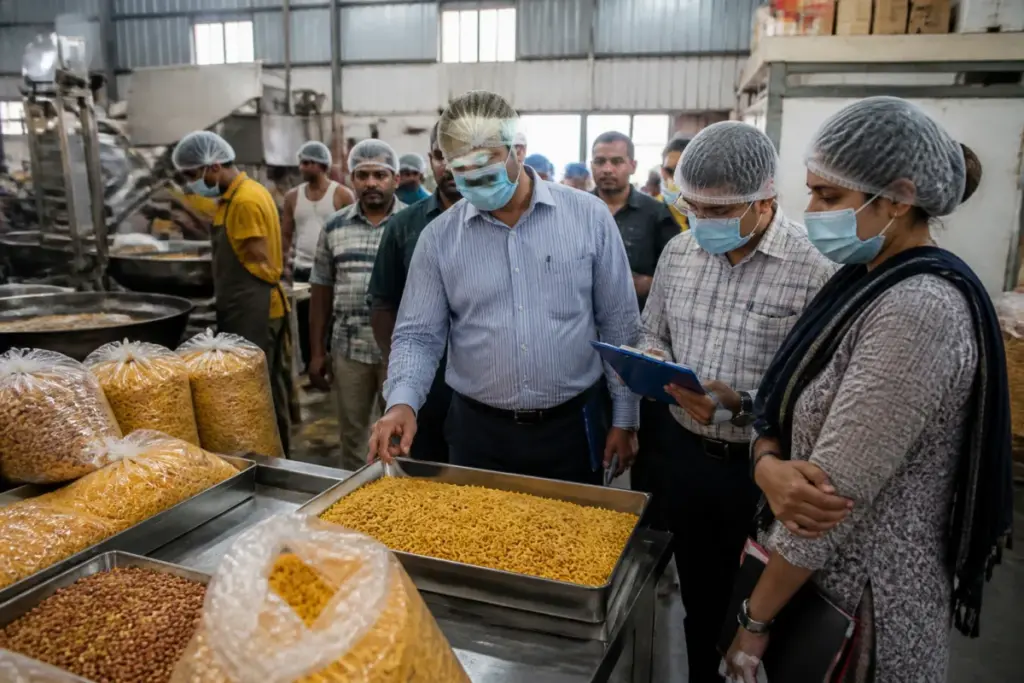
The Ahmedabad Municipal Corporation’s food safety department sealed a farsan manufacturing unit in Danilimda and suspended a 1,000-kg stock of masala peanuts, fine sev, farsi puri, maida and other snacks after reportedly finding unhygienic production conditions and multiple food safety violations.
The action was taken at A.N. Gruh Udyog in Godluck Estate’s warehouse number four during an inspection by the civic food department. The unit was producing different types of farsan, a category of savoury snacks widely sold across Ahmedabad, particularly during the festive season.
Dr Tejas Shah, the in-charge additional health officer overseeing the municipal food department, said the inspection found workers preparing food without hair covers, caps or aprons. The department also reported that the unit was operating in unhygienic conditions and had violated provisions of the Food Safety and Standards Act and related rules.
According to the report, the inspection team found the use of non-permitted colour in the farsan. The source described it as an industrial or factory colour rather than a colour approved for food use. The department also found that the same cooking oil was being reused repeatedly during frying, a practice that officials said formed part of the violations identified at the premises.
The food department further reported that the products were being packed without labelling required under Food Safety and Standards Authority of India rules. The absence of compliant labelling can make it difficult for consumers to identify ingredients, dates, the producer and other information required for packaged food products.
Following the inspection, the civic team sealed the unit and suspended the stock of approximately 1,000 kg. The action came a day after the department sealed another factory in the same Danilimda area for allegedly manufacturing tomato sauce without tomatoes, according to the report. The two inspections indicate that the civic department is carrying out checks on food manufacturing and processing units in the area ahead of the Dussehra festival.
The department has also issued guidance for customers and traders as temporary stalls and shops selling fafda and jalebi become more common during the festival. Customers have been advised to retain purchase records, including bills, dates and packaging, and to report suspected adulteration or unsafe food to the municipal food department or through the FSSAI’s Food Safety Connect portal or application.
Traders have been told to maintain the quality of oil and ghee, avoid repeatedly using frying oil or ghee, and retain evidence supporting claims that products are made with pure ghee. The department has also instructed sellers not to mix other flour into gram flour used to make fafda. The municipal food department’s next steps in the case will determine the further regulatory action against the sealed unit and the seized stock.


