

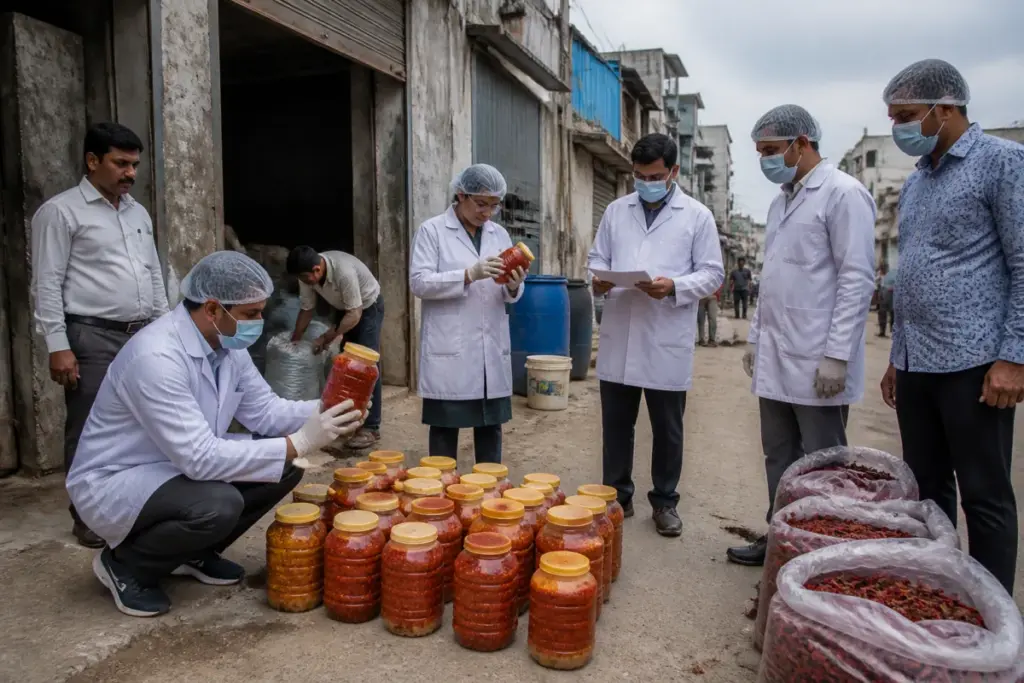
Ahmedabad’s municipal food department seized more than 10,000 kg of suspected adulterated tomato sauce and raw materials from a unit in Gota, where officials said papaya, potato, sugar and factory-grade colour were being used instead of tomatoes. The department sealed the premises and collected samples for further legal action.
The action was carried out at Ai Shri Khodiyar Gruh Udyog in Meldi Estate, near Gota railway station, according to Nav Gujarat Samay, which quoted Ahmedabad Municipal Corporation in-charge additional health officer Dr Tejas Shah. The report said the seized material was valued at about Rs 4.5 lakh.
According to Dr Shah, the municipal team received information about the manufacture of fake sauce at the unit and inspected the facility. Officials allegedly found tomato sauce being produced without tomatoes, using papaya, potato, sugar and a factory-grade colour. The food department took samples of the sauce and seized the finished product along with other raw materials.
The municipal action comes amid a wider enforcement drive against food manufacturers and sellers accused of compromising public health. Dr Shah said three factories had been identified and sealed in Ahmedabad over three days as part of the campaign. The report did not provide the names or locations of the other two units.
Municipal officials said the sauce produced at the Gota facility was supplied to fast-food businesses selling items such as dabeli, vada pav, sandwiches and burgers. The report did not establish how many outlets had purchased the product or whether any specific fast-food centre had been identified for action.
The seizure also raises questions about oversight across Ahmedabad’s informal and small-scale food supply chain. The report said municipal sources had previously sealed the same unit over sanitation-related issues through the solid waste department. It did not specify the earlier sealing date, the duration of that action or whether the unit had subsequently received permission to resume operations.
The municipal health department said fast-food centres purchasing such products should also face action. Ahmedabad has a large network of roadside carts, small shops, hotels and restaurants, making enforcement dependent not only on inspections of manufacturing units but also on tracing distribution and checking the ingredients used by food sellers.
The food department’s next steps are expected to include testing the collected samples and proceeding under applicable food-safety laws. The source report did not state the laboratory findings, the sections invoked against the unit or whether arrests had been made.


