

Karnataka’s draft electoral roll has recorded an increase of about eight lakh voters before the final list under the Special Intensive Revision is published, raising questions about who has been added and how the entries were processed. The state’s total electorate rose from 4.46 crore in the draft roll published in August to 4.54 crore, according to a notice issued by the office of the Chief Electoral Officer on October 16.
The report does not identify the new voters or establish whether all of them were applicants seeking fresh registration. A voter registration officer in Bengaluru told Prajavani that more than 10 lakh applications for new registration had been submitted across Karnataka. The officer said these applications may have been added automatically to the draft roll after processing, but the identities and status of the newly added voters would become clear only after the final electoral roll is published.
The development comes amid a large-scale verification exercise involving existing voters. Of the 4.46 crore voters included in the draft list on the basis of enumeration forms submitted to booth-level officers, notices were issued to 43.83 lakh voters over discrepancies in details and mapping information. Around 1.34 lakh of those notices reportedly received no response.
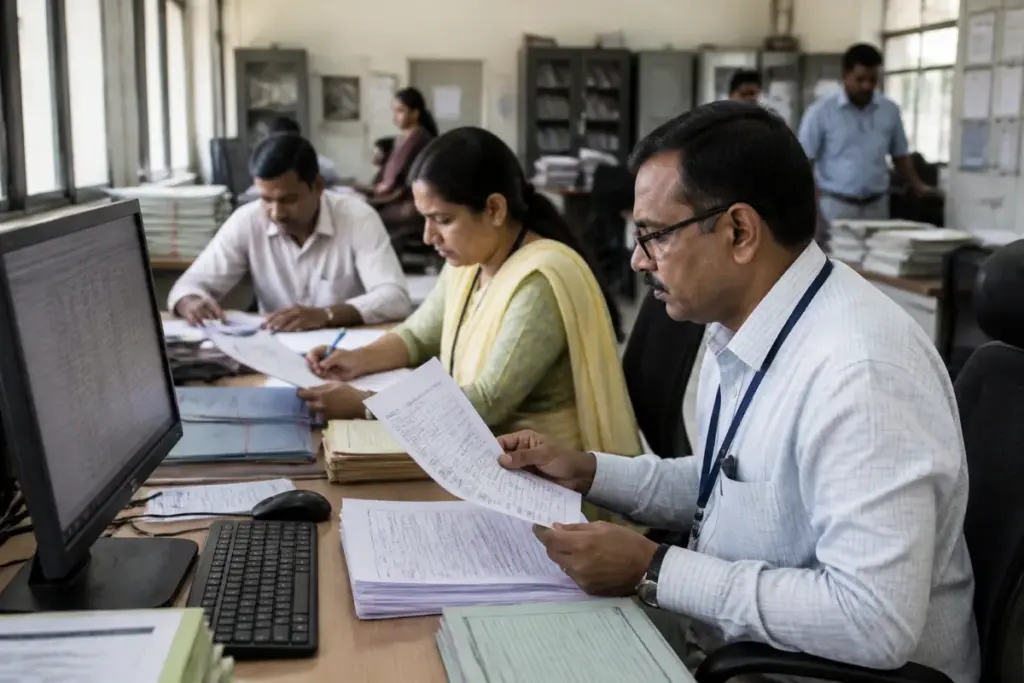
According to information cited in the report, some notices were received directly by voters while others were collected by political party agents. Booth-level officers attempted to contact voters using mobile numbers recorded in the enumeration forms. Several people did not answer, while some numbers were no longer active. Officials said that during household visits, many voters who did not respond to the notices were found not to be residing at the recorded addresses.
After conducting mahazars and uploading the notice details to the Election Commission’s ECI Net portal, the system automatically generated Form 7 applications, which are used to raise objections to names in an electoral roll. These applications were included in the list of objections, with the relevant electoral registration officer shown as the applicant. Prajavani’s review found that reasons for the objections had not been entered in these cases.
An assistant electoral registration officer from the Bengaluru South electoral district suggested that enumeration forms may have been submitted by political party agents to facilitate the inclusion of ineligible voters. The officer said that if voters linked to discrepancy notices could not be located, it could raise doubts about whether the forms had been used to include ineligible names. The report presents this as an official concern, not as an established finding.
The electoral-roll exercise has also generated a significant volume of applications. By the previous Friday, 10.07 lakh people had applied for fresh registration, 1.22 lakh had sought deletion of names and 12.79 lakh had requested corrections to voter details. The Chief Electoral Officer’s office said most applications had been examined and disposed of, but not all requests for new registration were accepted. Applications were rejected when applicants could not be found during field verification.
Thursday, October 22, is the last day for filing and disposing of claims and objections under the revision exercise. The final electoral roll is expected to clarify whether the additional eight lakh names comprise newly eligible applicants, entries requiring further verification or other categories of changes made during the revision process.


