

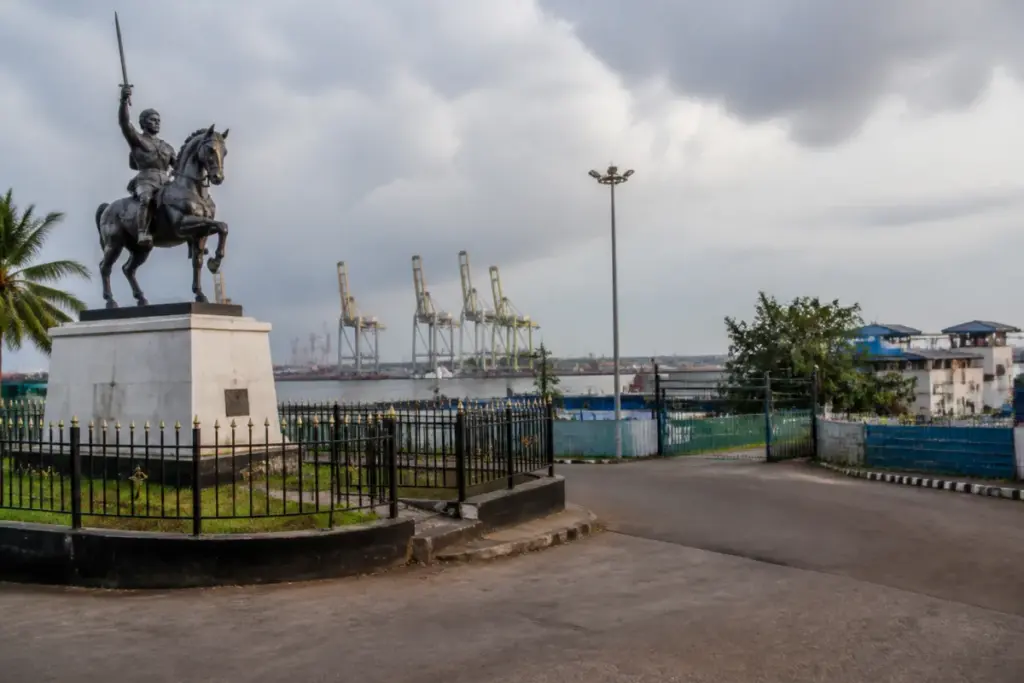
Goa’s proposal to buy land used for an unauthorised Chhatrapati Shivaji Maharaj statue at Mormugao Port Authority property was an exploratory step taken to prevent a potential law-and-order crisis, Chief Secretary V Candavelou has told the High Court.
In an affidavit, Candavelou said Shivaji had a special place in the hearts and minds of Goans and had historically been associated with attempts to free Goa from Portuguese colonial rule. He said Shivaji came to Goa in 1683 to save people from what he described as the oppressive Portuguese regime.
The affidavit was filed after the state informed the Mormugao Port Authority, or MPA, that it was willing to consider purchasing the land on which the statue had been erected. MPA had approached the High Court over the alleged encroachment and unauthorised construction on its property.
The High Court had earlier criticised the government’s inaction and directed the police and other authorities to assist MPA in removing the statue. MPA subsequently told the court that it wanted to withdraw its petition after the state expressed willingness to buy the land. The court then directed the chief secretary to submit a detailed affidavit explaining the government’s position.
Candavelou said the government had considered the issue at the highest administrative level because of serious law-and-order concerns and intelligence inputs. According to the affidavit, the administration was informed of the possibility of a gathering of about 15,000 people, raising concerns about a potential mass agitation and violent confrontation near the vital port establishment.
The chief secretary said the state’s decision in principle to explore the feasibility of acquiring the land was aimed at preserving public peace through a mutual agreement. He described the September 8 letter to the MPA as an “exploratory effort in response to an acute public peace challenge” and said it was not intended to undermine the High Court’s interim order.
The affidavit also sought to distinguish the proposal from an endorsement of encroachment. Candavelou said the state government did not endorse, condone or encourage illegal encroachments or unauthorised constructions on public or private property.
On the question of the state bearing the cost of acquiring land that had allegedly been encroached upon, Candavelou said the matter involved a preliminary, non-statutory exercise between two public entities. He said the exercise had been undertaken in good faith to maintain public peace and harmony, and assured the court that the administration had acted under a constitutional obligation to preserve public order.
The chief secretary said the September 8 communication followed continuous inter-departmental deliberations, field inspections and security assessments concerning the unauthorised statue. The High Court’s further response to the affidavit will determine the next stage of the dispute over the statue, the land and the proposed transaction.


