

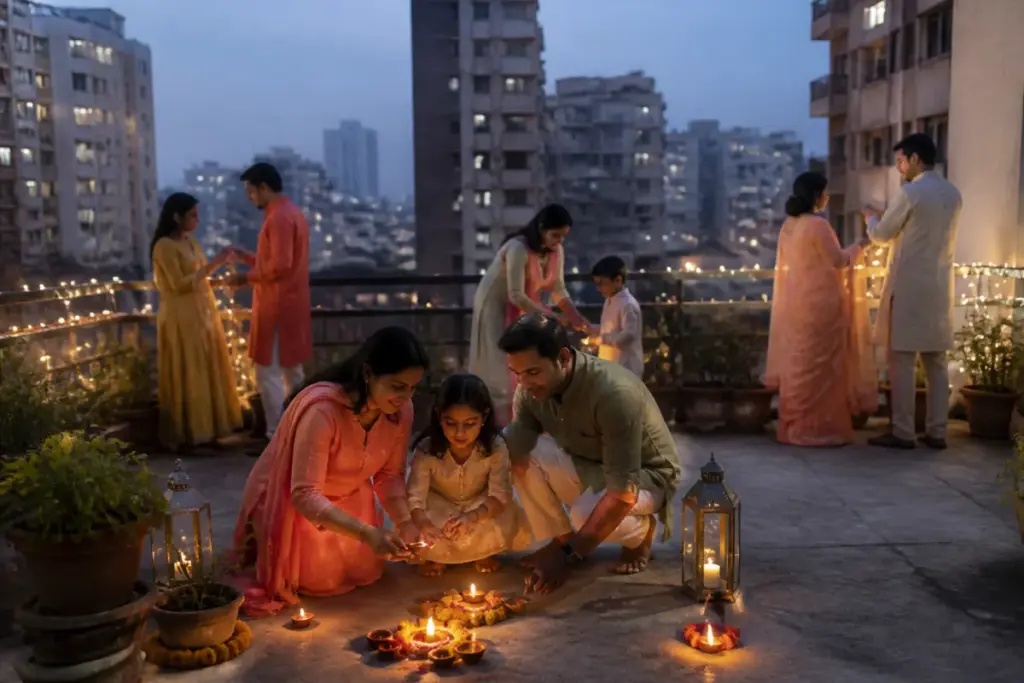
WWF-India has launched a nationwide Green Diwali campaign running from 20 October to 8 November, urging residents, schools, colleges and community organisations to reduce firecracker use and adopt cleaner celebrations in 130 cities covered by the National Clean Air Programme (NCAP), including Delhi.
The campaign comes ahead of the winter period, when lower temperatures and calm winds can allow pollutants to remain closer to the ground. WWF-India said the initiative aims to reduce the air and noise pollution associated with firecrackers while encouraging wider public participation in efforts to improve air quality.
Under the campaign, schools and community groups have been encouraged to organise awareness activities through morning assemblies, classroom sessions, rallies and community meetings. Participants are also being urged to take a pledge to celebrate a firecracker-free Diwali.
According to the campaign information, firecrackers release fine particulate matter, including PM2.5 and PM10, along with sulphur dioxide, nitrogen oxides and compounds containing toxic metals. These pollutants can worsen air quality during a period when atmospheric conditions may already restrict dispersion.
Children, older people, pregnant women and those living with asthma or heart and lung diseases may face particular difficulty during episodes of deteriorating air quality, WWF-India said. Firecrackers also carry risks of burns and fires, while noise and pollution can affect animals and birds.
The campaign’s focus on 130 NCAP cities places the initiative within India’s broader clean-air programme, which targets air-quality improvement across urban centres. WWF-India said that in 2025-26, annual PM10 levels were lower than the 2017-18 baseline in 108 of the 130 cities. The organisation said 72 cities recorded reductions of more than 20 percent, while 26 cities recorded reductions of more than 40 percent.
The number of cities meeting national ambient air-quality standards also increased from six in 2017-18 to 14 in 2025-26, according to the figures cited by WWF-India. The campaign does not replace regulatory action, but seeks to supplement city-level clean-air measures by encouraging changes in household and community behaviour during the festive period.
WWF-India has recommended the use of clay lamps and energy-efficient lighting, rangoli made with natural colours, avoidance of single-use plastic, waste segregation and preference for locally made products. Residents have also been advised to check the daily Air Quality Index on the Central Pollution Control Board’s Sameer app and limit outdoor activities when pollution levels are high.
The campaign will continue through 8 November, with schools, community organisations and residents expected to carry out awareness activities during the designated period. Its public-health impact will depend on participation across the targeted cities and on how these voluntary measures operate alongside official action on air pollution and firecracker use.


