

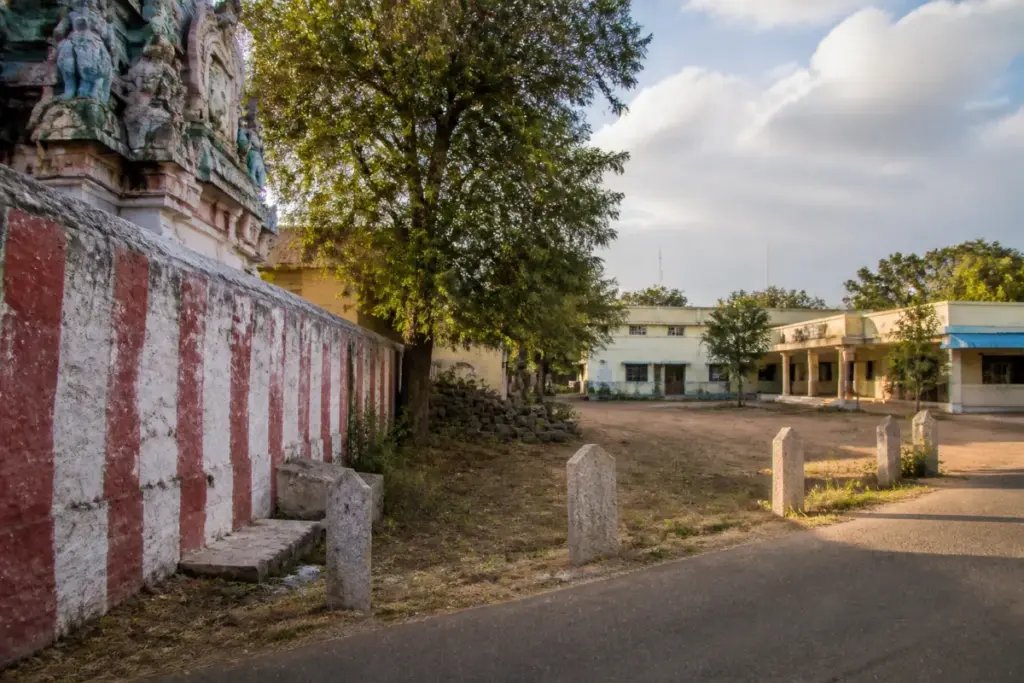
A report from Dinamalar has raised questions over the ownership and use of temple property in Tamil Nadu after Hindu Munnani leader Kadeswara Subramaniam said the Supreme Court had ruled that the state’s Hindu Religious and Charitable Endowments Department was only a custodian of temple assets and not their owner. The judgment itself was not provided in the supplied report, and the claim requires verification against the court record.
According to the report, Subramaniam was referring to a dispute involving property belonging to the Kodimudi–Nagapalayam Mariamman and Ponnasamyamman temples in Erode district. He alleged that a temporary trustee had been appointed for the temple and that a gift settlement deed was registered through the district collector in favour of the tahsildar. A tahsildar office was subsequently constructed on the land, he said.
The report attributes the dispute to a case filed by the temple’s hereditary trustee. It says Subramaniam described the alleged Supreme Court position as establishing that temple property belongs to the temple, while the state government and the Hindu Religious and Charitable Endowments Department act only as custodians. He further claimed that the court had held that the state could not acquire temple property through its officials.
These claims have direct implications for land governance and public infrastructure in Tamil Nadu. Government offices, transport facilities and other public projects sometimes depend on land transferred or assigned through administrative processes. Where such land is claimed to belong to a religious institution, the legal authority for the transfer, the role of trustees, the validity of registration documents and the conditions attached to the land become central questions.
The report does not provide the Supreme Court case number, judgment date, bench details, legal provisions considered or the operative directions issued by the court. It also does not include a response from the Tamil Nadu government, the Hindu Religious and Charitable Endowments Department, the district administration or the temple authorities. As a result, the precise legal scope of the alleged ruling and its effect on the tahsildar office cannot be established from the supplied material alone.
Subramaniam called on the department to follow the alleged judgment, recover temple properties described as being under encroachment and return government-occupied land to the concerned temples. Those demands are political and organisational statements rather than independently verified findings in the material available for this report.
The case illustrates the administrative sensitivity of temple land records, particularly where property is used for public buildings. Establishing the facts would require examination of the Supreme Court order, the original title and endowment records, the gift settlement deed, revenue entries and any directions issued by the court or state authorities. The legal record and official responses remain necessary to determine what happened in the Erode district dispute and whether any wider administrative action follows.


