

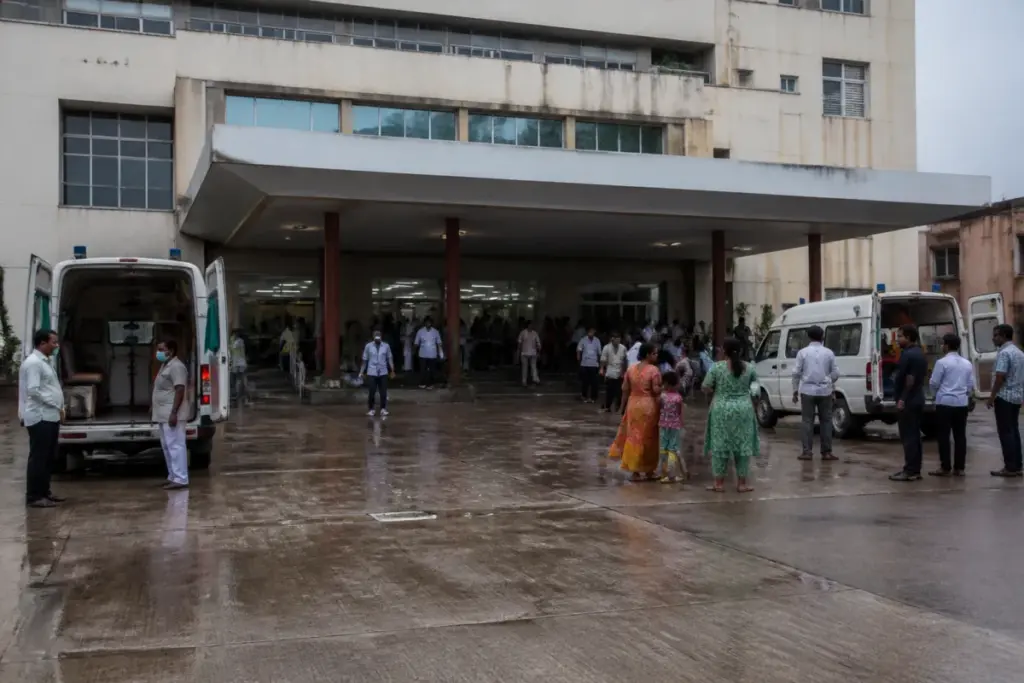
Nashik Collector Ayush Prasad has ordered an audit into the death of 40-year-old Vishnu Anand Kakvipure at Nashik Civil Hospital after allegations that delays in treatment and an external sonography referral contributed to the incident. The audit will examine the patient’s medical history, treatment records, emergency ward case papers and the circumstances surrounding his referral to a private diagnostic centre.
Kakvipure, a cobbler, died on Saturday after developing breathing difficulties, according to social activist Deepak Doke, who raised the complaint with the district administration. Doke alleged that Kakvipure’s family was directed to obtain a sonography outside the hospital even as his condition was deteriorating. The allegation has not been established, and the circumstances are now the subject of separate inquiries ordered by the hospital and medical college administrations.
According to Doke’s account, Kakvipure was initially taken by his wife to the Regional Referral Hospital. The facility primarily treats kidney, cancer and cardiac patients, and the patient was stabilised before being referred to Nashik Civil Hospital, Doke said.
At the Civil Hospital, doctors allegedly advised the family to take Kakvipure to a private diagnostic centre for sonography. Doke told the Times of India that Kakvipure’s wife requested that all possible treatment be provided within the hospital but was allegedly instructed to arrange the scan outside. While she arranged transport and took her husband to the diagnostic centre, Kakvipure allegedly collapsed outside the facility.
He was taken back to Nashik Civil Hospital, where doctors declared him brought dead, according to the report. Following the death, Doke staged a sit-in protest outside the hospital and submitted a memorandum to the district collector seeking an inquiry into the treatment and referral decisions.
Civil surgeon Satish Shimpi disputed the suggestion that the hospital’s sonography facility was unavailable. He said the machine was functional and that Kakvipure had been examined by a resident doctor from the postgraduate medical college, who referred him to the diagnostic centre. Shimpi also said that, had the chief medical officer been present, the patient would have been admitted.
The case has brought into focus the coordination between the civil hospital, the medical college and referral facilities during medical emergencies. It also raises questions about how decisions are recorded when diagnostic procedures are referred outside a public hospital and how responsibility is assigned between clinical staff and hospital administration.
Prasad has sought a detailed report covering the patient’s medical history, treatment records and emergency ward documentation, along with an explanation for the sonography referral. Shimpi said both the medical college and hospital administration had been directed to conduct separate inquiries and submit their reports to the district collector.


