

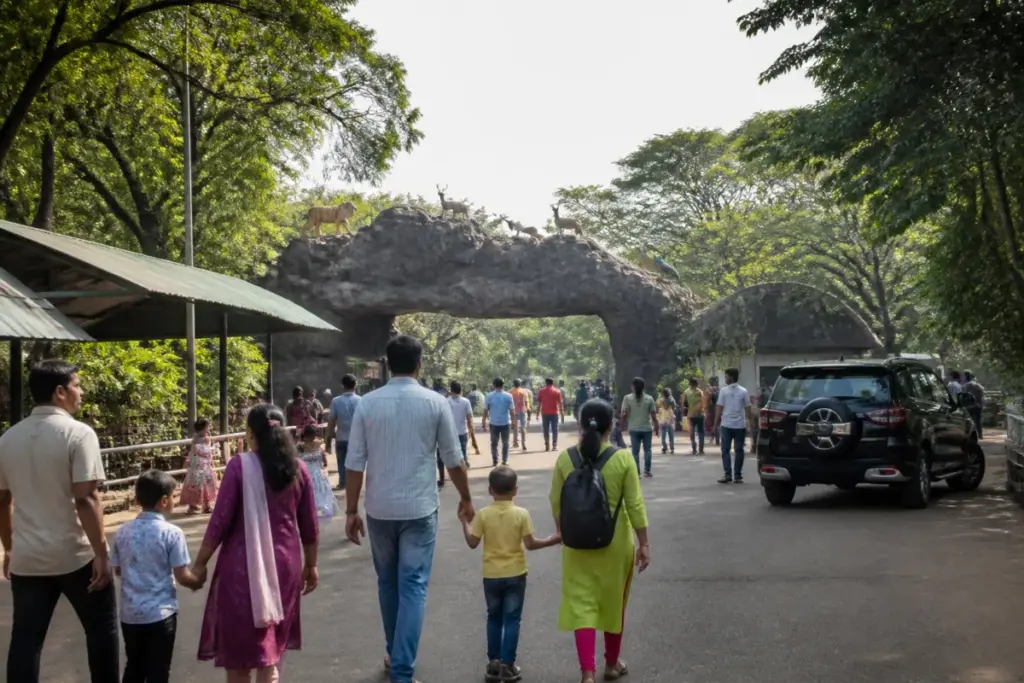
Sri Venkateswara Zoological Park in Tirupati has raised entry fees for adults and children, along with charges for four-wheelers and cloakroom use, making family visits more expensive from Wednesday. The revised tariffs were approved at the 16th governing body meeting of the Zoo Authority of Andhra Pradesh.
The adult entry fee has increased from ₹70 to ₹100, while the ticket for children has risen from ₹30 to ₹50. The charge for four-wheelers has been raised from ₹750 to ₹1,000. The cloakroom fee has also gone up from ₹10 to ₹15 per bag.
For a family of two adults and two children travelling in a four-wheeler, the combined cost of entry tickets and vehicle charges will now be ₹1,300, compared with ₹950 earlier. The increase amounts to ₹350 per visit, before accounting for transport, food and other expenses incurred during a trip to the wildlife park.
Zoo officials said the additional revenue would be used to meet expenses related to animal care, nutritious feed, veterinary services, enclosure maintenance and visitor amenities. Authorities also said the higher vehicle charges were intended to regulate traffic within the premises and reduce noise and air pollution.
The revised children’s fee represents an increase of nearly 67 per cent. This is significant for a facility that also serves an educational and conservation-awareness role, particularly for families and school groups. Higher admission costs could affect visitors travelling from other districts, who face additional travel and food expenses alongside the zoo charges.
M. Sai Prasanna, identified as a frequent visitor, said the zoo should have considered keeping children’s tickets affordable. The fee revision nevertheless retains a concessional entry charge of ₹10 per child for government school students. Zoo authorities said the concession was being continued to encourage educational visits and promote awareness of wildlife conservation.
The new rates place the zoo’s operating requirements and visitor affordability in direct balance. The authority’s stated use of the additional revenue includes core public-facing functions such as animal welfare, enclosure upkeep and visitor facilities, while the retained school concession is aimed at protecting access for organised educational visits.


