

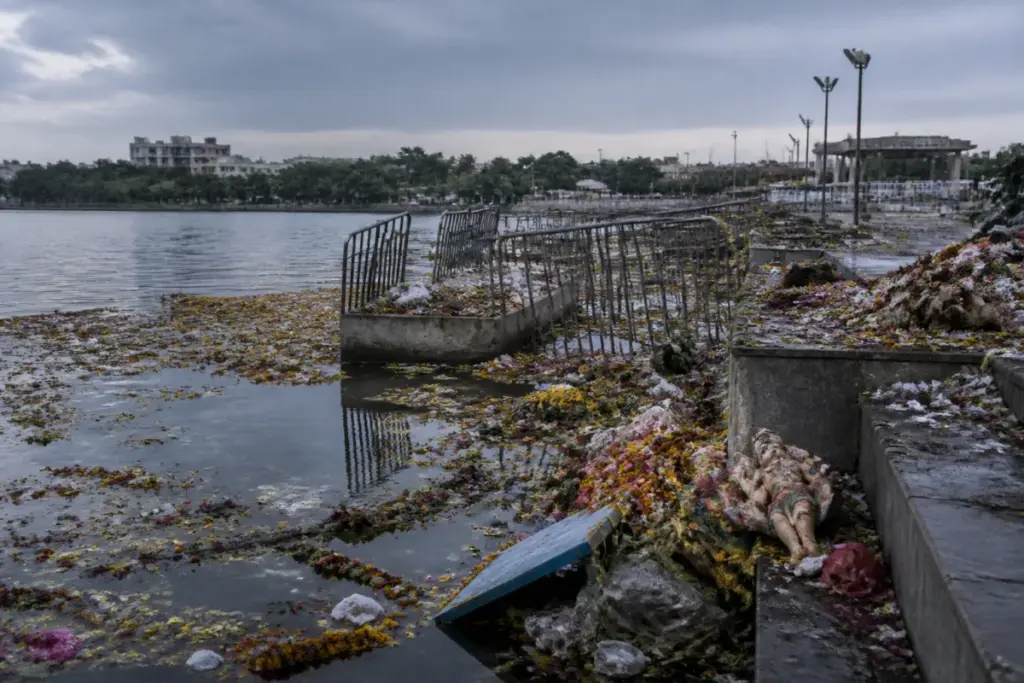
Futala Lake in Nagpur was left surrounded by heaps of nirmalya, puja offerings and discarded small idols after idol immersion, with overflowing artificial tanks and breached barricades raising fresh concerns about the Nagpur Municipal Corporation’s arrangements at one of the city’s prominent tourist attractions.
The waste was reported along the lake’s banks near Amravati Road, only metres from the Futala Musical Fountain, where crores are being spent on restoration. Environmentalists and residents alleged that devotees opened a barricaded gate and immersed idols and puja material directly into the lake after the designated facilities became inadequate.
Two artificial immersion tanks installed by the NMC along the stretch were reportedly overflowing with offerings. An eyewitness told the Times of India that no NMC sanitation personnel or workers were present during checks at 6:30 pm and again at 10 pm. The absence of staff, the eyewitness said, left accumulated offerings uncleared while devotees continued to face limited immersion arrangements.
The reported conditions have also raised questions about whether temporary facilities are being maintained through the immersion period. Environmentalist Kaustav Chatterjee, founder of Green Vigil Foundation, questioned why precautions taken during Ganesh Visarjan were not replicated during Devi Visarjan. He said the artificial tanks were not cleaned regularly, allowing nirmalya and other material to build up.
“At a time when Nagpur is facing a water crisis and water levels in our reservoirs are significantly low, protecting our water bodies should be a top priority for all stakeholders,” Chatterjee said.
Residents also criticised the civic arrangements at the lakefront. Kamlesh Gupta questioned the purpose of installing artificial tanks without ensuring regular cleaning. “The entire place looks filthy now. Where are devotees supposed to perform visarjan in such conditions? The condition of the lakefront looks terrible,” he said.
The incident places the focus on the operational side of idol immersion management: staffing, tank capacity, waste removal and enforcement of barricades. While temporary immersion facilities are intended to reduce pressure on natural water bodies, their effectiveness depends on regular clearing and the presence of personnel to guide visitors and prevent direct immersion.
The NMC’s reported arrangements are particularly significant at Futala Lake because the site combines a heavily visited public waterfront with ongoing investment in a major attraction. Waste left on the banks also affects the lakefront’s public use and raises concerns about the protection of an urban water body during festival periods.
The Times of India reported that it attempted to contact NMC officials for a response, but no reply had been received until the report went to press.


