

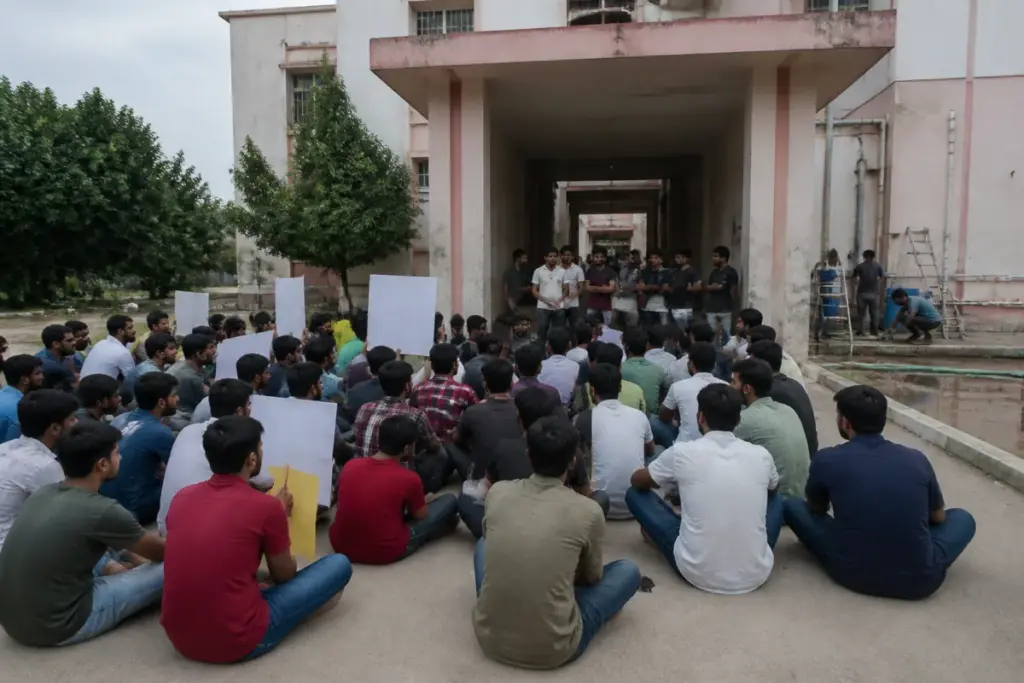
Lucknow University students burned effigies of the vice-chancellor and senior university officials on Dussehra, escalating a month-long dispute over alleged irregularities in hostel allotment and complaints about poor-quality food and drinking water.
The protest followed seven days of continuous sit-in demonstrations by hostel residents. The students are demanding a transparent allotment process and action from the university administration over their complaints, according to a report by The Times of India.
The effigies represented vice-chancellor Prof JP Saini, dean of students’ welfare Prof Amita Kanaujia and chief provost Prof Aashees Awasthi. The protest was linked to allegations that hostel allotments had not been conducted transparently, along with concerns about the quality of food served to residents and the availability of safe drinking water.
University officials said the vice-chancellor inspected hostels on both university campuses after the complaints. The administration has also formed a 10-member committee to monitor food quality in the hostels.
The committee’s formation places the responsibility for monitoring meals within a formal administrative process, although the report does not specify the committee’s members, reporting schedule or the standards it will use to assess food quality. The university has not been reported as announcing a deadline for the committee’s findings.
The water-related complaints were attributed by university officials to problems in the boring system. They said repairs were underway. The officials did not provide details about the nature of the fault, the number of affected hostels or the expected completion date for the repairs.
The dispute brings together three basic aspects of residential campus administration: the allocation of limited hostel accommodation, the management of daily food services and the maintenance of water infrastructure. For students living on campus, these systems directly determine access to housing, meals and essential services.
The continuing sit-in indicates that the complaints have not been resolved through the university’s initial response. The students’ demand for transparent allotment also points to the need for clear communication around eligibility, allocation procedures and grievance redressal, although the university’s detailed allotment process was not provided in the report.
The administration’s immediate response has included the hostel inspections, the formation of the food-quality monitoring committee and repairs linked to the boring system. Further action will depend on the committee’s monitoring process and the progress of the water repairs, with no specific completion timeline reported so far.


