

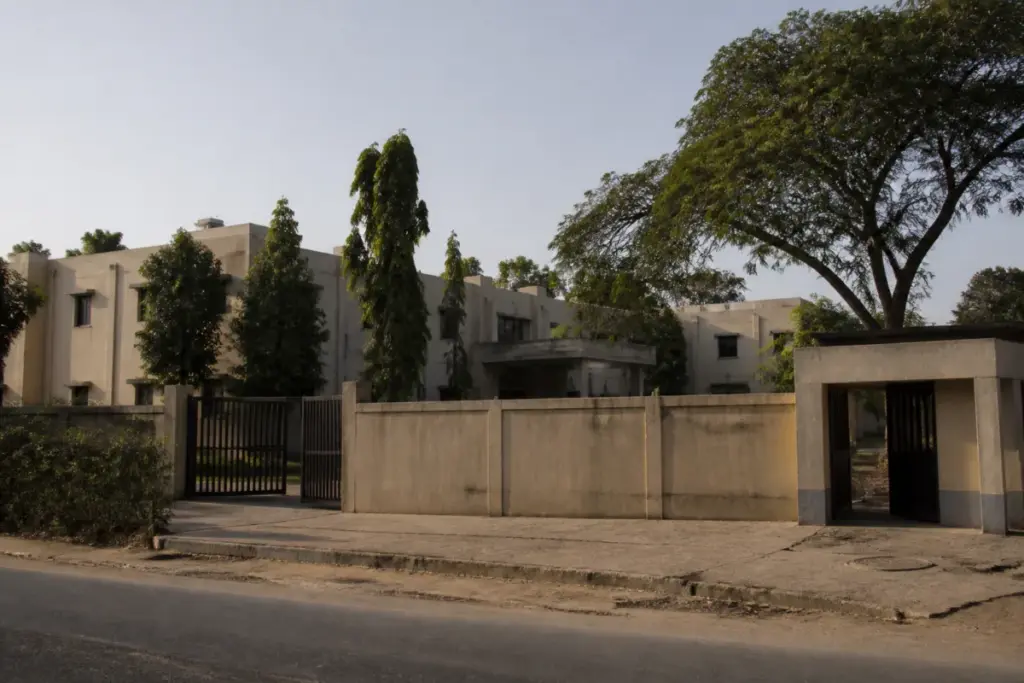
The Gujarat High Court’s latest hearing on women’s protection homes and child protection homes has brought a longstanding institutional question back into focus: whether facilities meant to protect vulnerable women and children are being monitored and maintained to the standards required by the court. The state has submitted an affidavit covering the condition and infrastructure of homes in 12 to 15 districts, while the petitioner has sought renewed inspections of facilities, security arrangements and rehabilitation support.
The hearing took place on 21 October in a public-interest litigation that has been pending for years. According to the report submitted in court, the state has completed individual meetings with all district collectors in compliance with an earlier direction of the High Court. The affidavit is understood to contain district-level information on the condition and infrastructure of women’s protection homes.
The court has fixed the matter for further hearing on 2 December. Until then, the proceedings leave several institutional questions open: whether the information submitted by the districts reflects actual conditions inside the homes, how frequently the facilities are independently inspected, and whether court-directed systems are functioning beyond the submission of compliance reports.
The case is significant because protection homes are not ordinary residential buildings. They are public institutions where safety, accommodation, care, legal support and rehabilitation are expected to operate together. A shortfall in any one of these areas can affect the residents’ ability to access protection and rebuild their lives. The material supplied in the report does not provide a district-wise assessment of the facilities or identify specific buildings that fall short. It does, however, show that the condition and infrastructure of the homes remain under judicial scrutiny.
The state’s affidavit places district administration at the centre of the compliance process. The High Court had directed the government to hold individual meetings with the collectors of each district, and the government told the court that these meetings had been completed. This indicates that responsibility for the homes is not being treated only as a departmental matter. District-level administration has been brought into the process, at least for the purpose of reviewing compliance with the court’s directions.
That administrative chain matters because the condition of a protection home depends on more than the building itself. The petitioner’s submissions before the court referred to the facilities available inside the homes, the arrangements for residents’ security and the measures planned for their rehabilitation. The request was for the State Legal Services Authority to conduct regular monthly visits and examine these aspects afresh across all women’s protection homes.
The demand for regular visits highlights the difference between periodic reporting and continuous oversight. A government affidavit can record whether a direction has been acted upon, but a visit can examine how residents experience the facility in practice. The report supplied for this story does not establish whether the proposed monthly inspections have been carried out consistently, what their findings were or whether corrective action followed. Those issues are likely to remain important as the case proceeds.
The reference to rehabilitation also broadens the scope of the litigation. Protection cannot be measured only through walls, beds, security arrangements or other physical infrastructure. The petitioner has asked the court to examine whether the government has made arrangements involving suitable teachers and other individuals to support residents’ rehabilitation. The available report does not specify the number of teachers, counsellors or rehabilitation workers assigned to the homes, nor does it describe the programmes operating in each district.
This absence of detail is itself relevant to understanding the administrative challenge. The state has placed a report on the condition and infrastructure of homes before the court, but the publicly described material does not provide a consolidated picture of capacity, occupancy, staffing, maintenance budgets, complaints or inspection outcomes. Without those details, it is difficult to compare facilities across districts or determine whether improvements are uniform or limited to selected homes.
The case also reflects the role of the High Court in supervising public institutions through continuing public-interest litigation. The matter is not limited to deciding a single incident or dispute. Instead, the court has issued directions, sought compliance from the government and continued to review whether those directions are being implemented. The latest hearing shows that the process involves multiple administrative levels, including the state government, district collectors and the State Legal Services Authority.
The report further states that the High Court had earlier directed the government to frame new rules for women’s protection homes and that the government subsequently notified them. The supplied material does not reproduce the rules, list their provisions or explain how they have changed the operation of the homes. It therefore cannot establish whether the rules have improved infrastructure, safety, staffing or rehabilitation. Their practical effect remains a matter that must be examined through implementation evidence rather than notification alone.
The court’s intervention has mainly involved two cases concerning women’s protection homes, although the current hearing also refers to child protection homes. The material available does not identify those cases by number or provide the full history of the earlier orders. It does establish that the issue has been before the court for years and that the government has been required to report on compliance with directions relating to the homes.
For urban governance, the case raises a broader question about how public care institutions are planned and monitored. These facilities may be located within individual districts, but their functioning depends on a statewide administrative framework. A district collector can coordinate local action, while a legal services authority can inspect and report on conditions, but the state must still ensure that standards, staffing, funding and accountability are consistently applied.
The evidence currently available points to a compliance system in progress rather than a resolved problem. The government says it has completed meetings with all district collectors and submitted information on homes in 12 to 15 districts. The petitioner continues to seek regular inspections covering facilities, safety and rehabilitation. The High Court has kept the matter open and scheduled the next hearing for 2 December.
What remains unclear is as important as what has been reported. The available account does not state how many women’s protection homes and child protection homes were assessed, how many residents they accommodate, whether any facilities require urgent repairs, or what timelines have been set for correcting identified deficiencies. It also does not establish whether the newly notified rules have been evaluated through measurable outcomes.
The next stage of the case will therefore show whether the reporting process moves from administrative assurance to verifiable institutional improvement. The court’s further hearing may bring greater clarity on the district-wise findings, the status of regular visits by the State Legal Services Authority and the measures proposed for safety and rehabilitation. For now, the proceedings confirm that the condition of Gujarat’s protection homes remains a live public-interest and governance issue, with implementation still under judicial review.


